Highlights
- Requesting wheelchair assistance at Antalya Airport is a vital medical precaution that prevents post-surgical complications like wound dehiscence or overexertion during long terminal walks.
- Passengers should book mobility support at least 48 hours in advance by selecting the appropriate assistance code (WCHR, WCHS, or WCHC) based on their specific physical limitations.
- Travelers must carry a 'Fit to Fly' certificate from their surgeon to confirm medical stability and ensure smooth processing through security and boarding gates.
Choosing the right support for your return journey is a critical step in your recovery process. If you have recently undergone a procedure, arranging for Antalya airport wheelchair after surgery ensures you navigate the terminal safely and without physical strain.
Table of Contents
Navigating Your Journey: Antalya Airport Wheelchair After Surgery
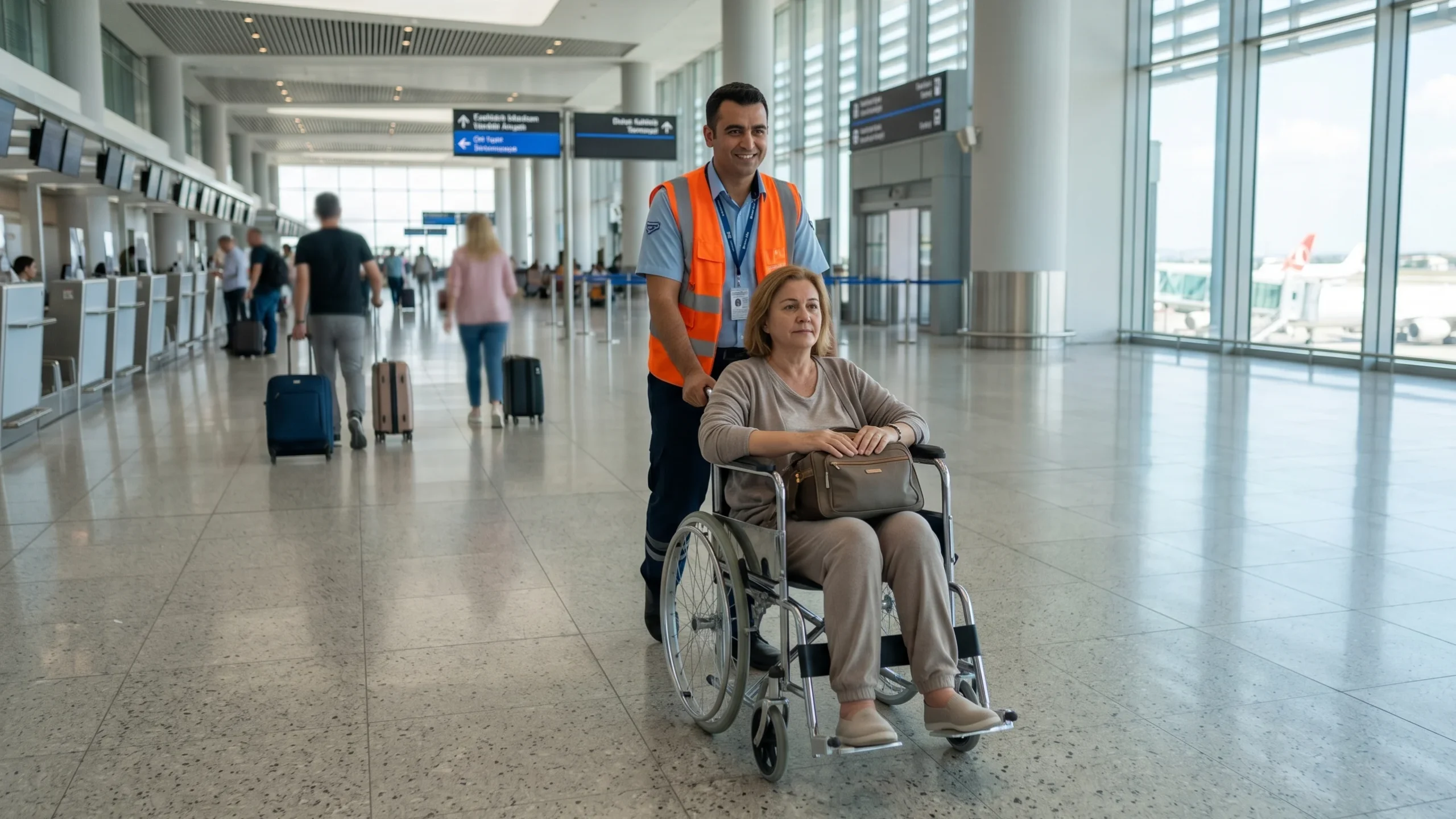
Traveling through a major international hub like Antalya Airport (AYT) can be physically demanding, even for those in peak health. When you are recovering from a surgical procedure—whether it is a cosmetic enhancement, an orthopedic correction, or bariatric surgery—the long walkways, security queues, and boarding processes can pose a risk to your healing. Requesting Antalya airport wheelchair after surgery is not just a matter of convenience; it is a necessary medical precaution to prevent complications like wound dehiscence or overexertion.
Antalya Airport is well-equipped to handle passengers with reduced mobility (PRM). The airport operates two international terminals and one domestic terminal, all of which provide comprehensive assistance services. However, the efficiency of your experience depends heavily on prior planning and understanding the specific protocols of both the airport and your chosen airline.
The Importance of Assistance During Post-Op Travel
After surgery, your body requires stability and rest. The physical stress of walking long distances through Terminal 1 or Terminal 2 can increase blood pressure and strain incision sites. Furthermore, the risk of accidental bumps in crowded areas is significantly higher when you are moving on foot.
Wheelchair assistance provides a “fast-track” experience in many ways. Staff members trained in PRM services guide you through dedicated lanes at passport control and security, ensuring that you are not standing for prolonged periods. This level of support is vital for maintaining the integrity of your surgical results and ensuring you arrive home without unnecessary pain.
How to Book Wheelchair Assistance at Antalya Airport
The process for securing mobility support should begin the moment you book your flight, or at least 48 hours before your departure. Most airlines operating out of Antalya, including Turkish Airlines, SunExpress, and Pegasus, have integrated systems for requesting these services.
- Notify your airline during the booking process by selecting the “Passenger with Reduced Mobility” or “Special Assistance” option.
- If you have already booked, log in to the “Manage My Booking” section on the airline’s website or app to add the request.
- Specify the level of assistance needed, such as WCHR (cannot walk long distances), WCHS (cannot climb stairs), or WCHC (completely immobile).
- Inform your surgical coordinator or clinic so they can provide the necessary medical documentation for the airline.
- Upon arrival at Antalya Airport, locate the “Assistance Call Points” situated at the entrance of the terminals or proceed directly to your airline’s check-in desk.
Levels of Wheelchair Assistance Explained
Not all wheelchair requests are the same. Understanding the industry-standard codes will help you receive the exact level of care you require:
- WCHR (Wheelchair-Ramp): This is for patients who can walk a short distance and climb stairs but cannot manage the long walks across the terminal.
- WCHS (Wheelchair-Stairs): This is necessary if you can walk a short distance but cannot navigate the stairs of an aircraft.
- WCHC (Wheelchair-Cabin): This is for patients who are completely immobile and require a specialized chair to be moved all the way to their seat in the cabin.
Medical Considerations and Flight Safety
Flying after surgery involves more than just physical comfort; it involves physiological safety. One of the primary concerns for international patients is the risk of deep vein thrombosis (DVT). Long periods of immobility combined with the cabin pressure of an airplane can increase the risk of blood clots.
Research published in the Journal of Travel Medicine indicates that post-operative patients are at a significantly higher risk for venous thromboembolism (VTE) during air travel. The study highlights that the combination of recent surgical trauma and the confined space of an aircraft cabin necessitates proactive mobility management and, in many cases, pharmacological prophylaxis like blood thinners. Utilizing a wheelchair at the airport allows you to save your energy for light “in-seat” exercises during the flight, which are crucial for maintaining circulation.
The “Fit to Fly” Certificate
Most airlines departing from Antalya will require a “Fit to Fly” certificate if you have had surgery within a certain timeframe (usually 7 to 14 days, depending on the procedure). This document, signed by your surgeon, confirms that you are stable enough for air travel and specifies if you require oxygen or extra legroom.
When you request an Antalya airport wheelchair after surgery, carry a printed copy of this certificate. Having it readily available at the check-in desk and the boarding gate prevents delays and ensures the ground crew understands your medical status.
Comparison of Assistance Services
While standard airport assistance is free and mandatory for airlines to provide, some patients prefer a more comprehensive, private service. The table below compares standard PRM assistance with private medical escort options.
| Feature | Standard Airport PRM | Private Medical Transfer/Escort |
| Cost | Free (Included in ticket) | Paid Service |
| Wait Times | May vary during peak hours | No waiting; dedicated staff |
| Scope | Within the airport terminal only | From clinic/hotel to aircraft seat |
| Medical Monitoring | None; basic mobility support | Vital signs monitoring and wound care |
| Security Handling | Priority lane access | Full advocacy through all checkpoints |
| Personalized Care | General assistance | 1-on-1 dedicated medical professional |
Accessibility Features at Antalya Airport (AYT)
Antalya Airport is designed with modern accessibility standards in mind. For patients recovering from surgery, these features make the transition from the car to the plane much smoother.
Terminal Infrastructure
The terminals feature wide elevators and ramps, ensuring that wheelchairs can move freely without the need for detours. There are also designated PRM seating areas near the boarding gates that are higher and more supportive, making it easier for patients to sit down and stand up—a particularly important feature for those who have had abdominal or hip surgery.
Dedicated Security and Passport Control
One of the most stressful parts of air travel is the security screening. For surgery patients, this can be even more daunting due to bandages, compression garments, or internal metal implants (in the case of orthopedic surgery). Antalya Airport provides dedicated lanes for wheelchair users. These lanes are generally quieter, and the staff is accustomed to handling passengers with medical needs sensitively.
Accessible Restrooms
Throughout Terminals 1 and 2, you will find “Disabled Restrooms” that offer ample space for a wheelchair and an accompanying person if you need assistance with compression garments or wound care during your time at the airport.
Surgery-Specific Advice for Wheelchair Users
The type of surgery you had will dictate how you use wheelchair services and what additional help you might need.
Bariatric Surgery Patients
After weight loss surgery, you may feel fatigued more quickly. While you are encouraged to walk to prevent clots, the vast scale of Antalya Airport is often too much for the first few days post-op. Using a wheelchair allows you to conserve your energy for the flight itself. Ensure you have your bariatric surgery card if you need to carry specific liquids or medications through security.
Cosmetic Surgery Patients
For those who have had “Mommy Makeovers,” tummy tucks, or breast augmentations, sudden movements can be painful. A wheelchair provides a protective barrier in the crowded terminal. It also ensures that you do not have to lift your carry-on luggage, which is strictly forbidden after most cosmetic procedures.
Orthopedic Patients
If you have undergone knee or hip replacement in Turkey, a wheelchair is non-negotiable. You will likely need a WCHS or WCHC service level. It is also worth checking if your airline can provide an “extra legroom” seat to keep your limb elevated, as swelling is a common issue during the flight back from Antalya.
CK Health Turkey: Professional Post-Op Support
When planning your medical journey to Antalya, the quality of your aftercare and transfer service is just as important as the surgery itself. CK Health Turkey specializes in providing a seamless experience for international patients, ensuring that every detail of your recovery—including your transition through the airport—is handled with professional care.
We understand that the journey home can be the most stressful part of the process. Our team coordinates closely with clinics and airport authorities to ensure our patients are never left waiting. From private, comfortable transfers to the terminal to ensuring your Antalya airport wheelchair after surgery is ready and waiting, we prioritize your comfort and safety above all else.
If you are planning a procedure in Turkey and want to ensure a stress-free recovery and return journey, we invite you to reach out. Our experts are ready to assist you with comprehensive medical travel planning. Visit our website or contact us directly to learn more about our premium patient coordination services.
Practical Tips for Your Departure Day
To ensure your experience at Antalya Airport is as smooth as possible, follow these practical steps on the day of your flight:
- Arrive Early: Reach the airport at least 3 hours before an international flight. PRM services are in high demand during the summer season in Antalya.
- Keep Meds Accessible: Store your pain relief and any prescribed medications in your personal bag, not in your checked luggage.
- Wear Compression Garments: If your surgeon prescribed them, ensure they are on before you reach the airport to manage swelling during the wait.
- Hydrate Constantly: The air in the terminal and on the plane is very dry, which can impact healing.
- Communicate with the Attendant: If the wheelchair attendant is moving too fast or if you feel a bump, speak up. They are there to help you, but they don’t know your pain levels unless you tell them.
Antalya is a world-class destination for medical tourism, and the airport infrastructure reflects this status. By utilizing the available PRM services and planning ahead, you can focus on what matters most: your recovery. Taking the step to book an Antalya airport wheelchair after surgery is a sign of a responsible and well-prepared patient, ensuring that your journey home is the final, comfortable step in your successful medical transformation.