Highlights
- Preoperative screenings in the final 48 hours are critical for safety, with about 0.9% of surgeries being postponed due to modifiable issues like uncontrolled hypertension or infections.
- Blood sugar management is vital, as high HbA1c levels significantly increase risks of infection and poor wound healing, often requiring levels below 7.0% to 8.0% for elective procedures.
- Patients can minimize the risk of being deemed unfit for surgery by obtaining local lab work 30 days in advance, disclosing all supplements, and stabilizing chronic conditions before travel.
Traveling for medical treatment requires a great deal of preparation, courage, and coordination. When a patient books an elective procedure abroad, the fear of arriving at the clinic only to find out they are not fit for surgery Turkey represents a major source of anxiety. Understanding the parameters of preoperative screenings can help travelers mitigate risks and plan a safe, seamless healthcare journey.
Table of Contents
The reality of medical travel is that modern surgical safety relies entirely on data gathered during the final 48 hours before an operation. While initial virtual consultations provide a baseline, the definitive decision occurs after in-person clinical testing. Learning what happens if a patient encounters failed pre op tests surgery abroad helps individuals set realistic expectations and take proactive measures before booking flights.
Understanding the Reality of Failed Pre Op Tests Surgery Abroad
A cancellation or postponement upon arrival is rarely a final refusal of care; instead, it serves as a necessary safety intervention. Surgeons and anesthesiologists evaluate physiological markers to ensure that a patient can safely tolerate the stress of general anesthesia and the subsequent healing phase.
When international medical travel providers identify underlying risks, they must prioritize stabilization over speed. Data published in the Turkish Journal of Anaesthesiology and Reanimatology indicates that elective surgery cancellations in the operating room occur at a low rate of approximately 0.9%. While this percentage remains small, a significant portion of these cancellations stem from acute, modifiable issues that can be caught during advanced screening.
Common reasons for a temporary or permanent delay include:
- Uncontrolled hypertension (high blood pressure) that increases cardiovascular stress.
- Acute respiratory or urinary tract infections requiring immediate antibiotic therapy.
- Undisclosed blood-thinning supplements or medications that increase hemorrhage risks.
- Severe cardiac or pulmonary anomalies detected during electrocardiograms (ECG) or chest X-rays.
- Unmanaged metabolic conditions, particularly poor glycemic control reflected in blood panels.
Evaluating the Impact of HbA1c Surgery Risk
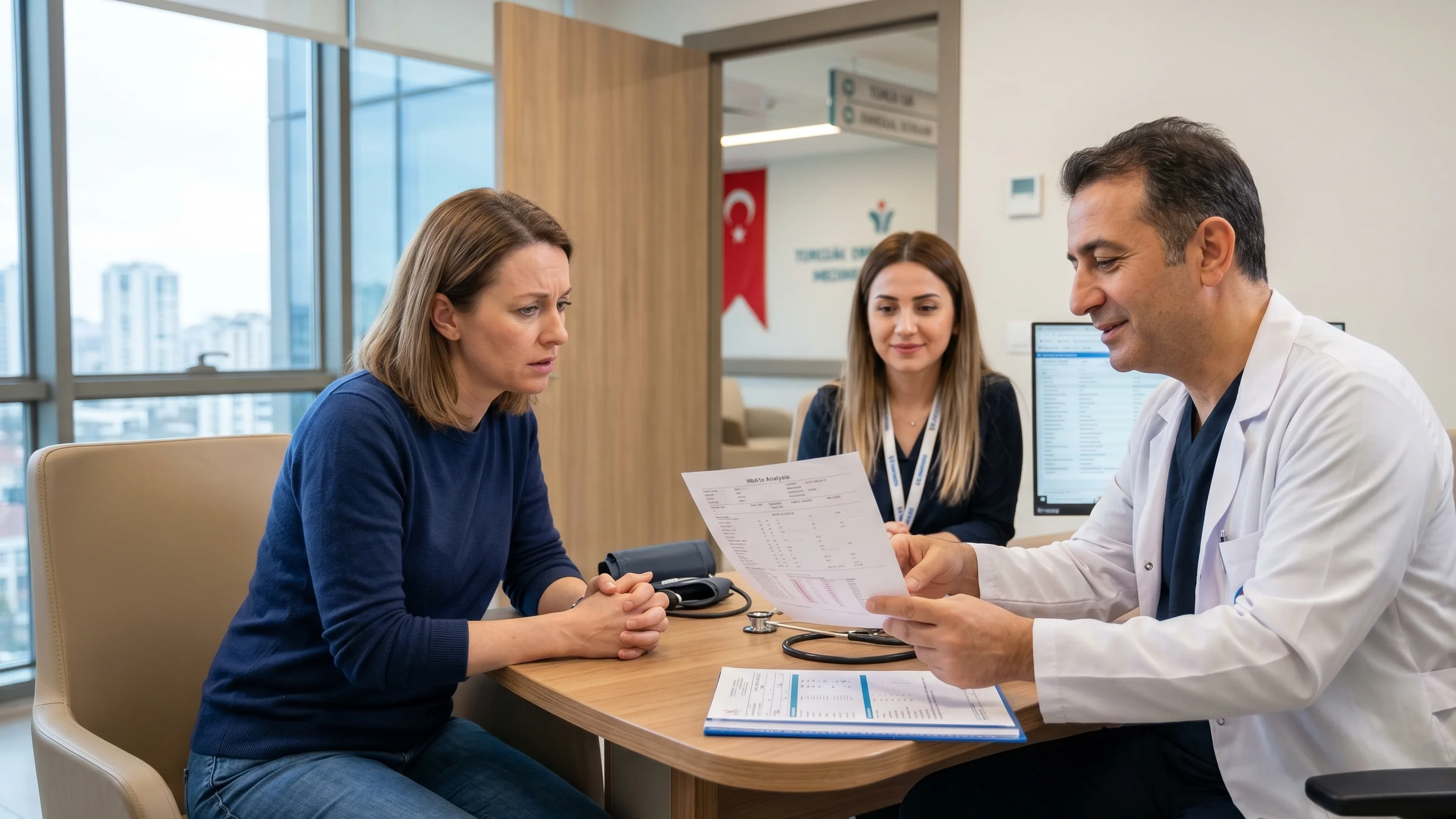
For diabetic and pre-diabetic individuals seeking bariatric metabolic surgery or major plastic surgery, long-term blood sugar regulation plays a critical role in safety. The primary biomarker evaluated by surgical teams is hemoglobin A1c, which measures average blood glucose levels over the preceding two to three months. A high pre-operative HbA1c surgery risk translates directly to elevated post-operative complications, particularly delayed wound healing, deep tissue infections, and tissue necrosis.
A landmark study published in The Impact of Hemoglobin A1c on Post-operative Outcomes in Bariatric Surgery Patientsevaluated the safety thresholds for elective metabolic interventions. The research compared outcomes for patients with HbA1c levels below 8% against those with levels equal to or greater than 8%. Interestingly, the study demonstrated that within a specialized multidisciplinary weight management framework, primary bariatric surgery can be safely considered and performed in patients with higher baseline markers without a statistically significant difference in 30-day post-operative complication rates.
However, for non-bariatric procedures, such as extensive body contouring or mommy makeovers, stricter limits apply. Most plastic surgeons enforce a strict cutoff of 7.0% to 7.5% because uncontrolled blood sugar severely impairs microvascular circulation, which can cause surgical flaps to fail.
Common Preoperative Screenings and Cancellation Thresholds
To understand what qualifies an individual as not fit for surgery Turkey, it is helpful to examine the specific thresholds used during standard hospital workups. The following table highlights the critical tests performed upon arrival and the values that generally trigger a postponement.
| Diagnostic Test | Normal Baseline Range | Postponement / Cancellation Threshold | Primary Medical Concern |
| HbA1c (Glycated Hemoglobin) | Under 5.7% (Non-diabetic) | $\ge$ 7.5% – 8.0% (Varies by procedure) | Severe wound infection, tissue necrosis, poor healing |
| Blood Pressure (BP) | 120/80 mmHg | $\ge$ 160/100 mmHg | Stroke risk, intraoperative bleeding, cardiac strain |
| Hemoglobin (Hb) Levels | 12.0 – 17.5 g/dL | < 10.0 g/dL (Severe anemia) | Poor tissue oxygenation, requiring blood transfusion |
| Coagulation Panel (PT/INR) | INR around 1.0 | INR > 1.5 (Unless medically managed) | Uncontrollable surgical bleeding, hematoma formation |
| Chest X-Ray / CT Scan | Clear lung fields | Active pneumonia, severe COPD exacerbation | Acute respiratory failure under general anesthesia |
| Electrocardiogram (ECG) | Normal sinus rhythm | Acute arrhythmia, ischemic changes | Myocardial infarction (heart attack) during anesthesia |
How to Avoid Being Deemed Not Fit for Surgery Turkey
Minimizing the risk of a last-minute cancellation requires proactive communication and pre-travel preparation. Patients should treat their health management as an active phase of their surgical journey weeks before departure.
- Obtain local baseline lab work at least 30 days before traveling. Sharing early blood panels, including full blood counts and HbA1c levels, allows the international surgical team to identify and correct issues while the patient is still at home.
- Disclose every medication, vitamin, and herbal supplement. Common items like aspirin, ibuprofen, green tea extracts, and high-dose vitamin E alter blood clotting mechanisms and must be discontinued two weeks prior to an operation.
- Stabilize chronic health conditions under local medical supervision. Working with a family doctor to adjust blood pressure or diabetes medications ensures that vital signs fall within safe parameters upon arrival at the international clinic.
- Stop smoking and consuming nicotine products. Nicotine constricts blood vessels and dramatically increases respiratory risks under anesthesia; most centers require total cessation at least two to four weeks before major interventions.
Safe Surgical Management with CK Health Turkey
When planning medical travel, partnering with an organized, patient-centric organization helps mitigate the emotional and financial strain of unexpected clinical findings. CK Health Turkey coordinates comprehensive pre-travel assessments designed to screen for underlying health issues before patients leave their home countries. By establishing clear lines of communication between local physicians and international specialists, the medical team ensures that every candidate is thoroughly prepared for their upcoming treatment.
For international patients seeking elective, bariatric, or reconstructive procedures, the organization prioritizes transparent clinical protocols and dedicated medical support. If an arrival screening reveals an acute health issue, patient safety takes precedence, and the clinical team works immediately to stabilize the condition rather than rushing an unsafe procedure. To learn more about preoperative guidelines or to plan a medical journey, individuals are invited to contact the patient coordination team through the official CK Health Turkey website.
Entering a clinical environment with proper physical preparation reduces the likelihood of facing failed pre op tests surgery abroad. By monitoring key metabolic indicators, sharing comprehensive medical histories, and adhering to pre-surgical checklists, international patients can safeguard their health and maximize the probability of achieving a successful, uneventful recovery. Maintaining close communication with trusted medical coordinators ensures that traveling individuals remain safe, well-informed, and medically optimized before they ever enter the operating room to address any potential HbA1c surgery risk.