Highlights
- Lipoedema patients often fear that a tummy tuck will permanently worsen lower-limb swelling, but clinical evidence shows the surgery does not accelerate the underlying disease process.
- While standard surgical techniques can disrupt lymphatic pathways, a specialized lymphatic-sparing approach preserves delicate vessels and can actually improve circulation by removing heavy abdominal pressure.
- Successful recovery requires meticulous post-operative care, including mandatory manual lymphatic drainage and the use of customized flat-knit compression garments to manage temporary fluid retention.
Deciding to undergo a major body contouring procedure is stressful enough without the added burden of a chronic adipose tissue disorder. Many women wonder if getting a tummy tuck with lipoedema will cause the persistent swelling in their legs, hips, or buttocks to spiral completely out of control. Fortunately, understanding the physiological relationship between abdominal contouring and lower-limb lymphatic flow can demystify these valid concerns.
Table of Contents
Why Patients Worry About Lower Body Swelling
The medical community has a long, illustrious history of telling patients with lipoedema to simply “eat less and run more,” showing a spectacular misunderstanding of how abnormal subcutaneous fat behaves. Because lipoedema fat is metabolically distinct, inflammatory, and completely unresponsive to caloric deficits, patients are rightfully highly protective of their bodies and deeply skeptical of standard surgical promises. The primary fear for anyone managing this condition is that abdominal surgery will somehow sever the remaining functional lymphatic channels, causing fluid to pool permanently in the lower extremities. This concern is not entirely baseless, as standard plastic surgery techniques designed for typical cosmetic patients can be remarkably unforgiving to a compromised lymphatic system.
As shown in the clinical staging of this condition, lipoedema progresses from a subtle sub-dermal nodularity to severe, disproportionate lobular tissue accumulation. Because the disease process inherently involves fragile blood vessels, hyper-permeable capillaries, and structural weakness in the surrounding connective tissues, any fluid imbalance is amplified. When a patient contemplates a major torso intervention, they are not just worrying about a scar; they are worrying about whether their lower limbs will pay a permanent biological price for a flatter stomach.
Understanding the Biological Risks of a Tummy Tuck with Lipoedema
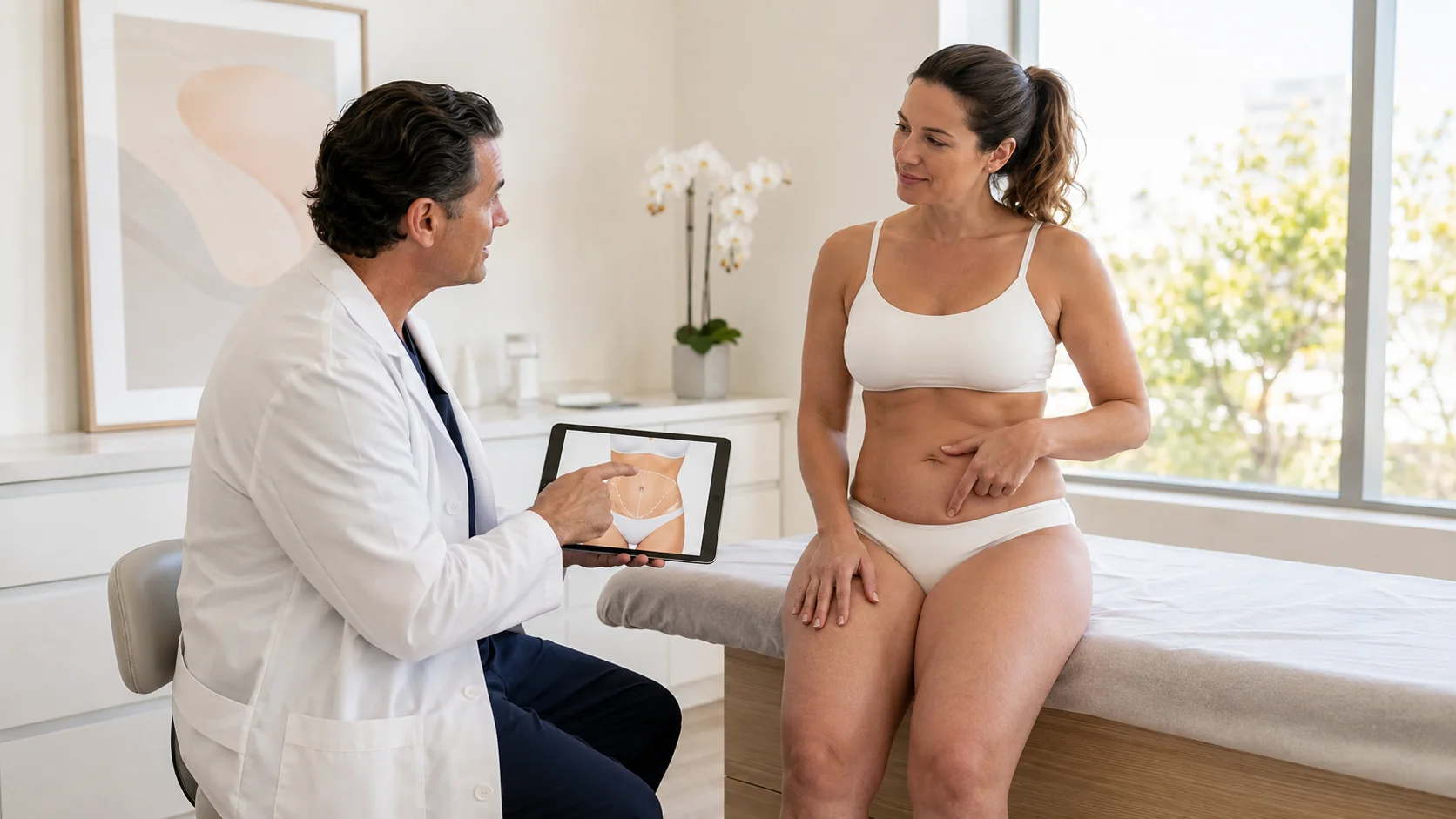
Anatomically, the lymph vessels draining the lower abdomen and the lower limbs converge near the groin at the inguinal lymph nodes. A traditional abdominoplasty involves elevating a massive flap of skin and fat from the abdominal wall, stretching it downward, and cutting away the excess. If a surgeon approaches a tummy tuck with lipoedema using the standard “conveyor-belt” cosmetic technique, they risk causing serious collateral damage to these crucial superficial lymphatic pathways.
When these pathways are disrupted in a body already struggling with lymphatic transport, the fluid that normally drains from the thighs and groin can back up, resulting in a temporary but highly distressing increase in lower-body swelling. However, it is vital to distinguish between temporary post-surgical swelling and a permanent biological worsening of lipoedema. The surgery does not magically command your body to produce more diseased, painful lipoedema fat in your calves or thighs. What it can do, if executed with a lack of specialized care, is create a temporary plumbing bottleneck that makes your existing lipoedema feel far more tense, heavy, and painful during the initial months of recovery.
The Science: Does Abdominoplasty Make Lipoedema Worse?
To put mind-numbing internet rumors to rest, we must look at the actual clinical evidence regarding how abdominal surgery interacts with this adipose disorder. A consensus guideline published in the peer-reviewed journal Plastic and Reconstructive Surgery outlines the standard of care for lipoedema patients undergoing surgical reduction and reconstruction. The research indicates that while up to thirty percent of lipoedema patients present with corresponding painful fat and tissue laxity in the lower abdomen, performing an abdominoplasty or a panniculectomy does not accelerate the underlying disease process in the legs.
In fact, the scientific consensus highlights a surprising mechanical benefit. When a patient has a significant abdominal overhang or a heavy panniculus, this tissue physically presses down on the groin and the upper thighs. This constant, heavy downward pressure acts like a physical clamp on the femoral veins and the major lymphatic trunks, severely restricting fluid return from the lower legs. By surgically removing this heavy abdominal apron, the mechanical obstruction is eliminated, which can actually improve long-term venous return and lymphatic flow in the lower body, making physical movement and therapeutic compression far easier to manage.
Surgical Techniques: Standard vs. Lipoedema-Adapted
To understand how a specialized surgeon navigates these biological challenges, it is helpful to compare the technical differences between a standard cosmetic procedure and one tailored for compromised tissue.
| Aspect | Standard Tummy Tuck | Lipoedema-Adapted Tummy Tuck |
| Dissection Depth | Deep tissue dissection down to the muscular fascia | Lymphatic-sparing dissection keeping superficial lymphatic pathways intact |
| Swelling Profile | Normal post-operative swelling resolving in 4 to 6 weeks | Prolonged swelling with high risk of fluid retention if not managed |
| Anesthesia Protocol | Standard general anesthesia | Specialized protocol sensitive to connective tissue and vascular fragility |
| Post-Operative Therapy | Optional lymphatic massage, standard abdominal binder | Mandatory manual lymphatic drainage and flat-knit compression garments |
| Lower Extremity Impact | Negligible impact on lower body fluid dynamics | Potential to improve lower leg circulation by removing abdominal mechanical blockage |
As outlined in the comparison, the differences are not merely cosmetic; they are deeply structural. A standard surgeon sweeps through tissue with little regard for microscopic lymph channels, whereas a specialized surgeon painstakingly preserves the thin, delicate layers of tissue where the primary lymphatic system resides.
Crucial Surgical Safeguards for Lipoedema Patients
To prevent post-operative complications like prolonged fluid retention or seromas, the surgical approach must be meticulously planned. First, the surgeon must utilize a lymphatic-sparing dissection technique. This means instead of dissecting all the way down to the deep muscular fascia across the entire abdomen, the surgeon leaves a protective layer of deep subcutaneous fat intact, especially in the lower abdomen near the groin, where the major lymphatic channels run. This preservation technique ensures that the delicate vessels carrying fluid away from the lower limbs remain functional.
Second, because patients with lipoedema often suffer from connective tissue hypermobility or fragility, the surgical team must use specialized, gentle tissue handling and an adjusted anesthesia protocol. Lipoedema tissue is highly prone to bruising and hematomas due to fragile capillary walls, so meticulous control of bleeding during surgery is paramount. Furthermore, the surgeon must plan for the proactive use of surgical drains to prevent fluid from pooling under the newly tightened abdominal skin, as the impaired lymphatic system will not be able to clear this fluid quickly on its own.
Postoperative Recovery: Managing Lymphatic Flow and Fluid Retention
The real work of protecting your lower body from swelling begins the moment you wake up in the recovery room. Because your lymphatic system will be temporarily overwhelmed by the normal inflammatory fluid generated by a tummy tuck, you must actively assist your body’s natural drainage mechanisms.
As illustrated, the key to supporting your recovery is gentle, superficial lymphatic drainage rather than deep, aggressive tissue massage. Deep, heavy pressure can actually damage healing tissues and crush delicate, regenerating lymphatic capillaries, whereas light, rhythmic, skin-stretching strokes encourage fluid to bypass the surgical bottleneck and find alternative drainage pathways.
In addition to manual lymphatic drainage, the continuous use of customized, flat-knit compression garments is non-negotiable. Unlike standard, circular-knit shapewear that simply squeezes the body uniformly and can restrict circulation, flat-knit compression provides a stiff, therapeutic gradient that actively pushes fluid out of the tissues and upward toward functional lymph nodes. You should also maintain a highly anti-inflammatory, low-sodium diet and prioritize gentle, low-impact movement like walking to engage the calf-muscle pump, which naturally drives lymphatic fluid out of the lower legs.
CK Health Turkey: Tailored Care for International Patients
Navigating a major surgery when you have a complex condition like lipoedema requires a team that actually understands the disease, rather than one that dismisses your symptoms as simple weight gain. CK Health Turkey specializes in providing highly personalized, medical-grade surgical journeys for international patients seeking advanced care. Located in the beautiful Mediterranean region of Antalya, the medical teams at CK Health Turkey combine world-class surgical expertise with a deep, compassionate understanding of lymphatic and adipose tissue disorders.
Every patient receives a comprehensive, tailored treatment plan that addresses their unique anatomical needs, ensuring that lymphatic-sparing techniques are at the forefront of any abdominal contouring procedure. From the initial virtual consultation to the meticulously coordinated post-operative care, including specialized compression fittings and localized therapy support, international patients are guided through a safe, reassuring, and highly professional experience. If you are ready to take the next step toward reclaiming your mobility and confidence, get in touch with CK Health Turkey to explore your customized surgical options.
Choosing to undergo a tummy tuck with lipoedema is a deeply personal decision that requires balancing cosmetic desires with strict medical realities. While standard, unadapted surgeries can temporarily exacerbate lower-body swelling due to lymphatic trauma, a highly specialized, lymphatic-sparing approach performed by an experienced surgeon can safely contour your abdomen without causing long-term damage to your legs. By prioritizing specialized surgical techniques, wearing appropriate flat-knit compression, and executing a dedicated post-operative lymphatic drainage routine, you can successfully achieve a flatter, more comfortable midsection while keeping your lower-body swelling fully managed and under control.