Highlights
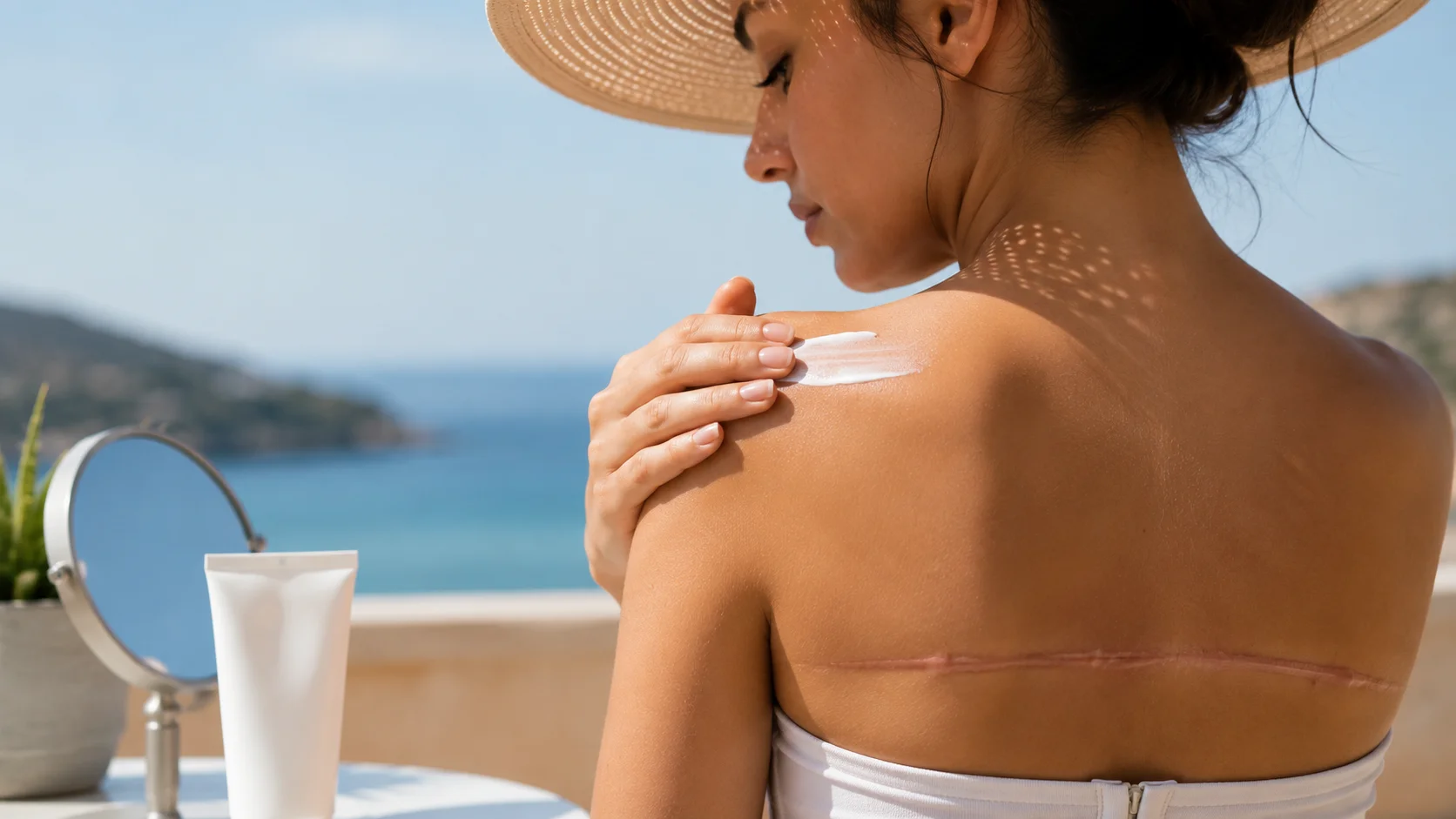
- Fresh surgical scars lack the pigment-producing cells needed for UV defense, meaning sun exposure can cause permanent dark staining or thick, irregular scar tissue.
- Relying solely on sunscreen is insufficient for new incisions; physical barriers like UV-protective clothing and silicone scar tape are essential for the first six months.
- A scar can take up to eighteen months to fully mature, and it must remain completely shielded from the sun until it has turned from pink to a flat, silvery-white line.
We get it. You paid a small fortune to look like a god, and now you want to show off your new body on a beach. But if you think a quick splash of sunscreen is going to save your fresh incisions, think again. Failing to prevent sun exposure after plastic surgery scars can turn your expensive surgical masterpiece into a dark, permanent reminder of your impatience.
Table of Contents
Why Fresh Scars and Sunlight Do Not Mix
Fresh surgical scars are not just normal skin that happens to look a bit pink, no matter how much you try to convince yourself otherwise. They are active, chaotic construction zones where your body is frantically trying to rebuild its structural integrity. During the early stages of healing, the delicate new skin lacks melanocytes, which are the cells responsible for producing pigment and defending your skin against ultraviolet radiation.
Because this immature tissue has zero natural defenses, exposing it to sunlight triggers an emergency response. The surrounding melanocytes go into overdrive, flooding the area with pigment in a desperate bid for protection. This process leads to post-inflammatory hyperpigmentation, a condition that stains the pink scar a stubborn, dark brown or muddy purple that may never fade.
Scientific Research on UV Rays and Scar Pigmentation
The severe consequences of exposing healing tissue to UV light are well-documented in dermatological literature. A milestone study examining postoperative ultraviolet exposure in healing wounds demonstrated that subjects exposed to UV radiation during the active remodeling phase developed significantly higher rates of skin fibrosis and hyperpigmentation. The research highlighted that UV light does not merely darken the surface pigment; it actively interferes with the deep collagen organization within the dermis. This disruption results in thicker, less pliable scars that are more prone to becoming hypertrophic or keloidal. Essentially, sunlight sabotages the architectural quality of the healing skin, leaving you with a structurally compromised and aesthetically prominent scar.
The Myth of SPF Monotherapy: Is Sunscreen Enough?
Many patients assume that slathering on a bit of SPF 50 means they are cleared for a full day of sunbathing. This is a massive, highly delusional misconception. While broad-spectrum sunscreen is a vital tool, it is never a foolproof shield on its own, especially during the first few months of recovery.
Chemical sunscreens work by absorbing UV rays and releasing them as heat, a process that can actually irritate newly formed skin. Physical sunscreens containing zinc oxide or titanium dioxide are vastly superior because they reflect light away from the skin, but they still rub off, sweat away, and require reapplication every two hours. If you rely solely on a cream to protect a fresh incision while lounging under the midday sun, you are playing a losing game.
Managing Sun Exposure After Plastic Surgery Scars
A mature scar can take anywhere from twelve to eighteen months to fully form, during which it remains highly susceptible to UV damage. Successfully managing sun exposure after plastic surgery scars requires a strict commitment to physical protection rather than absolute reliance on topical products.
For the first six months, the absolute best defense is complete coverage. If the sun cannot physically touch your skin, it cannot damage it. This means wearing tight-weave, UV-protective clothing, wide-brimmed hats, or applying medical-grade silicone scar tape directly over the incision. Only after the scar has completely lost its pink or purple hue and turned into a flat, silvery-white line can you treat it like the rest of your skin.
Step-by-Step Protection Protocol
If you must venture outdoors during your recovery, you need a disciplined, multi-layered approach to shield your healing skin from UV rays. Follow this systematic routine to ensure your incisions heal as invisibly as possible:
- Cleanse the healing incision gently with a mild, fragrance-free soap and pat it completely dry before applying any topical products.
- Apply a thin layer of medical-grade silicone gel or a strip of silicone scar tape directly over the clean, fully closed incision to lock in moisture and create a physical barrier.
- Layer a generous amount of physical, mineral-based sunscreen with at least SPF 30 or higher containing zinc oxide over the surrounding skin and on top of the silicone gel if not using tape.
- Cover the entire surgical area with dark, tightly woven, or UPF 50+ sun-protective clothing to block out any penetrating light waves.
- Reapply your mineral sunscreen every two hours without fail, and seek shade immediately during peak UV hours between ten in the morning and four in the afternoon.
Comparing Protection Methods for Surgical Scars
Choosing the right combination of protective measures depends on the age of your scar and the level of direct sun exposure you expect. The comparison below outlines the efficacy and limitations of the primary scar protection strategies.
| Protection Strategy | Best Used For | UV Blocking Efficacy | Main Limitations |
|---|---|---|---|
| Silicone Scar Tape | First 6 months post-op | High (Physical block) | Visible on exposed areas like the face |
| Mineral Sunscreen (Zinc Oxide) | Daily protection after incision closes | Moderate to High | Requires constant reapplication; easily rubs off |
| UPF 50+ Clothing | Outdoor activities and body scars | Extremely High | Cannot be easily used for facial surgeries |
| Chemical Sunscreen | Fully matured scars (12+ months) | Moderate | Can cause contact dermatitis on fresh wounds |
Safe Healing with CK Health Turkey
Undergoing a transformative cosmetic procedure is only half the journey; the quality of your aftercare determines the final aesthetic outcome. At CK Health Turkey, international patients receive comprehensive, expert guidance that extends far beyond the operating room. From the moment your surgery is completed in our state-of-the-art facilities, our medical team provides personalized scar management protocols tailored to your specific skin type and lifestyle. If you want to ensure your cosmetic journey is supported by elite medical professionals who guide you through every stage of the healing process, reach out to our team today to schedule your consultation.
Ultimately, trying to rush your return to the sun is a brilliant way to ruin your expensive investment. Protecting your skin is a long-term commitment, and managing sun exposure after plastic surgery scars requires patience, discipline, and the right physical barriers. Treat your healing incisions with the respect they deserve, stay in the shade, and let your body do its job properly.