Highlights
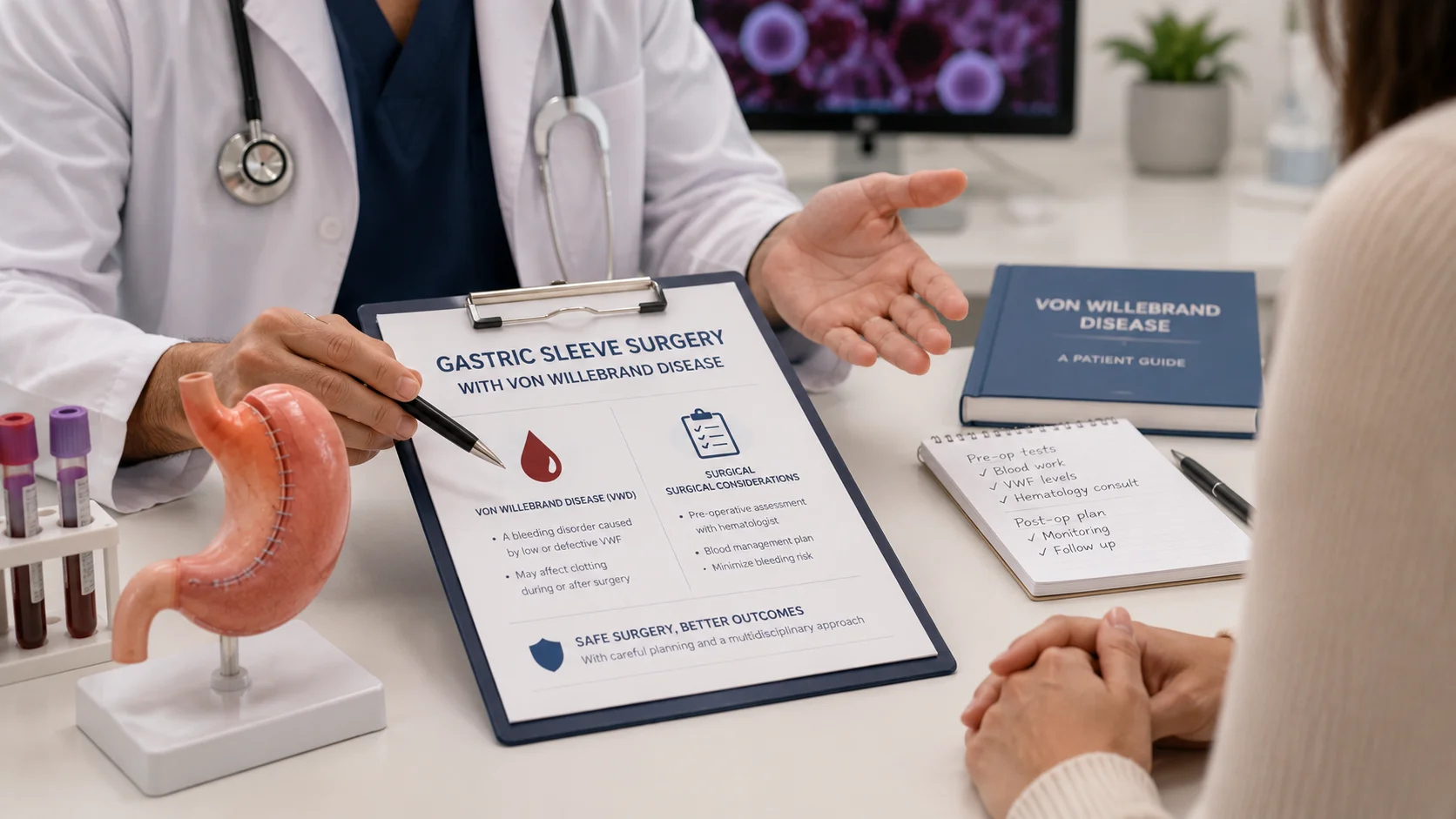
- Bariatric surgery for patients with Von Willebrand disease is feasible but requires a meticulously planned collaboration between bariatric surgeons and hematologists to manage bleeding risks.
- The surgical approach depends on the specific subtype of the disease, with management strategies ranging from simple prophylactic medication for Type 1 to intensive factor replacement for Type 3.
- International guidelines recommend maintaining factor VIII and von Willebrand factor activity levels above 0.50 IU/mL for at least three days postoperatively to prevent hemorrhages while balancing the risk of thrombosis.
Undergoing bariatric surgery is a major milestone that requires comprehensive medical evaluation, especially when managing an underlying bleeding disorder. For individuals considering a gastric sleeve with Von Willebrand disease, the path to weight loss involves a meticulously planned collaboration between bariatric surgeons and hematologists. Understanding the exact balance of clotting factors and surgical safety protocols is the key to achieving your health goals without unnecessary risks.
Table of Contents
Understanding Von Willebrand Disease in a Surgical Context
Von Willebrand disease is the most common inherited bleeding disorder, characterized by a deficiency or qualitative dysfunction of von Willebrand factor. This critical blood protein acts as the biological glue that facilitates platelet adhesion to damaged blood vessels, while also protecting and transporting clotting factor VIII. During any major surgery, particularly a laparoscopic sleeve gastrectomy where a large portion of the stomach is transected and stapled, the body relies heavily on these clotting factors to secure the staple line and prevent internal hemorrhages.
When a patient with this condition undergoes a major abdominal procedure, the standard clotting cascade is disrupted. Without proactive intervention, the surgical team faces a significantly elevated risk of intraoperative bleeding or delayed postoperative bleeding along the newly created gastric sleeve. To manage these risks effectively, medical teams must evaluate the specific subtype of the disease, as each presentation requires a unique hematological approach.
Type 1 VWD: Quantitative Reductions
Type 1 is the most prevalent form of the condition, representing a mild to moderate quantitative deficiency of structurally normal von Willebrand factor. For patients with this subtype, the body produces the correct protein, but simply in insufficient quantities to support rapid clotting under surgical stress. While Type 1 is generally considered the easiest to manage, major gastric surgery still warrants active prophylactic treatment to prevent mucosal bleeding along the extensive staple lines of the stomach.
Type 2 VWD: Qualitative Dysfunction
Type 2 involves qualitative defects where the von Willebrand factor is present in the bloodstream but fails to function as it should. This category is subdivided into several distinct variants, each presenting unique challenges for the surgical and anesthesia teams. Because the underlying protein is structurally flawed, standard treatments that stimulate the release of stored factors may not produce a reliable clotting response, making these patients higher-risk candidates who require precise, targeted factor replacement therapies.
Type 3 VWD: Complete Factor Absence
Type 3 is the rarest and most severe presentation, marked by a near-complete absence of von Willebrand factor and critically low levels of factor VIII. Patients with this subtype face severe, spontaneous bleeding episodes even without the physical trauma of surgery. Undergoing a restrictive bariatric procedure with Type 3 disease requires continuous, high-dose intravenous factor replacement and intensive, round-the-clock monitoring in a highly specialized hospital environment.
Clinical Feasibility of a Gastric Sleeve with Von Willebrand Disease
Determining whether a patient can safely undergo a gastric sleeve with Von Willebrand disease depends entirely on a thorough, individualized risk assessment. Historically, bleeding disorders were often viewed as absolute contraindications for elective bariatric procedures due to the fear of uncontrollable bleeding along the gastric staple line. However, advancements in minimally invasive laparoscopic techniques and hematological therapies have shifted this paradigm, making weight loss surgery a highly viable option for patients who are carefully pre-screened and managed.
The eligibility of a candidate is determined by their personal bleeding phenotype, their response to previous physical challenges, and the stability of their baseline laboratory values. While a patient with mild Type 1 disease may only require a single pre-operative dose of medication to safely undergo surgery, a patient with Type 2 or Type 3 disease will require a comprehensive perioperative plan involving specialized factor infusions. By leveraging a multidisciplinary team of bariatric surgeons, anesthesiologists, and hematologists, clinical centers can design custom protocols that mitigate bleeding risks to levels comparable to patients without coagulation disorders.
Scientific Guidelines and Medical Consensus on Surgical Bleeding Risk
To ensure maximum safety during major surgical interventions, clinical teams rely on established international medical standards. The 2021 guidelines jointly published by the American Society of Hematology, the International Society on Thrombosis and Haemostasis, the National Bleeding Disorders Foundation, and the World Federation of Hemophilia suggest that for major surgeries, clinical teams should aim to maintain both factor VIII and von Willebrand factor activity levels above 0.50 IU/mL for at least three days postoperatively.
These guidelines emphasize that maintaining this target threshold significantly reduces the risk of early and delayed postoperative hemorrhage without unnecessarily increasing the risk of thrombotic complications. Because bariatric patients are naturally at a higher baseline risk for deep vein thrombosis and portal vein thrombosis due to obesity, finding the exact balance between preventing bleeding and preventing blood clots is highly delicate. Achieving this balance requires daily laboratory monitoring of clotting factor levels and carefully timed administrations of factor concentrates or antifibrinolytic agents throughout the early recovery period.
Pre-Operative Preparation and Screening Protocols
A successful surgical outcome begins weeks before the actual procedure through a structured, multi-step preparation phase. This rigorous screening process ensures that the patient’s coagulation profile is fully understood and optimized before they enter the operating room.
- Secure a comprehensive hematological consultation to determine the exact subtype and baseline clotting activity of your condition.
- Establish a personalized perioperative factor replacement protocol detailing the precise timing and dosage of factor concentrates or desmopressin.
- Conduct pre-operative laboratory tests including a complete blood count, prothrombin time, activated partial thromboplastin time, and specific factor assays.
- Review and adjust all current medications, ensuring that any antiplatelet agents, nonsteroidal anti-inflammatory drugs, or supplements that inhibit clotting are suspended well in advance.
- Coordinate care between the bariatric surgical team, the anesthesia provider, and the specialized hematology clinic to synchronize the administration of protective therapies on the day of the procedure.
Intraoperative Strategies and Post-Operative Management
During the operation, the surgical team employs specific techniques designed to minimize blood loss and secure the surgical site. Utilizing a laparoscopic approach is standard, as minimally invasive procedures result in significantly less tissue trauma and lower intraoperative bleeding compared to open surgeries. Additionally, surgeons utilize advanced energy devices, such as ultrasonic shears, and implement staple line reinforcement techniques, such as oversewing the staple line or applying synthetic buttressing materials, to provide physical support to the delicate gastric tissues.
Once the surgery is completed, the post-operative management phase focuses on maintaining therapeutic clotting levels while initiating early mobility to prevent deep vein thrombosis. The clinical team monitors the patient’s vital signs, hemoglobin levels, and surgical drain outputs closely to detect any signs of internal bleeding immediately. If the patient has a history of severe bleeding, the hematologist will manage the transition to prophylactic blood thinners with extreme caution, often waiting until the immediate surgical risk window has passed and ensuring that factor levels remain stable throughout the transition.
Von Willebrand Disease Classification and Bariatric Surgical Management
Understanding the clinical differences between the types of this bleeding disorder helps patients and medical teams prepare for the specific level of care required during a bariatric journey.
| VWD Type | Baseline VWF Function | Relative Surgical Risk | Primary Treatment Strategy |
| Type 1 | Partial quantitative deficiency; VWF levels are lower than normal but function is intact. | Mild to moderate | Desmopressin (DDAVP) or tranexamic acid, depending on the severity of mucosal bleeding. |
| Type 2 | Qualitative defect; VWF is present in normal or slightly low amounts but does not function properly. | Moderate to high | Factor concentrates containing both VWF and FVIII; desmopressin is generally avoided or used with extreme caution. |
| Type 3 | Severe quantitative deficiency; virtually complete absence of VWF and very low levels of FVIII. | High | Intravenous infusion of plasma-derived or recombinant VWF/FVIII factor concentrates. |
Why Choose CK Health Turkey for Your Bariatric Journey?
For international patients seeking specialized, high-quality medical care, CK Health Turkey offers a premier destination for complex bariatric surgeries. Managing high-risk cases, such as patients with underlying hematological conditions, requires a sophisticated medical infrastructure and a highly coordinated team of specialists. Our partner clinics in Turkey are fully equipped with state-of-the-art surgical technology, advanced intensive care units, and experienced hematology departments capable of managing complex coagulation requirements.
By choosing our dedicated team, you gain access to comprehensive pre-operative planning, world-class surgical expertise, and personalized post-operative recovery protocols tailored to your unique medical profile. We handle all aspects of your medical travel, from initial consultations to post-operative follow-ups, ensuring a seamless and stress-free experience. Contact us today to schedule your comprehensive medical evaluation and take the first step toward a safer, healthier future.
Choosing to undergo a gastric sleeve with Von Willebrand disease is a profound step toward improving your long-term health, and with the correct medical protocols, it can be performed with a high level of safety. By prioritizing detailed pre-operative screening, collaborating with experienced hematologists, and utilizing advanced surgical techniques, patients with bleeding disorders can achieve excellent weight loss results while keeping surgical risks at a absolute minimum.