Highlights
- Combining a tummy tuck with hernia repair allows surgeons to address both cosmetic skin concerns and functional muscle defects in a single operative session.
- This integrated approach offers significant benefits, including a single anesthesia event, a consolidated recovery period, and improved cost efficiency compared to separate surgeries.
- Clinical studies confirm that performing these procedures concurrently is safe and effective, resulting in low recurrence rates and superior aesthetic synergy for the patient.
Many individuals struggling with stubborn abdominal skin also suffer from underlying structural issues like ventral or umbilical hernias. Performing hernia repair with tummy tuck allows surgeons to resolve functional tissue defects while reshaping the midsection in a single operative session. This integrated approach restores both core stability and body confidence with a single recovery period.
Table of Contents
What is a Combined Abdominoplasty and Hernia Surgery?
An abdominoplasty, commonly known as a tummy tuck, is a cosmetic procedure designed to remove excess skin and stubborn fat from the middle and lower abdomen while tightening weakened connective tissue. Hernia repair, on the other hand, is a functional medical procedure aimed at fixing a gap or tear in the abdominal muscle wall through which internal tissues or organ segments protrude.
When muscle tissue separates or weakens—often due to pregnancy, significant weight fluctuations, aging, or prior surgical incisions—the abdominal wall loses its structural integrity. This weakness can give rise to both diastasis recti (a widening gap between the left and right abdominal muscles) and true hernias.
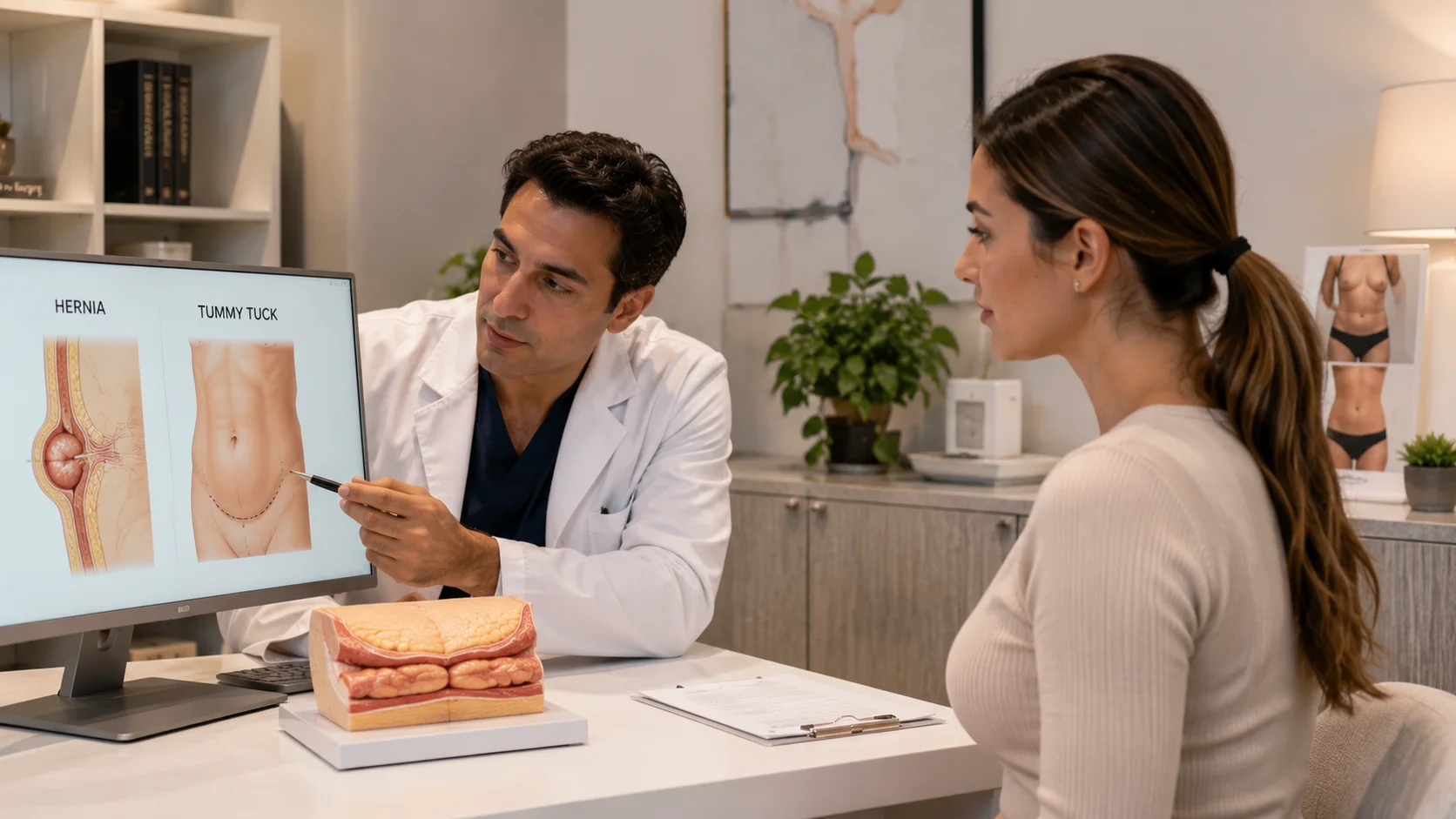
Combining these procedures allows a surgical team to address cosmetic and functional concerns simultaneously. Rather than undergoing two distinct operations spaced months apart, the surgeon accesses the deep abdominal fascia through the tummy tuck incision to repair the hernia, reinforce the muscle wall, and refine the external contour all at once.
Understanding Hernia Repair with Tummy Tuck
Performing hernia repair with tummy tuck offers a direct anatomical advantage: the wide surgical exposure created during abdominoplasty provides the surgeon with clear visibility of the entire abdominal wall. This allows for precise identification of primary hernias, secondary defects, or hidden fascial tears that might otherwise go unnoticed.
Umbilical Hernias
The umbilicus, or belly button, is a naturally vulnerable point on the abdominal wall. Umbilical hernias frequently develop in postpartum women or individuals who have experienced substantial weight shifts. During a tummy tuck, the surgeon circumscribes the belly button, lifts the surrounding skin flap, and repairs the umbilical defect directly beneath it before repositioning the umbilicus into a aesthetically pleasing location on the newly tightened skin.
Ventral and Epigastric Hernias
Ventral hernias occur along the midline of the abdomen above the belly button. These hernias often develop alongside diastasis recti. During a combined operation, the surgeon reduces the herniated tissue back into the abdominal cavity and immediately sutures the surrounding fascia closed. Muscle tightening (plication) is then performed along the entire vertical midline to provide dual-layer support.
Incisional Hernias
Incisional hernias form at the site of previous surgical scars where the abdominal muscle wall failed to heal completely. Repairing an incisional hernia during abdominoplasty involves dissecting scar tissue, placing a supportive surgical mesh if necessary, and re-establishing a strong, flat abdominal foundation before draped skin is trimmed and closed.
Core Benefits of Combining Procedures
Opting for a dual-procedure approach delivers distinct clinical and lifestyle benefits for patients seeking comprehensive abdominal restoration:
- Single Anesthesia Event: Undergoing general anesthesia once rather than twice significantly reduces total surgical risk and limits anesthesia-related side effects such as post-operative nausea and fatigue.
- Consolidated Recovery Period: Taking time off work, managing post-operative activity restrictions, and relying on caregivers happens just once, minimizing disruption to daily life.
- Superior Functional and Aesthetic Synergy: Repairing a hernia without addressing surrounding loose skin often leaves a bulge or redundant tissue. Conversely, tightening skin over an untreated hernia can result in pain or worsening protrusion. Addressing both issues together creates a smooth, flat, and anatomically sound result.
- Financial Efficiency: Combining surgeries reduces total hospital costs, operating room fees, and anesthesia charges compared to scheduling two separate procedures.
Scientific Evidence and Clinical Safety Insights
Concerns regarding whether adding abdominoplasty to hernia surgery increases complication rates have been thoroughly investigated in medical literature. Recent clinical evidence confirms that performing these surgeries concurrently is both safe and highly effective. A comparative clinical study published in PubMed evaluated long-term outcomes in patients receiving abdominoplasty with concurrent hernia repair against those undergoing abdominoplasty alone. The findings revealed a low hernia recurrence rate of approximately 1.4%, with no statistically significant increase in surgical site occurrences, cosmetic complications, or readmission rates. The study demonstrated that the wide exposure provided by the tummy tuck flap facilitates precise fascial repair without compromising tissue perfusion or increasing overall surgical risk.
Candidate Evaluation and Medical Suitability
While combining these procedures offers clear advantages, careful patient selection is essential for ensuring safety and optimal aesthetic results. Ideal candidates include individuals who:
- Experience abdominal bulging, localized discomfort, or a visible hernia alongside loose skin.
- Have achieved a stable body weight, typically with a Body Mass Index (BMI) below 30 to 32.
- Are non-smokers or willing to stop smoking entirely for several weeks before and after surgery to support tissue healing and flap viability.
- Have completed childbearing, as future pregnancies can stretch repaired muscles and compromise hernia repairs.
- Are in overall good health without uncontrolled systemic conditions such as severe cardiovascular disease or unmanaged diabetes.
During pre-operative planning, candidates undergo thorough physical examinations and ultrasound or CT imaging when necessary to assess the exact size and location of the hernia defect.
The Surgical Procedure: Step-by-Step
Understanding how a combined operation unfolds can help ease pre-surgery anxiety and prepare patients for what to expect on the day of their procedure.
- Pre-Operative Marking and Anesthesia AdministrationThe surgical team places precise anatomical markings on the patient’s abdomen while standing, mapping out incision lines, hernia boundaries, and skin excision limits, followed by the administration of general anesthesia.
- Abdominal Incision and Skin Flap ElevationA horizontal incision is made across the lower abdomen, positioned low enough to remain concealed beneath standard swimwear, allowing the surgeon to elevate the skin and subcutaneous fat flap up to the ribcage.
- Hernia Reduction and Defect RepairThe hernia sac is isolated from surrounding tissue, its contents are carefully pushed back into the abdominal cavity, and the muscle gap is tightly closed using permanent sutures or reinforced with a lightweight synthetic mesh.
- Midline Muscle Plication (Diastasis Recti Repair)The surgeon draws the separated rectus abdominis muscles together along the midline, securing them with heavy suturing from the pubic bone to the lower chest wall to narrow the waistline and restore internal core pressure.
- Redundant Tissue Removal and Umbilical ReshapingThe elevated skin flap is stretched downward, excess skin and fat are trimmed away, and a small incision is created to bring the natural belly button through to the surface in an aesthetically appealing position.
- Layered Closure, Drainage Placement, and DressingTemporary surgical drains are placed beneath the skin flap to collect excess fluid, and the primary incision is closed in multiple tissue layers before applying sterile dressings and a surgical compression garment.
Recovery Timeline and Aftercare Guidelines
Recovery from a combined procedure follows a structured timeline focused on protecting the fascial repair while supporting proper skin flap healing.
| Recovery Phase | Typical Expectations | Key Care Instructions |
| Week 1 | Peak swelling, mild to moderate discomfort, stooped posture while walking. | Rest continuously, take prescribed pain medication, monitor drain fluid output daily. |
| Weeks 2 – 3 | Drains are typically removed, upright posture improves, light walking encouraged. | Wear compression garment 24/7, avoid lifting objects heavier than 5 kg, take short walks to boost circulation. |
| Weeks 4 – 6 | Swelling begins to subside, energy levels return, desk work resumed. | Transition to daytime compression garment, avoid strenuous core exercises or heavy lifting. |
| Months 2 – 6 | Scar begins to mature and fade, final abdominal contour becomes visible, core strength returns. | Resume full exercise routines gradually, begin scar management treatments (silicone gel/sheets). |
Standalone Surgery vs. Combined Approach
To evaluate the practical trade-offs between undergoing separate procedures versus a single combined surgery, consider the key factors outlined below.
| Feature / Factor | Standalone Hernia Repair | Standalone Tummy Tuck | Combined Hernia & Tummy Tuck |
| Primary Goal | Functional tissue repair | Cosmetic contouring & skin removal | Functional repair & cosmetic refinement |
| Muscle Tightening | Limited to hernia site | Full midline plication | Full midline plication + hernia closure |
| Excess Skin Removal | No | Yes | Yes |
| Anesthesia Sessions | 1 session | 1 session | 1 session |
| Total Recovery Time | 2 to 4 weeks | 4 to 6 weeks | 4 to 6 weeks |
| Long-Term Cost Value | Higher total cost if done separately later | Higher total cost if hernia develops later | Highest cost efficiency (single hospital stay) |
CK Health Turkey: Specialized Care for International Patients
For international patients considering complex body contouring and functional abdominal procedures, CK Health Turkey stands out as a premier healthcare provider located in Antalya, Turkey. Navigating surgical treatment abroad requires confidence in both medical expertise and clinical safety standards, particularly when combining reconstructive general surgery with advanced cosmetic plastic surgery.
CK Health Turkey utilizes a collaborative surgical model where board-certified plastic surgeons and general surgeons work side by side in accredited hospital facilities. This multidisciplinary approach ensures that hernia defects are repaired with surgical precision while the aesthetic contouring of the abdominal wall is executed to the highest cosmetic standards.
International patients benefit from end-to-end medical travel management designed to eliminate stress. Offerings include:
- Comprehensive pre-operative consultations and diagnostic imaging.
- Surgery performed in internationally accredited hospital environments equipped with modern surgical technologies.
- All-inclusive arrangements encompassing private VIP airport transfers, luxury hotel accommodations, and dedicated personal translation services.
- Detailed post-operative aftercare monitoring and structured follow-up protocols after returning home.
Individuals interested in learning more about combining structural core repairs with body sculpting can contact CK Health Turkey or visit their official website to schedule a comprehensive virtual consultation with a surgical specialist.
Combining hernia repair with tummy tuck offers a safe, clinically proven method for rebuilding structural core strength while achieving a firm, aesthetically balanced abdominal contour. By choosing an experienced surgical team to address both muscular defects and redundant skin in a single session, patients can streamline their recovery and enjoy long-lasting functional and visual results.