Highlights
- Patients must wait 6 to 12 months after radiotherapy to allow tissue inflammation to subside and microcirculation to stabilize before undergoing implant surgery.
- Radiation increases the risk of capsular contracture, but techniques like autologous fat grafting can significantly reduce these complications by improving tissue vascularity.
- Achieving breast symmetry after a lumpectomy often requires a tailored approach, including combinations of implants, breast lifts, or fat transfers to both the treated and healthy breast.
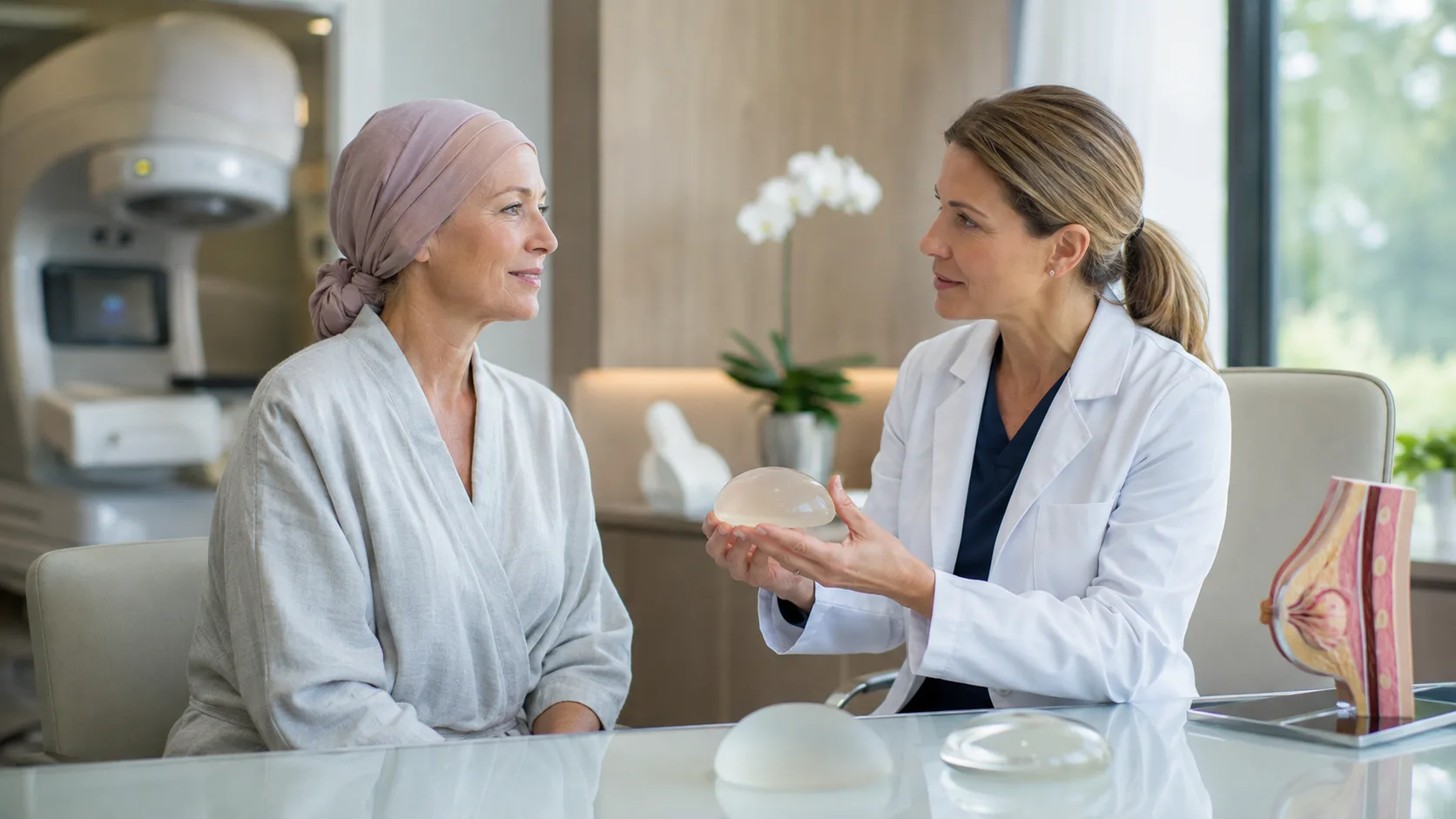
Navigating physical recovery after cancer treatment requires careful medical guidance and individualized surgical planning. Many women consider getting breast implants after lumpectomy and radiotherapy to correct volume asymmetry, contour irregularities, or tissue firmness caused by previous oncological procedures. Restoring your body confidence is entirely achievable when surgeries are performed with appropriate timing and specialized reconstructive techniques.
Table of Contents
Understanding the Impact of Lumpectomy and Radiation on Breast Tissue
Lumpectomy, also known as breast-conserving surgery, aims to remove cancerous tissue while preserving as much of the natural breast as possible. While this procedure successfully eradicates localized tumors, it often leaves a noticeable focal defect, dimpling, or volume discrepancy between the breasts. To minimize the risk of cancer recurrence, lumpectomy is routinely followed by adjuvant therapies, such as radiation and systemic chemotherapy.
Radiotherapy utilizes targeted high-energy rays to destroy residual cancer cells. However, radiation also exerts lasting biological effects on surrounding healthy tissue. It alters microvascular blood supply, damages cellular collagen, and induces radiation-induced fibrosis, which causes the breast tissue and skin to become firmer, tighter, and less elastic over time.
Chemotherapy can further compound tissue changes by temporarily delaying body-wide healing mechanisms and altering subcutaneous fat density. When evaluating cosmetic or reconstructive options after these treatments, surgeons must account for reduced skin compliance and compromised tissue vascularity to prevent surgical complications.
Breast Implants After Lumpectomy and Radiotherapy: Eligibility and Timing
Determining whether you are a suitable candidate for implant placement involves assessing several oncological and anatomical factors. Patients must first receive complete oncological clearance confirming stable remission before undergoing elective cosmetic or reconstructive revisions.
Eligibility depends heavily on the health of the remaining breast skin and muscle envelope. Candidates should possess sufficient tissue coverage, manageable skin elasticity, and an absence of severe, active radiation dermatitis. If the skin over the irradiated area is thin, hyperpigmented, or tightly adhered to the chest wall, placing an implant directly beneath it carries a higher risk of complications such as skin breakdown or implant extrusion.
Timing is equally critical to surgical success. Performing revision surgery too quickly after radiation increases the rate of delayed wound healing and infection. Plastic surgeons generally advise waiting at least 6 to 12 months after completing radiotherapy before placing implants or undergoing breast uplift surgery. This timeframe allows acute radiation inflammation to subside, microcirculation to stabilize, and the final soft tissue contours to settle.
Surgical Approaches: Implants, Uplifts, and Hybrid Techniques
Correcting post-lumpectomy deformities requires a tailored approach, as no single procedure fits every patient’s anatomical needs.
Mastopexy (Breast Lift) Combined with Implants
When radiation or natural aging leads to tissue sagging alongside volume loss, combining a mastopexy with implant insertion can lift the nipple-areolar complex and restore upper-pole fullness. However, performing incisions on irradiated skin requires meticulous surgical technique. Surgeons often use shorter incision patterns to preserve cutaneous blood supply and avoid excessive skin tension over the implant.
Autologous Fat Transfer (Lipofilling)
Fat grafting has become an indispensable tool in post-radiation reconstruction. Surgeons harvest fat cells via gentle liposuction from areas like the abdomen or thighs, process them, and inject them into the irradiated breast bed. This technique fills localized lumpectomy defects, softens stiffened irradiated tissue, and provides a thicker protective cushion over a future implant.
Contralateral Breast Matching
Achieving symmetry often involves operating on the unaffected breast as well. Depending on your aesthetic goals, the contralateral breast may undergo augmentation, reduction, or a breast lift to match the shape, volume, and position of the treated breast.
Scientific Evidence on Radiation and Implant Complications
Clinical literature consistently highlights the unique challenges associated with placing synthetic devices into radiated tissue beds. A study published in MDPI Cancers evaluated long-term outcomes in patients receiving implant-based reconstruction alongside post-mastectomy or post-lumpectomy radiation. The research revealed that radiation significantly increases the incidence of capsular contracture—a condition where scar tissue tightens around the implant, causing pain and firmness—with rates ranging between 20% and 45% in irradiated fields compared to under 10% in non-irradiated tissue. However, the study demonstrated that incorporating autologous fat grafting into the reconstructive plan reduced severe capsular contracture rates down to 18.8%. Researchers attributed this benefit to the regenerative properties of adipose-derived stem cells, which improve tissue vascularity and mitigate radiation-induced scarring.
The Step-by-Step Surgical and Recovery Process
Undergoing breast restoration after cancer treatment follows a structured, multi-phase pathway designed to prioritize patient safety and aesthetic precision.
- Oncological Clearance and Consultation
Obtain formal approval from your breast surgeon or oncologist. During your initial consultation with a plastic surgeon, your chest wall, skin elasticity, and scar tissue will be thoroughly evaluated. - Pre-Surgical Planning and Medical Optimization
Stop smoking at least six weeks prior to surgery, as nicotine severely impairs microvascular blood flow. Your medical team may recommend targeted skin hydration therapies or preliminary fat grafting sessions to prepare the tissue bed. - Surgical Execution
The procedure is performed under general anesthesia. The surgeon places the implant—typically in a subpectoral or dual-plane position to maximize tissue coverage—and performs necessary lifting or fat grafting maneuvers. - Early Post-Operative Management
Surgical drains may be placed temporarily to prevent fluid accumulation. You will wear a supportive, non-wire recovery bra continuously for four to six weeks to minimize swelling and support tissue positioning. - Long-Term Monitoring and Rehabilitation
Follow-up visits monitor wound healing and implant positioning. Specialized gentle massage techniques or prescribed anti-fibrotic medications may be recommended to keep the surrounding capsule soft.
Comparing Reconstructive Options Post-Radiotherapy
Choosing the right reconstructive pathway depends on tissue condition, patient preference, and surgical risk profiles. The table below outlines key differences among standard surgical approaches following radiation therapy.
| Reconstructive Approach | Surgical Complexity | Aesthetic Symmetry Potential | Radiation Risk Profile | Average Recovery Period |
|---|---|---|---|---|
| Implant Placement Only | Moderate | High | Higher risk of capsular contracture and tissue tightness | 4–6 weeks |
| Hybrid (Implant + Fat Transfer) | Moderate to High | Very High | Reduced risk of contracture due to regenerative fat buffer | 6–8 weeks |
| Autologous Flap Reconstruction | High | High (Natural Feel) | Lowest risk of device failure; uses patient’s own tissue | 8–12 weeks |
| Mastopexy (Breast Lift) Alone | Moderate | Moderate | Risk of delayed skin edge healing on irradiated zones | 3–5 weeks |
Restorative Surgery at CK Health Turkey
For international patients seeking experienced reconstructive care, CK Health Turkey offers comprehensive surgical solutions tailored to complex post-oncological revisions. Located in Antalya, the clinic collaborates with highly skilled plastic surgeons who specialize in advanced breast revision, hybrid fat grafting, and symmetry procedures.
CK Health Turkey provides a seamless patient experience by integrating pre-operative virtual consultations, customized treatment plans, accredited hospital facilities, and dedicated multilingual support throughout recovery. Patients receive personalized attention to address the subtle nuances of irradiated tissue repair while achieving natural, balanced results.
If you are considering reconstructive or cosmetic revisions after cancer treatment, reach out to the medical coordination team at CK Health Turkey to schedule a comprehensive consultation and explore your personalized treatment options.
Restoring your breast contour and physical comfort after cancer therapy is a gradual process that demands specialized surgical expertise. By allowing adequate recovery time for your tissue and consulting with experienced plastic surgeons, you can safely evaluate breast implants after lumpectomy and radiotherapy to regain symmetry and confidence in your appearance.