Highlights
- The 'beach chair' or Semi-Fowler's position is the gold standard for recovery, requiring the upper body and knees to be elevated to form a soft 'V' shape.
- Sleeping on the stomach or side is strictly prohibited for several weeks to prevent incision rupture, asymmetrical tension, and compromised blood circulation.
- Maintaining a low-tension posture is scientifically proven to optimize blood flow to healing tissues, reducing the risk of wound separation and excessive scarring.
Navigating recovery from a circumferential body contouring procedure requires patience, proper preparation, and careful physical support. Learning how to sleep after a 360 body lift is one of the most critical challenges patients face during their early recovery weeks. Positioning your body correctly prevents strain on delicate incisions while promoting optimal circulation and reducing postoperative swelling.
Table of Contents
Understanding the Surgical Scope of a 360 Body Lift
A 360 body lift, also known as a circumferential belt lipectomy, is a transformative procedure that addresses redundant skin and tissue around the entire midsection. Unlike a standard abdominoplasty, which focuses primarily on the front wall of the stomach, a 360 body lift extends around the flanks, hips, and lower back. During surgery, excess skin and fat are removed in a continuous belt-like strip, underlying tissues are tightened, and the remaining skin is pulled together and stitched closed.
Because the resulting incision encircles your entire torso, finding a restful sleeping position presents a unique anatomical challenge. When you lie completely flat, you stretch the skin across your abdomen. Conversely, if you bend too far forward without back support, you put excessive pulling force on the lower back and buttock lift incisions. Balancing these opposing vectors of mechanical stress requires a dedicated post-surgical sleeping posture that neutralizes skin tension around the entire circumference of your body.
How to Sleep After a 360 Body Lift: Recommended Positions
The Modified “Beach Chair” Position
The gold standard posture for post-body-lift sleeping is the modified beach chair position, clinically referred to as the Semi-Fowler’s position. In this posture, your upper body is elevated at a 30 to 45-degree angle, while your hips are flexed and your knees are supported in a bent position at roughly 30 degrees.
By elevating both your head and your knees, your body forms a soft “V” shape. This posture brings the lower ribcage closer to the pelvis, relieving tension on the anterior abdominal incision. Simultaneously, bending the knees reduces tightness in the hip flexors and lower back, taking direct pressure off the posterior incision line.
Why Side and Prone Sleeping Are Off-Limits
Sleeping on your stomach (prone) is strictly prohibited for at least six to eight weeks following surgery. Lying on your abdomen places direct body weight on fresh healing incisions, restricts lymph drainage, and can cause stitch rupture or internal bleeding.
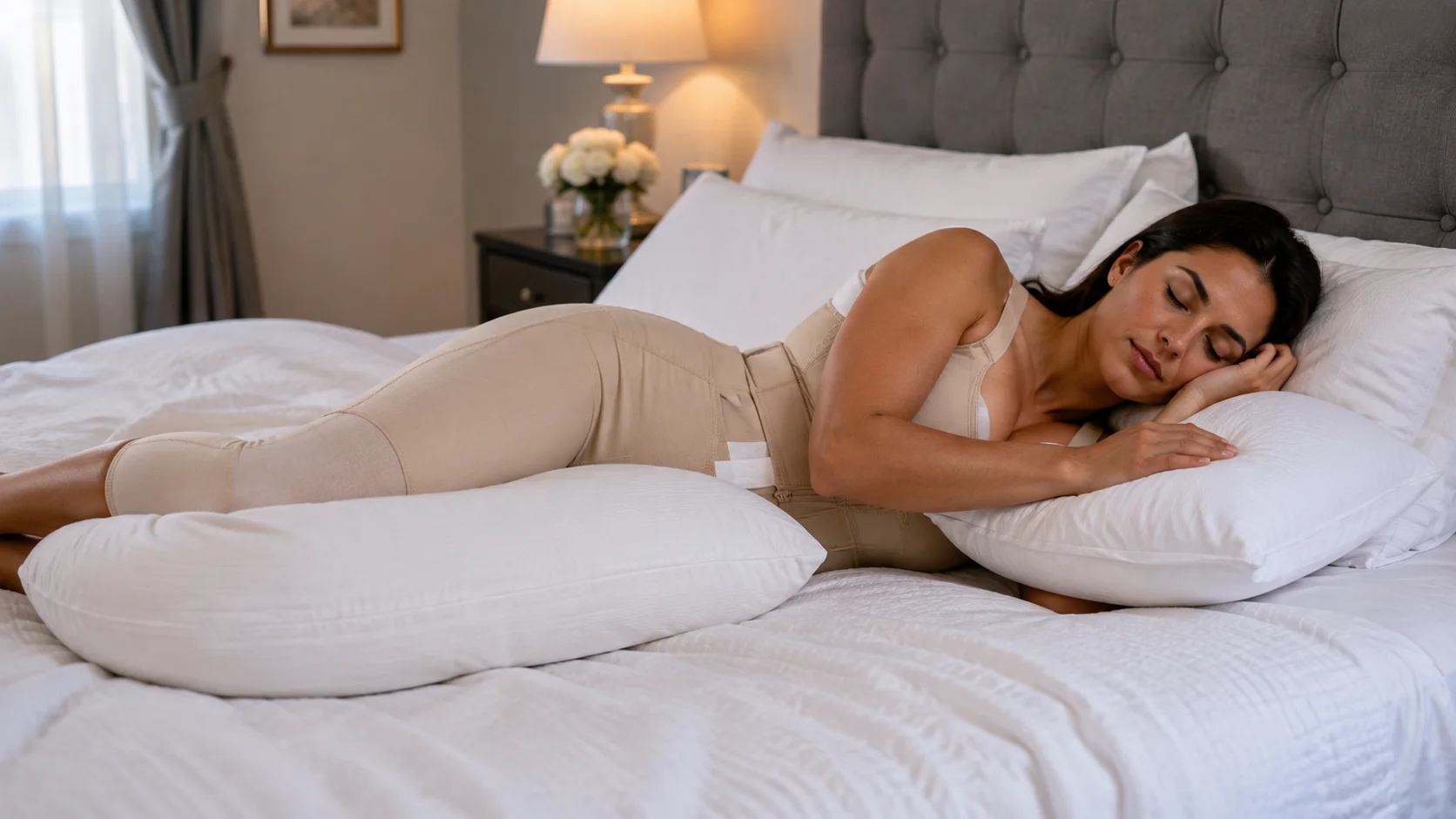
Side sleeping is equally problematic during early recovery. When you lie on your side, gravity pulls the upper leg and hip downward, creating asymmetrical lateral shear forces across the flanks and back incisions. This uneven pulling can widen scar tissue, cause localized fluid accumulation, or cause partial wound breakdown along the lateral hip line.
Pillow Placement Strategies for Maximum Comfort
Achieving a stable beach chair posture in a standard bed requires strategic pillow placement:
- Back support: Use a structured foam wedge pillow or three firm pillows stacked in a staggered formation to keep your upper torso reclined without slumping.
- Knee elevation: Place a dedicated knee elevation pillow or two plush pillows under your knees to maintain a consistent bend in your legs.
- Side bolsters: Tuck rolled towels or long body pillows alongside your hips and thighs to create a “nest” that prevents you from accidentally rolling onto your side while asleep.
Scientific Insights on Incision Tension and Wound Healing
Clinical research in plastic and reconstructive surgery highlights a direct link between mechanical wound tension and postoperative complications. Studies published in medical journals such as Plastic and Reconstructive Surgerydemonstrate that excessive stretching across surgical margins compromises local blood perfusion, depriving healing tissues of vital oxygen and nutrients. When microvascular blood supply is reduced by high physical strain, the risk of wound dehiscence (incision separation), delayed tissue healing, and seroma formation increases significantly. Maintaining a low-tension reclined posture during the primary inflammatory and proliferative healing phases—typically the first 14 to 21 days—ensures optimal microvascular blood flow, minimizes margin breakdown, and leads to thinner, flatter scar development.
Step-by-Step Guide: Getting In and Out of Bed Safely
Transitioning between sitting and lying down requires extreme care to avoid engaging your core abdominal muscles or twisting your spine. Follow this step-by-step process every time you enter or exit your bed:
- Back up slowly toward the edge of the bed until the backs of your knees touch the mattress.
- Lower your hips down onto the edge of the bed in a controlled motion, using your arm strength on nearby stable furniture or a partner’s support.
- Pivot your lower body onto the mattress while keeping your knees bent and your torso leaning slightly backward at all times.
- Ease your upper back down onto your elevated pillow wedge, keeping your head elevated and shoulders relaxed.
- Have a caregiver adjust your knee support pillows directly under your thighs and knees before relaxing fully.
- Reverse this exact motion when rising, using your legs and arms to gently swing your legs off the side while swinging your upper body upright as a single unit.
Comparing Sleep Setup Options During Body Lift Recovery
Selecting the right sleeping arrangement can significantly impact your pain levels and mobility during the first month of healing.
| Sleeping Option | Tension Reduction | Ease of Entry/Exit | Level of Comfort | Recommended Duration |
| Power Recliner Chair | Exceptional | High | Very High | Weeks 1 to 3 |
| Foam Wedge Pillow System | High | Moderate | High | Weeks 1 to 6 |
| Adjustable Hospital Bed | Exceptional | High | Exceptional | Weeks 1 to 4 |
| Standard Bed + Pillows | Moderate | Low | Moderate | Weeks 3 to 6+ |
Essential Accessories and Nighttime Care Protocol
Navigating Medical Compression Garments
You will need to wear a medical-grade compression garment (faja or abdominal binder) 24 hours a day during early recovery, including while sleeping. This garment reduces fluid retention, supports weakened tissues, and protects incisions against external friction. Before sleeping, ensure your garment is smoothed out completely. Any sharp folds or creases in the fabric can press into numb skin, causing localized pressure sores or compromised blood flow.
Managing Drainage Tubes During the Night
Most 360 body lifts require surgical drains to prevent fluid accumulation under the skin flaps. Before settling into bed, pin your drain bulbs securely to the lower band of your compression garment using safety pins. Ensure the tubing has enough slack so it does not pull or catch when you adjust your upper body. Never let drain bulbs hang freely, as their weight can cause painful pulling on the skin insertion sites.
Pain Medication Timing and Sleep Hygiene
Quality sleep is essential for physical recovery, but post-surgical discomfort can interrupt rest. Take your prescribed pain medication approximately 30 to 45 minutes before bedtime so that peak pain relief coincides with your attempt to fall asleep. Keep your bedroom temperature cool, as compression garments trap body heat and night sweats can irritate healing wound margins.
Week-by-Week Sleep Recovery Timeline
Weeks 1 to 2: Strict Reclined Positioning
During the first fortnight, maintain the reclined V-position strictly throughout the night. Do not attempt to flatten your back or straighten your legs fully. Mobility is limited, and sleeping hours will likely be fragmented. Short daytime naps in your recliner or wedge setup are encouraged to help your body heal.
Weeks 3 to 4: Gradual Unfolding
As internal tissue inflammation subsides and skin tightness softens, your surgeon may permit you to lower your upper body elevation slightly. You can reduce the angle of your back wedge from 45 degrees toward 30 degrees, and slightly reduce knee flex. However, sleeping flat or on your side remains restricted.
Weeks 5 to 6+: Transitioning Back to Normal Sleep
By the fifth or sixth week, incision lines are typically well-consolidated with sufficient tensile strength. After receiving explicit clearance from your plastic surgeon, you can slowly transition back to sleeping flat on your back or introduce gentle side sleeping supported by a full-length body pillow between your knees.
Advanced Medical Support at CK Health Turkey
Undergoing a major body contouring transformation requires expert surgical skill combined with comprehensive post-operative care. For international patients seeking world-class cosmetic surgery, CK Health Turkey stands out as a premier healthcare provider located in the Mediterranean destination of Antalya, Turkey.
CK Health Turkey specializes in complex post-bariatric transformations, offering customized 360 body lift procedures performed by board-certified plastic surgeons. International patients receive end-to-end support, including stays in modern medical facilities, dedicated post-surgical nursing oversight, and detailed guidance on post-operative recovery protocols. From tailor-made compression garments to personalized recovery accommodations designed for optimal post-surgical rest, their team ensures every patient heals safely and comfortably.
If you are considering a 360 body lift or wish to explore comprehensive body contouring packages, visit the official CK Health Turkey website today to schedule a personal consultation with a medical consultant.
Rest is the foundation of surgical recovery, and taking proactive steps to protect your continuous 360-degree incision will pay off in smoother healing and refined aesthetic results. By maintaining the reclined V-position, using supportive wedge pillows, and moving with deliberate care, you eliminate unnecessary mechanical strain on your body. Understanding how to sleep after a 360 body lift empowers you to navigate the most demanding weeks of recovery with confidence, safety, and comfort.