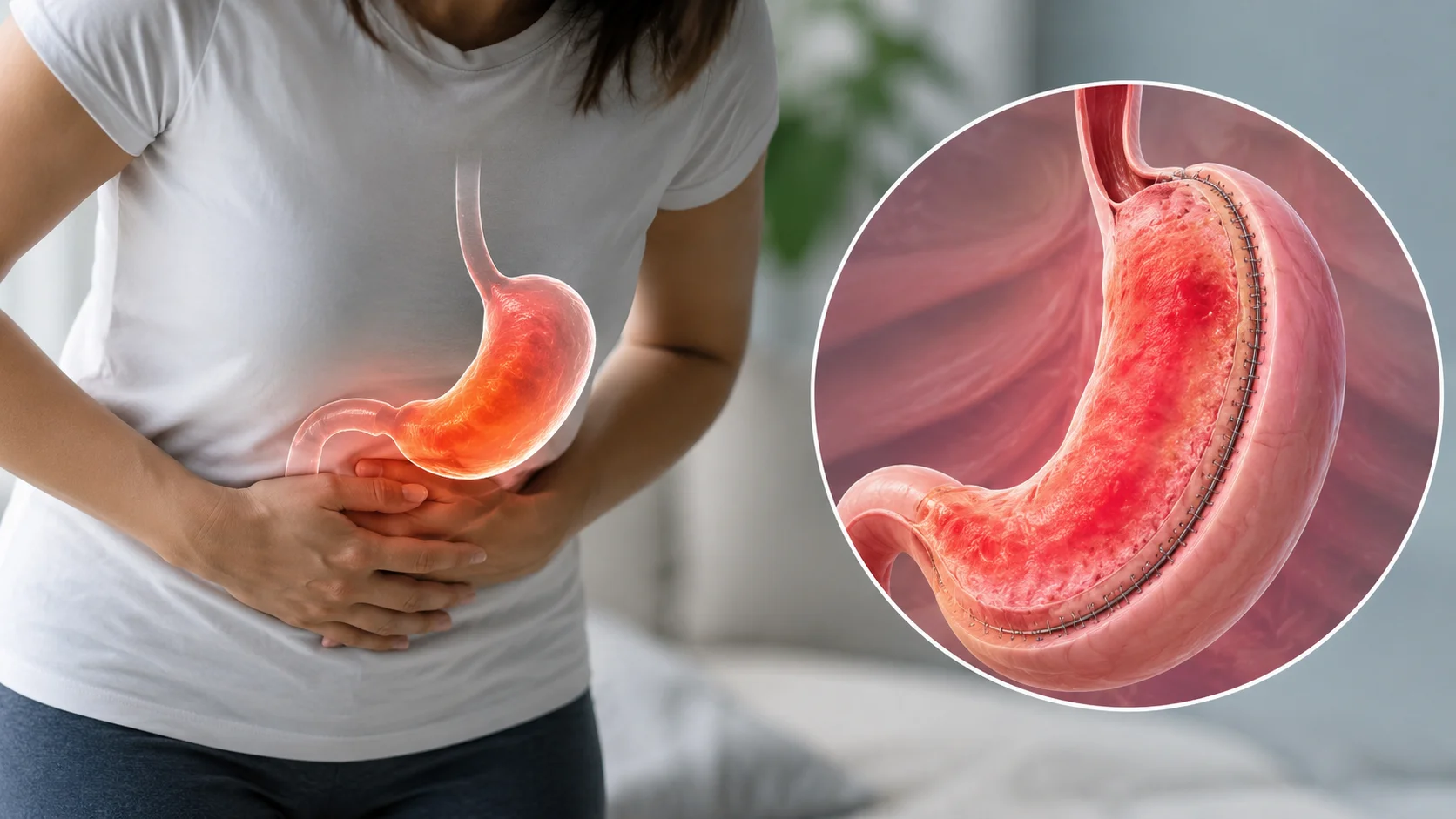
Having stomach inflammation or an ulcer prior to weight loss surgery is a very common concern among bariatric candidates. In most cases, undergoing a gastric sleeve with gastritis is completely safe once a thorough medical evaluation and targeted treatments are completed. Understanding how your medical team manages stomach inflammation ensures a smooth and secure path to your bariatric transformation.
Table of Contents
Understanding Gastritis and Stomach Inflammation Before Surgery
Gastritis is a general term referring to any condition that involves inflammation, irritation, or erosion of the stomach lining (mucosa). It can occur suddenly as an acute flare-up or develop gradually as a chronic condition. Because the stomach lining plays a protective role against digestive acids, any disruption to this barrier can lead to discomfort, indigestion, or pain.
Types of Gastritis
Gastritis typically falls into two primary categories depending on the underlying cause and duration:
- Erythematous or Superficial Gastritis: Mild surface redness and mild mucosal irritation without tissue breakdown.
- Erosive Gastritis: More severe irritation where the stomach lining develops shallow erosions or small sores.
- Helicobacter pylori (H. pylori) Gastritis: Inflammation triggered by a common bacterial infection that colonizes the stomach mucus layer.
- Atrophic Gastritis: Chronic inflammation leading to the thinning of the stomach lining over time.
Why Is Gastritis Common in Bariatric Candidates?
Individuals struggling with severe obesity often have higher rates of gastrointestinal conditions. Factors such as altered eating patterns, higher intra-abdominal pressure, elevated stress levels, and frequent use of non-steroidal anti-inflammatory drugs (NSAIDs) for joint pain contribute to stomach irritation. As a result, routine diagnostic checks before surgery frequently reveal mild degrees of underlying inflammation even in patients who report no symptoms at all.
Can You Get a Gastric Sleeve with Gastritis?
The short answer is yes, you can get a sleeve gastrectomy if you have mild or moderate chronic gastritis. Having stomach inflammation does not automatically disqualify you from undergoing bariatric surgery. In fact, because the sleeve gastrectomy procedure removes approximately 80% of the stomach—specifically the outer curvature where much of the acid-producing tissue resides—the surgical procedure itself often reduces total acid capacity in the long run.
However, the key distinction lies between mild chronic inflammation and active, severe mucosal damage:
- Mild to Moderate Gastritis: Surgeons can proceed as planned. You will usually be prescribed protective medications such as Proton Pump Inhibitors (PPIs) before and after surgery.
- Active Helicobacter pylori Infection: If testing reveals an active bacterial infection, a short course of antibiotic therapy is administered to clear the bacteria prior to making surgical incisions.
- Active Gastric Ulcer or Severe Erosive Gastritis: If an endoscopy reveals a deep, open ulcer or severe bleeding, surgery is temporarily postponed for 2 to 8 weeks. During this window, intensive medication is prescribed to fully heal the stomach tissue before the operation.
Scientific Research on Preoperative Gastritis and Surgical Outcomes
Medical researchers have extensively evaluated how pre-existing stomach conditions impact bariatric outcomes. A comprehensive systematic review and meta-analysis published in bariatric medical literature evaluating thousands of sleeve gastrectomy patients demonstrated that pre-existing chronic gastritis or Helicobacter pylori colonization does not significantly increase the rate of major early surgical complications—such as staple-line leaks, postoperative bleeding, or hospital readmissions—when appropriate perioperative medical protocols are followed. This scientific insight confirms that with proper diagnostic screening and routine medication management, underlying stomach inflammation can be managed safely without jeopardizing patient health.
Diagnosis and Pre-Operative Preparation Steps
To ensure your stomach lining is healthy enough for surgery, your surgical team follows a structured pre-operative evaluation process.
- Preoperative Upper Endoscopy (EGD)An endoscopy allows the surgeon or gastroenterologist to visually inspect the esophagus, stomach, and duodenum. This test identifies surface redness, erosions, hiatal hernias, or ulcers that might require pre-treatment.
- Helicobacter pylori TestingDuring the endoscopy or via a simple breath or stool test, tissue samples are checked for H. pylori bacteria. Identifying this organism early allows for prompt medical intervention.
- Targeted Pre-TreatmentIf inflammation or bacteria are detected, you will complete a tailored medication course. This may include a 10- to 14-day triple or quadruple antibiotic therapy for H. pylori, or daily PPI therapy to reduce stomach acid.
- Surgical Clearance and Final AssessmentOnce the infection is cleared or mucosal healing is confirmed, your medical team gives formal clearance for the sleeve gastrectomy.
Comparing Stomach Conditions and Surgical Protocols
The decision to proceed with surgery depends on the specific condition detected during your pre-operative workup. The comparison table below outlines how different stomach conditions are managed.
| Stomach Condition | Common Symptoms | Required Pre-Op Treatment | Surgery Delayed? | Surgical Plan Impact |
| Mild / Superficial Gastritis | Indigestion, mild bloating, or asymptomatic | Standard PPI medication | No delay | Proceed with planned sleeve gastrectomy |
| H. pylori Gastritis | Upper abdominal fullness, nausea | 10 to 14-day antibiotic eradication protocol | Minimal to no delay | Proceed after completing antibiotic course |
| Severe Erosive Gastritis | Burning stomach pain, nausea, acid reflux | High-dose PPIs and mucosal protective agents | Short delay (2 to 4 weeks) | Proceed once mucosal lining stabilizes |
| Active Gastric Ulcer | Severe upper abdominal pain, localized tenderness | Intensive PPI therapy and follow-up check | Delayed (4 to 8 weeks) | Postponed until complete ulcer healing is confirmed |
Post-Operative Care for Patients with Gastritis
Managing stomach health after a sleeve gastrectomy is crucial for comfortable healing and long-term success. Because the resected stomach is smaller and narrower, taking proper care of the newly created gastric sleeve prevents irritation.
Post-Surgery Medication Regimen
After surgery, your medical team will prescribe daily acid-suppressing medication (such as omeprazole or pantoprazole) for 3 to 6 months. This medication lowers stomach acidity, protects the staple line, and prevents acid-related irritation while the tissue fully heals.
Protecting Your Stomach Lining
To safeguard your new stomach sleeve, adhere to these guidelines:
- Avoid NSAIDs: Medications like ibuprofen, naproxen, and aspirin can severely irritate the stomach lining and cause new ulcers. Use recommended alternatives such as acetaminophen for pain management.
- Follow the Bariatric Diet Stages: Progress carefully from clear liquids to purées and soft foods as advised by your bariatric dietitian.
- Limit Irritants: Avoid caffeine, highly acidic foods, spicy dishes, and alcohol during the initial recovery months.
- Avoid Tobacco: Smoking drastically reduces blood flow to the stomach lining, delaying healing and increasing the risk of ulcers and staple-line complications.
CK Health Turkey: Dedicated Bariatric Excellence
Choosing the right clinic and surgical team is the most important step in ensuring a safe bariatric journey, especially if you have underlying digestive concerns like gastritis. Located in Antalya, CK Health Turkey stands out as a premier destination for international patients seeking high-quality, comprehensive weight loss surgery.
At CK Health Turkey, patient safety is the top priority. Every international patient undergoes detailed pre-operative assessments, including thorough diagnostic checks and endoscopic evaluations, to ensure that stomach inflammation or H. pylori infections are diagnosed and treated before surgery takes place. With a multidisciplinary team composed of experienced bariatric surgeons, gastroenterologists, and dedicated dietitians, CK Health Turkey provides personalized treatment plans tailored to your specific medical history.
From initial online consultations and personalized travel arrangements to state-of-the-art hospital facilities and structured post-operative follow-up, international patients receive continuous support every step of the way. If you are considering weight loss surgery and want expert guidance regarding your digestive health, visit the official CK Health Turkey website or reach out to their medical coordinators today to request a free consultation.
Navigating bariatric surgery with pre-existing digestive conditions requires expert medical guidance and a tailored treatment plan. Choosing an experienced surgical team guarantees that underlying issues like Helicobacter pylori or inflammation are thoroughly managed prior to operating. With proper pre-operative assessment and post-operative care, undergoing a gastric sleeve with gastritis remains a safe, highly effective pathway toward achieving sustainable weight loss and improving your overall health.