Highlights
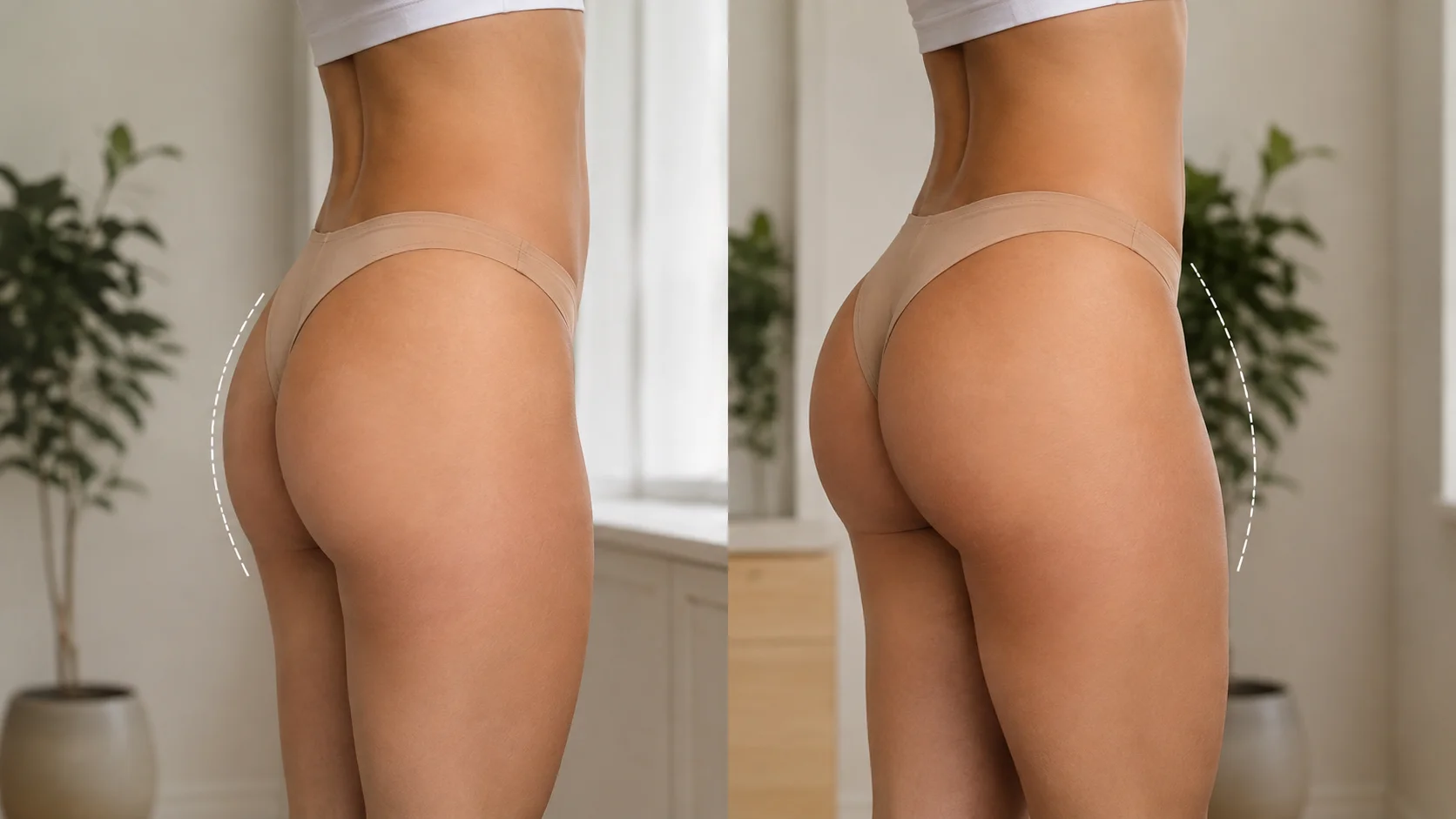
- A lower body lift, or 360-degree belt lipectomy, physically elevates sagging gluteal tissue by removing a continuous band of excess skin and fat around the waistline.
- While the procedure effectively tightens and reshapes the posterior pelvic region, it is primarily a skin-reduction surgery that does not add new volume to the buttocks.
- To prevent a flat appearance, surgeons often use gluteal auto-augmentation, which repurposes the patient's own discarded tissue to create natural volume and upper pole fullness.
Massive weight loss or natural aging often leaves severe skin laxity around the midsection and gluteal region. Many patients considering post-bariatric body contouring frequently ask, does a lower body lift lift your butt? The short answer is yes, a belt lipectomy physically elevates and tightens gluteal tissue to restore a firmer, higher position.
Table of Contents
Understanding the Biomechanics: How Does a Lower Body Lift Lift Your Butt?
A lower body lift, also known as a 360-degree belt lipectomy, is designed to treat the entire circumference of the lower torso. The procedure involves removing a continuous band of redundant skin and subcutaneous fat from the lower abdomen, flanks, outer thighs, and lower back. Because the incision extends completely around the body, the surgical tension created on the posterior trunk directly acts upon the buttocks.
When the surgeon excises the excess skin tissue above the buttocks and secures the remaining deep tissues to the underlying fascia, a powerful upward vector is generated. This vertical pulling force suspends the gluteal region, lifting sagging skin, smoothing out severe dimpling, and raising the lower gluteal crease. For patients suffering from skin sagging after weight loss, this circumferential tension effectively reverses the downward descent of the buttock tissues.
In addition to vertical elevation, a lower body lift tightens the lateral hip and flank areas. This combined multidirectional tension reshapes the entire posterior pelvic belt, creating a cleaner transition between the lower back, hips, and upper thighs.
Gluteal Positioning and the Vector Effect
The anatomical repositioning achieved during a lower body lift depends heavily on surgical planning and vector alignment. Sagging gluteal tissue typically shifts downward and outward over time, flattening the upper pole and creating excess tissue folds at the base of the buttock.
During the surgical design phase, markings are drawn while the patient is standing to accurately calculate skin laxity. The superior margin of the posterior excision is placed near the waistline or lower back, while the inferior margin sits atop the upper buttocks. Pulling these two margins together delivers several key contour improvements:
- Elevation of the gluteal fold, shortening the apparent length of the buttocks and restoring a youthful frame.
- Smoothing of the banana roll, which is the persistent roll of fat and skin located directly underneath the gluteal crease.
- Tightening of the lateral trochanteric skin, which eliminates sagging on the outer thighs and hip dips caused by loose tissue.
- Redefinition of the lumbar arch, creating a clear visual boundary between the lower back and the gluteal apex.
Lower Body Lift vs. Alternative Gluteal Procedures
Understanding how a lower body lift compares to other body contouring procedures helps set realistic surgical expectations. While a lower body lift focuses on skin excision and elevation, other techniques focus on volume addition or localized tightening.
| Procedure Characteristic | Lower Body Lift (Belt Lipectomy) | Brazilian Butt Lift (BBL) | Isolated Gluteal Auto-Augmentation | Traditional Thigh Lift |
| Primary Goal | Circumferential excess skin removal | Gluteal volume creation and shaping | Simultaneous elevation and volume preservation | Medial or lateral thigh skin reduction |
| Gluteal Skin Elevation | Significant 360-degree vertical pull | Minimal to none | Significant upward elevation | Minimal direct impact on buttocks |
| Volume Addition | None (unless combined with auto-augmentation) | High (via purified fat transfer) | Moderate (via local tissue redistribution) | None |
| Incision Placement | Continuous around the waistline | Concealed micro-cannula insertion points | Extended lower back incision | Inguinal crease or vertical inner thigh |
| Ideal Candidate | Massive weight loss patients with severe laxity | Patients with good skin elasticity wanting projection | Patients needing skin removal plus subtle projection | Patients with isolated inner/outer thigh sagging |
What a Lower Body Lift Can and Cannot Do
To achieve optimal satisfaction, patients must distinguish between structural tissue elevation and volumetric enhancement. A lower body lift is fundamentally a skin-reduction procedure rather than a volume-building procedure.
What it CAN achieve
A lower body lift reliably removes the drooping apron of skin on the lower back and buttocks. It restores the natural anatomic position of the gluteal mass by hoisting it upward onto the pelvic framework. The procedure also eliminates deep skin folds, improves contour symmetry, and creates a smoother surface appearance. Furthermore, elevating the sagging tissue exposes the natural muscular structure beneath, giving the buttocks a firmer and more toned aesthetic even without adding volume.
What it CANNOT achieve
A standard lower body lift does not add new volume to the buttocks. In fact, removing a thick layer of lower back skin and fat can sometimes make the buttocks appear flatter if the underlying muscle mass is minimal. If a patient seeks a rounder, bubble-like projection in addition to skin tightening, a standard excision alone will not suffice. To solve this, surgeons often combine the procedure with gluteal auto-augmentation or fat grafting.
The Role of Gluteal Auto-Augmentation
For patients who require skin excision but also wish to avoid a flat posterior profile, plastic surgeons frequently incorporate gluteal auto-augmentation into the lower body lift.
Instead of discarding all the skin and fat tissue removed from the lower back, the surgeon de-epithelializes a section of the subcutaneous tissue. This creates a vascularized local dermal-fat flap. Rather than cutting this tissue away, the surgeon shapes it into an internal cushion and rotates or slides it deep beneath the gluteal skin into the upper pole of the buttock.
This advanced technique offers several distinct advantages:
- Natural Volumization: Uses the patient’s own living tissue without the need for synthetic implants or transferred fat.
- Long-Term Projection: Dermal-fat flaps retain their blood supply, leading to superior long-term volume retention compared to standard fat grafting in post-weight-loss patients.
- Enhanced Upper Pole Fullness: Fills the upper quadrant of the buttocks, counteracting the flattening effect of skin excision.
- Optimal Resource Use: Turns discarded tissue into a valuable cosmetic asset during a single surgical session.
Scientific Insights and Clinical Outcomes
Clinical studies in plastic and reconstructive surgery consistently highlight the psychological and physical benefits of circumferential body lifts. Research published in major medical journals demonstrates that gluteal reshaping during belt lipectomy achieves high patient satisfaction rates, particularly among post-bariatric individuals.
Studies analyzing long-term outcomes after 360-degree lower body lifts confirm that elevating the gluteal complex significantly reduces friction-induced skin breakdown, improves mobility, and enhances clothing fit. Researchers emphasize that preserving local vascular supply during flap elevation is crucial for tissue viability. Clinical consensus indicates that combining circumferential skin resection with auto-augmentation produces a stable, aesthetically pleasing gluteal contour that withstands the natural aging process better than skin resection alone.
The Step-by-Step Surgical Journey
Undergoing a lower body lift is a significant physical transformation that requires meticulous preparation, skilled surgical execution, and structured post-operative care.
- Pre-Operative Assessment and Planning
The surgical team evaluates your medical history, nutritional status, weight stability, and tissue laxity. Markings are drawn on your body while standing to map out the precise lines of excision and ensure scar lines remain concealed under standard swimwear. - Anesthesia and Incision Execution
The procedure is performed under general anesthesia. The surgeon executes a circumferential incision around the waist, meticulously dissecting excess skin and fat down to the muscle fascia while protecting vital nerves and blood vessels. - Tissue Redistribution and Flap Creation
If auto-augmentation is planned, the surgeon prepares the lower back tissue flaps and anchors them into the upper gluteal pockets to build projection. - Suspension and Closure
Deep tissue layers are secured to the strong pelvic fascia using heavy surgical sutures to prevent scar descent. The skin edges are then aligned and closed in multiple layers, and surgical drains are placed to prevent fluid accumulation. - Post-Operative Recovery and Monitoring
You are fitted with a specialized compression garment to support the newly elevated tissues and minimize swelling. Walking is encouraged early in the recovery phase to promote circulation, though strenuous activities and direct pressure on the incisions are restricted for several weeks.
Who Is an Ideal Candidate for a Lower Body Lift?
While a lower body lift offers dramatic aesthetic improvements, it is a complex surgical procedure best suited for specific patient profiles.
- Individuals who have achieved a stable weight for at least three to six months following bariatric surgery or diet and exercise.
- Patients with significant loose, hanging skin around the abdomen, flanks, hips, and posterior waistline.
- Non-smokers who are in good overall health and free from unmanaged medical conditions that hinder wound healing.
- Individuals with realistic expectations regarding surgical scarring, understanding that long scars are a necessary trade-off for dramatic skin tightening.
- Patients committed to maintaining a healthy lifestyle, stable weight, and proper nutritional habits post-surgery.
Why Choose CK Health Turkey for Your Lower Body Lift
Undergoing major body contouring abroad requires a trusted medical partner capable of delivering world-class surgical expertise, advanced hospital infrastructure, and seamless international patient support.
Located in Antalya, CK Health Turkey stands out as a premier destination for patients seeking transformative plastic surgery. The clinic collaborates with highly experienced, board-certified plastic surgeons who specialize in post-bariatric reconstruction, belt lipectomy, and advanced gluteal auto-augmentation techniques. Each treatment plan is custom-designed to match your anatomical needs and aesthetic goals.
CK Health Turkey offers comprehensive, stress-free medical packages tailored for international visitors. From your initial digital consultation and personalized surgical planning to VIP airport transfers, luxury accommodation, and continuous multi-lingual post-operative care, every step of your journey is managed with meticulous attention to detail. Operating in accredited, state-of-the-art hospital facilities, their surgical teams prioritize safety, surgical precision, and natural-looking aesthetic results.
If you are ready to address excess skin, elevate your posterior profile, and reclaim your body confidence, reach out to CK Health Turkey today to schedule your comprehensive online consultation and explore your personalized treatment options.
Long-Term Maintenance and Results Preservation
Maintaining the elevated position of your buttocks after a lower body lift requires ongoing attention to wellness and physical health. While the surgical removal of redundant skin is permanent, remaining tissue can still stretch if exposed to significant weight fluctuations.
To protect your surgical investment, maintain a stable body weight through a balanced diet rich in protein and micronutrients that support collagen production. Once cleared by your surgeon, incorporating targeted resistance training—specifically exercises that strengthen the gluteus maximus, medius, and minimus muscles—will build structural support beneath the elevated skin. This muscular foundation enhances projection and helps sustain a firm, lifted appearance for years to come.
Understanding how a belt lipectomy reshapes your silhouette clarifies the core question: does a lower body lift lift your butt by mechanically elevating sagging tissue, smoothing stubborn skin folds, and restoring a defined gluteal contour across the entire posterior body.