Highlights
- A BMI under 18 does not automatically disqualify a patient from breast augmentation, but it requires a thorough medical assessment of nutritional health and tissue thickness.
- Underweight patients face specific risks such as increased implant visibility, palpable rippling, and potential wound healing issues if nutritional deficiencies are present.
- Surgical success depends on individualizing the procedure by selecting appropriate implant dimensions and placement techniques that suit the patient's narrow frame and limited soft tissue.
Considering breast implants with BMI under 18 raises questions about surgical safety, implant visibility and whether a very slim frame can support the result you want. A low body mass index does not automatically rule out breast augmentation, but it deserves a careful health and anatomy assessment before elective surgery.
Table of Contents
The most important decisions involve your nutritional health, the thickness of your existing breast tissue, implant dimensions and an honest discussion of potential complications.
Can you get breast implants with BMI under 18?
Sometimes, but eligibility is an individual medical decision. A BMI below 18 is within the World Health Organization’s adult underweight category, defined as below 18.5 kg/m². BMI is a screening measure based on height and weight, not a direct test of nutritional health or a measure of the amount of breast tissue available to cover an implant.
The World Health Organization (WHO) describes BMI below 18.5 as underweight and notes that BMI alone does not capture every difference between individuals. Two people with the same BMI may differ in diet, muscle mass, health history and breast anatomy.
There is no universal international rule stating that every patient below BMI 18 must be refused breast augmentation. Equally, it would be unsafe to assume an elective operation is appropriate simply because someone has always been naturally slim. The surgeon and anaesthetic team need to investigate the reasons for low weight, assess readiness for surgery and consider whether delaying treatment would reduce avoidable risk.
Why does being underweight matter for breast augmentation?
The issue is not the BMI number alone. A very low weight may coincide with limited soft tissue around the chest, nutritional deficiencies, recent weight loss or another medical condition. These factors affect different parts of surgical planning.
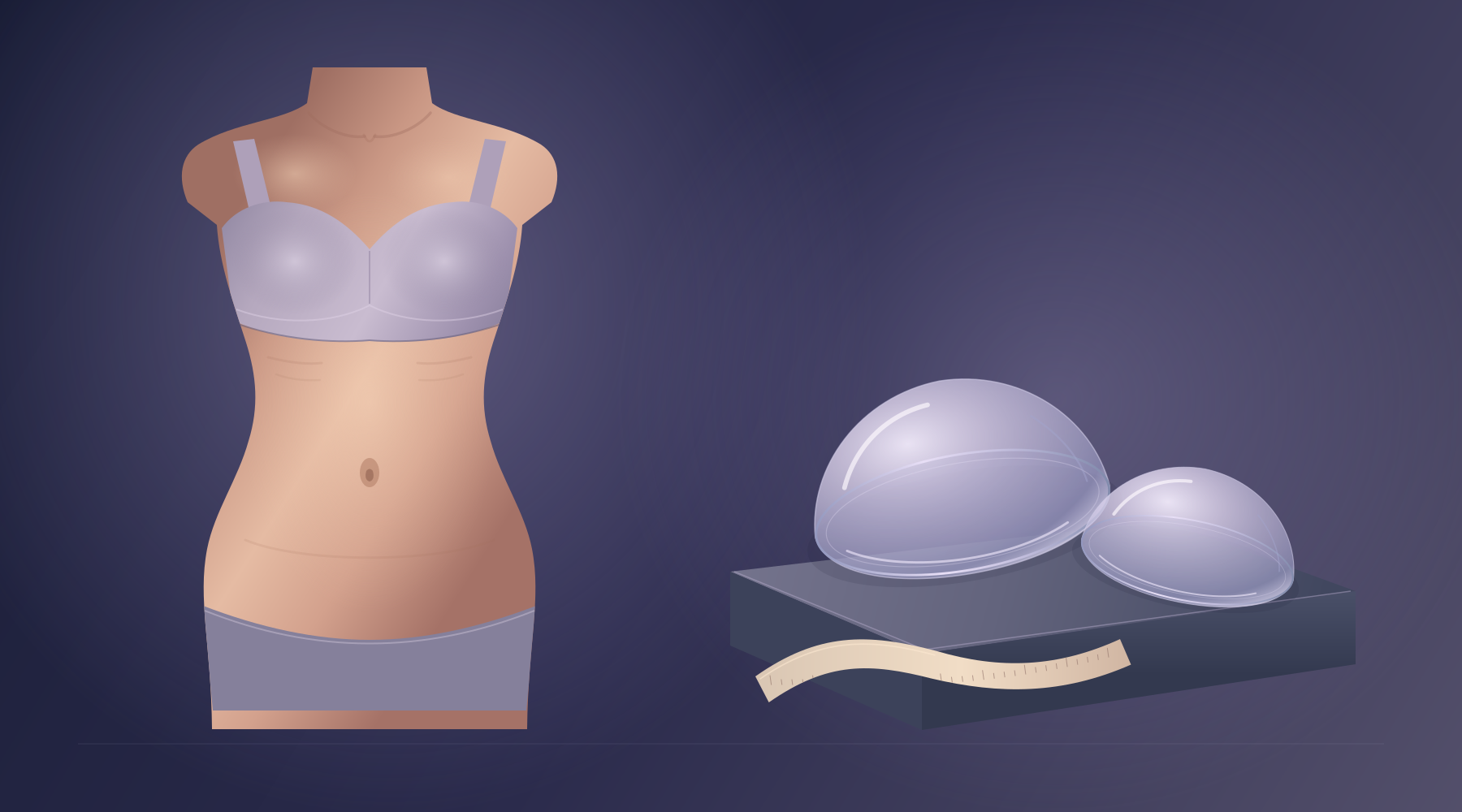
Breast implants are placed beneath existing tissue, sometimes with additional coverage from the chest muscle depending on the technique. When natural breast tissue is especially thin, the implant may be more visible or palpable. Inadequate nutrition can also impair wound healing, although an underweight classification by itself does not prove that someone is malnourished.
The UK National Institute for Health and Care Excellence (NICE) recommends considering nutrition support in adults with a BMI under 18.5 and assessing unintentional weight loss and reduced dietary intake. This is one reason elective-surgery planning should include more than a BMI calculation.
For patients who recently lost weight unintentionally or have difficulty eating, health assessment and nutritional optimisation may be more important than choosing an implant size immediately.
What risks are more relevant for very slim patients?
Implant rippling and visible edges
Rippling means folds or wrinkles of an implant can be felt or sometimes seen through the overlying tissue. Thin tissue coverage may make this more noticeable, particularly at the outer and lower breast where muscle coverage may be limited.
The US Food and Drug Administration (FDA) lists wrinkling, visibility, palpability, pain and implant displacement among recognised breast implant complications. The risk depends on anatomy, implant type and placement rather than BMI alone.
Wound healing and scar quality
Good healing requires adequate nutrition and general health. A patient with low weight caused by restricted intake, illness or recent rapid weight loss may need assessment before surgery. Smoking, diabetes, certain medications and other health factors also influence healing, irrespective of body size.
Not everyone who has a BMI below 18 has poor wound healing. The relevant concern is whether the person has adequate nutrition and physiological reserve for an elective operation.
Implant size, position and long-term tissue support
A narrow chest, limited breast width or thin skin envelope can restrict which implant dimensions are likely to fit comfortably. An implant that is too large for available tissue may be more conspicuous and increase strain on the skin over time.
Breast augmentation also carries general risks, including infection, bleeding, altered nipple sensation, capsular contracture, asymmetry, implant rupture and possible revision surgery. The American Society of Plastic Surgeons (ASPS) explains these risks as part of informed consent for all patients.
What does research say about underweight patients and breast implants?
Research specifically focused on cosmetic breast augmentation in patients below BMI 18 is limited. It is important to distinguish studies of cosmetic implants from those of breast reconstruction after cancer surgery, because the patients and operations differ.
One 2024 retrospective study of 1,015 transaxillary subfascial breast augmentations reported BMI below 18.5 as a significant risk factor for incision-related complications in that particular technique. It also identified other factors influencing implant or pocket complications. This supports careful evaluation of very slim patients but does not establish a universal complication rate or an absolute BMI cutoff for all augmentation techniques.
A 2023 implant-based breast reconstruction study found higher rates of capsular contracture and aesthetic complications in its underweight group compared with normal-weight patients. However, those procedures followed mastectomy and should not be treated as direct predictions for otherwise healthy patients seeking cosmetic breast enlargement.
Taken together, these findings are reasons to individualise surgical planning. They do not justify saying that low BMI is always safe or always disqualifying, and the evidence cannot promise how one person’s breasts will look or heal.
How do surgeons evaluate someone with a BMI below 18?
A careful preoperative assessment should consider more than an online BMI calculator. Your clinician may review weight history, eating habits, recent illness, medication, menstruation or other signs of nutritional or hormonal problems, and previous surgery.
Depending on symptoms and medical history, blood tests or further nutritional investigation may be indicated. A surgeon may also suggest seeing a GP or dietitian before elective augmentation if the cause of low weight is uncertain.
During the breast examination, the surgeon assesses breast base width, skin elasticity, the amount of soft tissue covering the chest, symmetry and the location of the existing breast fold. These measurements matter directly when selecting implant dimensions and discussing realistic cleavage and projection.
Someone with a stable low BMI, adequate nutritional status and suitable anatomy may have a different surgical plan from someone with rapid recent weight loss and limited dietary intake. Elective treatment should be delayed if health concerns require investigation or optimisation.
Can a small implant look natural with very little breast tissue?
Many slim patients prefer a modest increase that fits their chest proportions. A relatively small, carefully selected implant may create a balanced result, but there is no implant size guaranteed to look natural on every narrow frame.
The surgeon considers the width of the natural breast, implant projection and the available skin envelope. Breast implants are measured in millilitres or cubic centimetres, but the same volume can look very different on two people. A smaller implant is not automatically free from visible edges or rippling if tissue coverage is extremely thin.
Try to avoid selecting an implant solely from a celebrity photograph or a cup-size goal. Our guide to choosing breast implant size explains why measurements and expectations matter more than a cup label.
Over or under the muscle: does it make a difference?
Implant position may influence the coverage available over the upper part of the implant. An implant placed partially beneath the pectoral muscle may have additional upper-pole coverage compared with an implant positioned entirely above the muscle, which can be useful in selected patients with thin tissue.
However, submuscular or dual-plane placement has trade-offs, including possible movement of the implant when the chest muscle contracts and variation in the coverage of other breast areas. Above-muscle placement may suit certain anatomy but can leave an implant more noticeable when tissue is sparse.
No placement eliminates all visibility, rippling or other complications. The CK Health Turkey comparison of implants over and under the muscle explains how surgeons balance these factors.
Could fat transfer be an alternative to implants?
Fat transfer breast augmentation uses fat collected from another part of the body, which is processed and injected to add volume. It may be discussed for selected patients who want a modest change or supplementary soft-tissue coverage.
Very lean patients may have limited donor fat, restricting how much enlargement is possible. Fat transfer also has its own risks and limitations, including variable fat retention, lumps and the possibility of further treatment.
A 2014 retrospective study of breast fat grafting included underweight women and reported no statistically significant increase in its observed complications compared with a higher-BMI group. This small, non-randomised evidence relates to fat grafting, not the safety of placing silicone implants at BMI under 18.
Some patients may benefit from staged approaches or from postponing surgery while weight and health are assessed. The best choice depends on donor fat, breast shape, desired increase and the treating surgeon’s evaluation.
Should you gain weight before breast implants?
Not necessarily in every case, but gaining weight or addressing nutritional concerns may be recommended when a surgeon believes the current body condition makes elective surgery less safe or the result less predictable.
If your low BMI reflects recent involuntary weight loss, an underlying health condition, inadequate dietary intake or disordered eating, medical assessment should come before surgery. The goal is not to reach a number by any means necessary; it is to establish stable health and an appropriate nutritional plan.
Rapid weight changes after augmentation may also alter breast appearance as the surrounding natural tissue changes. If significant weight change is anticipated, delaying cosmetic surgery may help with more realistic planning.
What if you have BMI 17, 17.5 or 17.9?
These values all fall below the WHO adult underweight threshold of 18.5, but small numerical differences do not fully describe a patient’s health. For example, a person at BMI 17.9 with longstanding stable weight and normal clinical findings may require a different assessment from someone at the same BMI after rapid unexplained weight loss.
There is no evidence-based rule that implants are automatically safe at 18.0 but unsafe at 17.9. Some surgeons or hospitals may have their own eligibility policies, and an individual clinician can decline or delay elective surgery when risks are not acceptable.
Instead of treating BMI as a pass-or-fail score, ask what additional findings would make your operation safer and what alternative plans are available.
Questions to ask before deciding on breast implants
- Is my BMI a concern because of nutritional health, tissue coverage or another specific reason?
- Do I need any medical assessment or nutrition support before surgery?
- How much natural breast tissue covers the proposed implant?
- What implant dimensions and placement would suit my chest width?
- How noticeable might implant edges or rippling be?
- What are the limits of the result I can realistically expect?
- Would smaller implants, fat transfer or postponement be appropriate alternatives?
- What complications or future operations should I be prepared for?
Make sure you have an opportunity to speak with the operating surgeon, review the proposed implant and understand the follow-up plan. Elective surgery should never proceed solely because a price has been agreed or a trip has been booked.
Long-term considerations for breast implants
Breast implants are not considered lifetime devices. The FDA advises that additional procedures may be required and that implants need ongoing monitoring. Risks such as capsular contracture, rupture and changes in breast appearance remain relevant regardless of BMI.
For silicone gel implants, the FDA recommends ultrasound or MRI screening for silent rupture starting five to six years after surgery and then every two to three years, with different evaluation where symptoms are present. Costs and arrangements for follow-up imaging should be discussed before treatment.
Patients with a very lean frame should also understand that weight changes, ageing, pregnancy and the natural breast tissue may affect the appearance of implants over time.
CK Health Turkey: breast augmentation consultations
CK Health Turkey in Antalya supports international patients who are exploring plastic surgery options in Turkey. If your BMI is below 18, it is important to share your height, current weight, recent weight changes, health history and desired outcome during the consultation process.
A qualified operating surgeon and clinical team must determine whether augmentation is appropriate, whether further medical assessment is necessary and which options fit your anatomy. The focus should be on informed decisions, realistic expectations and a recovery plan suited to your circumstances—not on guaranteeing eligibility for an implant procedure.
To ask about an individual assessment, contact CK Health Turkey and explain any concerns about being underweight before considering travel for surgery.
Ultimately, breast implants with BMI under 18 require more than selecting a size or deciding whether to place the implant above or below the muscle. A careful review of nutritional health, breast tissue coverage, surgical risks and long-term expectations provides the most useful starting point for a safe, informed discussion.