Highlights
- Breast lift results after gastric sleeve surgery are long-lasting but not permanent, as breasts continue to be affected by gravity, aging, and skin elasticity changes.
- Significant weight fluctuations after the procedure, such as further weight loss or regain, are primary factors that can cause breasts to sag again.
- Surgeons typically recommend waiting 12 to 18 months after bariatric surgery until weight has been stable for at least six months before undergoing a breast lift.
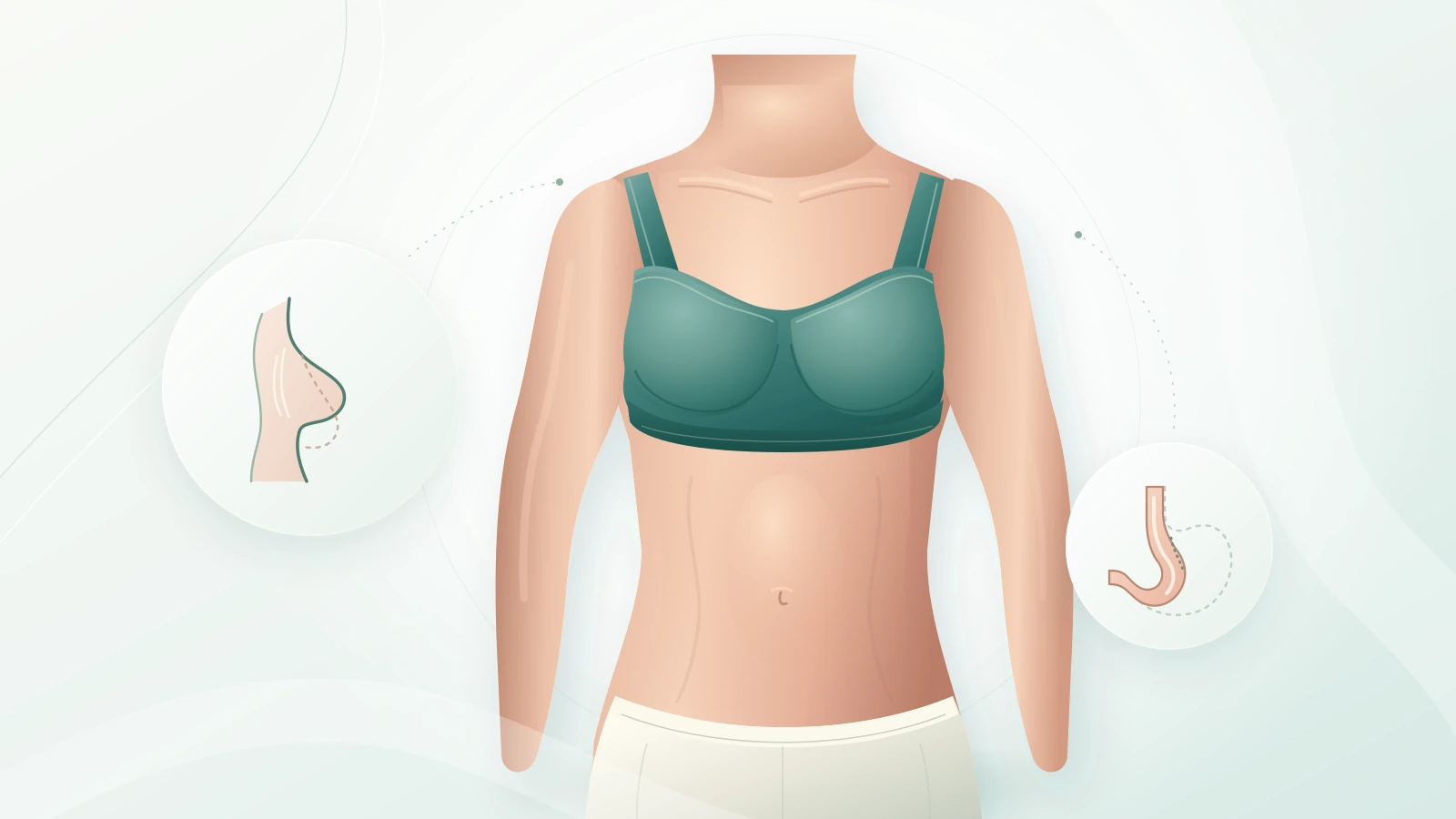
Can breasts sag again after breast lift following gastric sleeve surgery? Yes. A breast lift can raise and reshape breasts affected by substantial weight loss, but it cannot stop natural ageing, prevent future weight fluctuations or restore the skin’s original elasticity. Some settling is expected after surgery; more noticeable drooping can develop later.
Table of Contents
That does not mean a breast lift is ineffective. The key is understanding what causes recurrent sagging, when to plan surgery after weight loss, and which techniques may suit breasts that have lost volume and support after a gastric sleeve.
Can breasts sag again after breast lift following gastric sleeve surgery?
Yes, but it is not inevitable that your breasts will return to their preoperative appearance. A mastopexy, or breast lift, removes excess skin and reshapes or repositions breast tissue and the nipple-areola complex. The result can last for years, although the breast will continue to respond to gravity, ageing, changes in body weight and pregnancy.
The American Society of Plastic Surgeons (ASPS) explains that breast lift results are long-lasting rather than permanent. It specifically notes that significant weight loss after surgery may negatively affect breast appearance and that maintaining weight can help preserve the result. Mayo Clinic likewise explains that breast tissue can lose firmness with time and that heavier breasts may be more likely to droop again.
After gastric sleeve surgery, patients often have a different starting point from people seeking a breast lift after pregnancy alone. Major weight loss may leave a relatively large skin envelope around a smaller volume of breast tissue. That can make reshaping and maintaining upper-breast fullness more challenging.
There is no credible single percentage that predicts whether an individual gastric sleeve patient will experience renewed sagging after a lift. Your anatomy, subsequent weight changes, surgical technique and length of follow-up all matter.
Why do breasts sag after gastric sleeve weight loss?
The breast is made of glandular tissue, fat, skin and supporting connective tissue. After substantial weight loss, breast fat often decreases, while stretched skin may not shrink enough to match the new volume. The result may be a flatter upper breast, a lower nipple position or loose tissue hanging beneath the breast fold.
Before bariatric surgery, the skin may have spent years stretched by greater breast size. How far it contracts afterward depends partly on age, genetics, previous pregnancies, starting size, the amount of weight lost and underlying skin quality.
A published surgical review of breast reshaping after massive weight loss describes reduced skin elasticity, loss of breast projection and a deflated appearance as common challenges. It also explains why surgical planning after major weight loss often needs to address the breast and surrounding chest tissues together.
The gastric sleeve itself does not directly cause breast ligaments to fail. Instead, its effect on body weight and breast volume can make pre-existing skin laxity more visible. Some patients notice the change gradually over the first year, while others see it as their weight-loss rate slows.
What causes breasts to sag again after a lift?
Further weight loss after breast surgery
If a breast lift is performed while you are still losing a considerable amount of weight, additional reduction in breast fat can leave the skin envelope relatively loose again. Your breasts may become less full and the lower portion may appear to descend even though the nipple was repositioned at surgery.
This is one reason plastic surgeons usually prefer patients to have reached a reasonably stable weight before post-bariatric body contouring. A breast lift done too early cannot anticipate exactly how much volume may be lost later.
Weight regain followed by more weight loss
Weight regain may increase breast volume and stretch the skin, particularly when followed by another period of significant weight loss. Repeated fluctuations can change the contour of breasts that were previously lifted.
Not every small variation on the scales will noticeably affect breast shape. The concern is sustained or substantial changes, especially when the breast tissue remains sensitive to fat loss or gain.
Thin or less elastic skin
A large weight reduction can leave the skin and connective tissues with limited ability to support the reshaped breast. A surgeon can remove redundant skin and position the breast tissue, but cannot guarantee that the remaining tissues will keep their initial firmness indefinitely.
The International Society of Aesthetic Plastic Surgery (ISAPS) identifies skin quality, ageing and weight changes as factors that affect the longevity of mastopexy results.
Natural ageing, gravity and breast weight
Over time, normal ageing changes skin elasticity and connective tissue. Larger or heavier breasts may also place greater downward load on their supporting tissues. These factors still operate after a well-performed lift.
Pregnancy and hormonal changes
Pregnancy can increase breast size and stretch the skin, and subsequent changes in breast volume may affect the lift. If you are planning a pregnancy after gastric sleeve surgery, discuss both nutritional readiness with the bariatric team and the timing of cosmetic breast surgery with your plastic surgeon.
For broader guidance, see our article on conception after weight-loss surgery.
How soon after gastric sleeve should you consider a breast lift?
There is no one date that suits every patient. Surgeons generally want to see that major weight loss has slowed, your weight is reasonably stable, and your nutrition and overall health can support healing. Exact expectations differ between practices and depend on the procedure.
The Aesthetic Society’s post-weight-loss surgery guidance recommends at least six months of stable weight, with broader consideration of how long significant weight loss has been underway. The University of Pittsburgh Medical Center’s Life After Weight Loss programme describes body contouring as generally considered when patients are near their goal weight and stable, often around 12 to 18 months after bariatric surgery, with at least three months of stability in its local pathway. These are different institutional recommendations, not guaranteed eligibility rules for breast surgery.
If you are still losing weight, vomiting frequently, struggling with protein intake or correcting nutrient deficiencies, postponing elective mastopexy may be the more appropriate decision. The bariatric and plastic surgery teams should agree that your recovery is sufficiently advanced.
The goal is not to wait for a perfect number on the scales, but to avoid operating while breast volume is still changing substantially.
Does a breast lift alone last longer than a lift with implants?
There is no simple answer. A breast lift can correct drooping by removing excess skin, reshaping the existing breast and moving the nipple to a higher position. However, it does not necessarily create the volume or upper-breast fullness that someone has lost after a gastric sleeve.
Adding an implant may help restore volume in selected patients, but it also introduces extra weight, implant-related risks and future monitoring or possible replacement needs. An implant does not act as a guarantee against recurrent sagging.
In a 2026 comparative study of 138 women who had breast reshaping after massive weight loss, 74 underwent autologous tissue techniques and 64 underwent implant-based mastopexy. The implant group had more recorded complications and recurrent breast ptosis, while wound separation was more frequent with the autologous approach. This observational study does not prove that implants cause sagging in every patient or that one technique is universally superior. Surgical choices, anatomy and follow-up differ between people.
If you already have adequate breast volume but dislike the droop, an uplift without implants may be appropriate. If volume loss is substantial, the surgeon may discuss implants, fat transfer, tissue reshaping or a staged plan. See our breast lift without implants guide.
What is bottoming out, and is it the same as sagging?
Not exactly. Patients may use “sagging” for several different changes after breast surgery, but surgeons assess them separately.
Recurrent ptosis means breast tissue and sometimes the nipple-areola complex have descended again. Pseudoptosis can describe breast tissue hanging low while the nipple remains in a relatively acceptable position. Bottoming out commonly refers to excessive descent or stretching of the lower breast portion, especially in implant-based surgery, although the term may be used more broadly.
These differences matter because the appropriate correction depends on whether the concern is skin laxity, low tissue position, loss of volume, implant position or a combination. A photograph alone may not reveal the cause.
A 2022 systematic review on the longevity of breast ptosis correction found that maintaining lift results over time is challenging and that results vary across surgical methods. The authors emphasised that tissue quality and ongoing gravity still influence outcomes after surgery.
Normal settling or a genuine recurrence of breast sagging?
In the first months after a breast lift, swelling decreases and the breast changes shape. A lower pole that initially looks high or firm may soften as tissues settle. This is not automatically the same as a failed operation or renewed ptosis.
| Change noticed | What it may represent | Recommended response |
|---|---|---|
| Gradual softening and rounding in the first months | Normal settling as swelling resolves | Follow the scheduled postoperative reviews |
| Loss of fullness after continued weight loss | Reduced breast fat volume | Review weight trend and breast shape with your surgeon |
| Nipple or breast tissue progressively descending later | Possible recurrent ptosis | Arrange a plastic surgery examination |
| Lower breast stretching while nipple stays relatively high | Possible pseudoptosis or lower-pole elongation | Ask the surgeon to assess tissue support |
| Sudden swelling, marked asymmetry, pain or redness | Possible postoperative complication | Contact the clinical team promptly |
The ASPS advises that the final shape develops over the months after mastopexy. Before deciding a breast lift has failed, it is useful to compare photographs taken at consistent angles and discuss the changes at follow-up rather than judging only an early postoperative image.
Can surgical technique reduce the chance of sagging again?
Technique can influence how the breast tissue is reshaped and supported, but no recognised procedure eliminates future ptosis. Patients after major weight loss may require more than removing extra skin because the remaining tissue can be thin and have limited structural support.
Common approaches include vertical (lollipop) and inverted-T (anchor) mastopexy. Depending on the anatomy, surgeons may also use the patient’s own breast tissue to restore projection or consider other support strategies. The ideal incision pattern depends on how much excess skin exists, breast size, nipple position and skin quality.
A 2019 case series of 15 women after major weight loss described an autologous tissue reshaping technique with stable nipple position and upper-breast fullness over its reported follow-up. The findings are encouraging but limited by the small sample and short observation period; they cannot establish that this technique prevents sagging for life.
Discuss the reasons for the proposed technique, its scars and the surgeon’s experience with post-bariatric patients. Be cautious about claims that a particular “internal bra”, implant or stitch pattern guarantees permanent elevation.
How can you help preserve breast lift results after a gastric sleeve?
There is no lifestyle routine that completely stops the ageing of breast tissue. However, a few practical measures can help protect your health and avoid changes that may affect the surgical result.
- Maintain a sustainable weight. Continue the long-term nutrition and lifestyle plan developed with your bariatric team rather than cycling between rapid loss and regain.
- Follow your postoperative restrictions. Wear any prescribed surgical bra, avoid early strain on the incisions and resume physical activity only as advised.
- Meet your nutrition requirements. Attend routine bariatric follow-up and correct identified deficiencies before and after elective plastic surgery.
- Avoid nicotine. Smoking and nicotine exposure can impair wound healing and increase surgical risks. Discuss cessation with your clinical team.
- Plan around pregnancy when possible. Changes associated with pregnancy and breastfeeding may alter breast volume and shape after a lift.
- Attend breast surgery reviews. A surgeon can distinguish expected settling from complications or developing ptosis.
A well-fitting supportive bra may help with comfort and movement, particularly during exercise, but it should not be advertised as a scientifically proven way to prevent all long-term sagging. Creams, collagen products and exercise cannot reliably remove substantial loose breast skin or permanently reposition a descended nipple.
Why nutrition matters before a post-bariatric breast lift
After a gastric sleeve, smaller meals and changing food tolerance can make it difficult for some patients to meet protein and micronutrient requirements. Even when weight has stabilised, the plastic surgeon needs to understand whether your nutritional status supports healing.
A 2026 ASPS research summary highlights the importance of screening nutritional status and planning an individual diet before body-contouring surgery after substantial weight loss. The associated review identifies protein and micronutrient adequacy as concerns that may affect wound healing.
Preoperative assessment may include blood count, iron status and other tests according to the bariatric and surgical teams. Do not take high-dose supplements in the hope of tightening loose skin or improving lift longevity; supplements should address actual nutritional needs.
Our gastric sleeve aftercare blood test guide and protein tracking guide explain more about postoperative monitoring.
If your breasts sag again, do you need another breast lift?
Not always. A change that bothers you aesthetically may be slight, and some settling can be an expected part of healing. If there is clear recurrent ptosis or dissatisfaction after the tissues have stabilised, a surgeon can assess whether revision surgery is appropriate.
Options may include a repeat lift, reshaping with the patient’s own tissue, a change in implant strategy if implants are present, or no further surgery. Any revision has its own risks, especially when previous incisions, reduced skin quality and scar tissue affect the blood supply and available tissue.
It is reasonable to ask whether waiting for weight stability or further tissue settling would improve the decision. A revision should not be scheduled simply because the breasts look different at six weeks than they did immediately after surgery.
If you develop a new lump, nipple discharge, concerning skin change or persistent focal pain, seek clinical assessment rather than assuming the change is only cosmetic. Cosmetic surgery follow-up does not replace routine breast health evaluation or age-appropriate screening.
What if you still want to lose more weight?
Tell the plastic surgeon how much weight you have lost, your current trend and whether additional loss is expected. Patients who are still in the active weight-loss phase after sleeve gastrectomy may be advised to wait until the breast volume and general nutritional state are more stable.
The recommendation is individual: someone whose weight has been stable for months but remains slightly above a desired target may be assessed differently from someone losing weight rapidly each week. A surgeon must also weigh the physical symptoms caused by excess skin, your medical history and how realistic it is to sustain further weight loss.
Our guide to body contouring and timing after weight loss surgery discusses related considerations for other post-bariatric procedures.
Questions to ask before breast lift surgery after gastric sleeve
- Has my weight been stable long enough for a reliable breast shape assessment?
- How much breast volume have I lost, and how elastic is my remaining skin?
- Do I mainly need skin removal, tissue reshaping, more volume or a combination?
- Would an implant make sense, or might my own breast tissue provide a better option?
- What are the realistic chances of gradual settling or recurrent drooping in my case?
- Which incision pattern is proposed, and what permanent scars should I expect?
- Do my nutritional results and bariatric follow-up support elective surgery?
- What happens if I lose more weight or become pregnant after the lift?
- How will we monitor the result, and what would make revision surgery worth considering?
Bring a record of your weight trend, previous bariatric surgery and any relevant blood tests. Photos showing your breast shape over time may also help the surgeon understand the changes that matter most to you.
CK Health Turkey: planning a breast lift after gastric sleeve
CK Health Turkey in Antalya supports international patients exploring plastic surgery after significant weight loss. If you have had a gastric sleeve and are concerned about breast drooping, the first step is to discuss your weight stability, health, tissue quality and desired shape during an individual assessment.
A qualified plastic surgeon can explain whether mastopexy alone, a lift with volume restoration or a staged procedure is appropriate. The clinical team should also review your nutritional health and realistic long-term expectations; no coordinator or surgeon can promise that breasts will never change again after a lift.
For information about consultation arrangements and personalised treatment planning, contact CK Health Turkey and share details of your weight-loss journey and concerns about breast shape.
So, can breasts sag again after breast lift following gastric sleeve surgery? They can, especially if substantial weight changes continue or the skin has limited elasticity. Choosing the right time for surgery, understanding how the proposed technique addresses your remaining breast tissue and maintaining long-term bariatric follow-up can help you make an informed decision without expecting an impossible permanent guarantee.