
Highlights
- Thigh lift surgery, or thighplasty, is a body contouring procedure designed to remove excess skin and fat caused by aging or significant weight loss.
- Surgeons utilize various incision techniques, such as vertical, groin, or bikini line placements, depending on the patient's anatomy and the amount of skin redundancy.
- The success of the procedure relies on precise incision planning to optimize aesthetic results while strategically concealing scars within natural skin folds.
Thigh lift surgery, a highly sought-after body contouring procedure, addresses skin laxity and excess fat in the upper legs. Patients often seek this intervention following significant weight loss or due to natural aging processes. The strategic placement and design of incisions are paramount for achieving optimal aesthetic and functional outcomes. A deep understanding of these surgical considerations is essential for both practitioners and prospective patients. This foundational element directly influences scar visibility and the overall sculpted appearance of the thighs. The precision involved in marking and executing these incisions dictates the success of the procedure.
Table of Contents
Understanding Medical Terms for Thigh Lift Surgery
- Thighplasty represents the primary medical term used by plastic surgeons and healthcare professionals when documenting this body contouring procedure in patient records and medical literature.
- Crural lift constitutes another formal medical designation found in surgical journals and academic publications, derived from the Latin term “crus” meaning leg or thigh region.
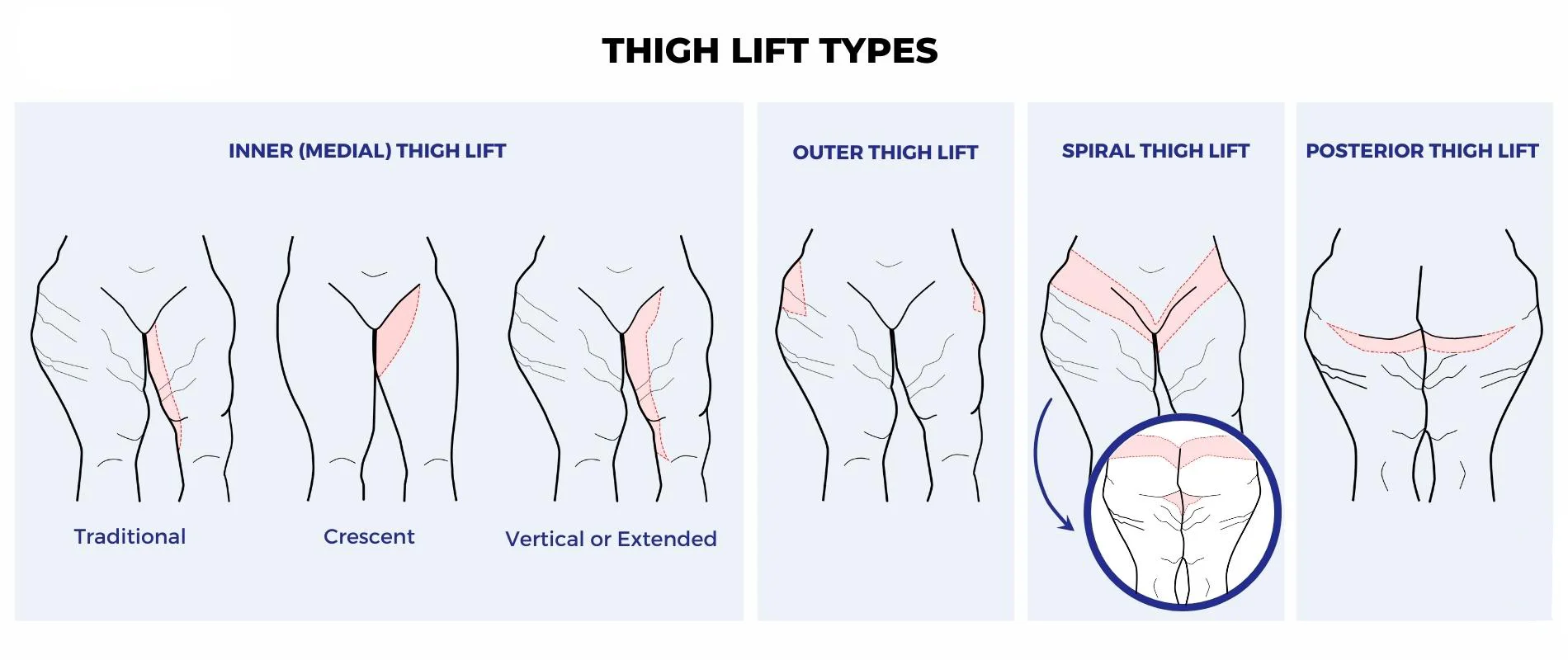
- Medial thigh lift specifically describes procedures focusing on the inner thigh area, addressing excess skin and tissue along the medial compartment of the upper leg.
- Lateral thigh lift refers to surgical techniques targeting the outer thigh region, often performed in conjunction with lower body lift procedures for comprehensive contouring.
- Bilateral thighplasty indicates surgical intervention performed on both thighs during a single operative session, commonly referenced in surgical planning documentation.
- Infragluteal thigh lift describes procedures addressing the area where the buttocks meet the posterior thigh, targeting tissue laxity in this transitional zone.
- Circumferential thigh lift encompasses surgical approaches that address multiple thigh regions simultaneously, providing comprehensive lower body contouring results.
- Thigh reduction surgery serves as a patient-friendly term frequently used in consultation settings and educational materials to describe the procedure’s primary objective.
- Thigh contouring represents a broader category term that encompasses various surgical and non-surgical approaches to improving thigh appearance and shape.
- Lower extremity lift includes thigh lift procedures within the wider scope of leg contouring surgeries, often used in comprehensive body transformation planning.
- Proximal thigh lift specifically addresses the upper portion of the thigh closest to the torso, focusing on areas with significant skin redundancy.
- Distal thigh lift targets the lower thigh region, though this approach is less common due to potential visible scarring concerns.
- Thigh dermolipectomy combines dermal and subcutaneous tissue removal, representing the technical description of tissue excision during the procedure.
- Inner thigh plasty specifically focuses on medial thigh concerns, addressing skin laxity and contour irregularities in this sensitive area.
- Outer thigh plasty targets lateral thigh regions, often coordinated with hip and buttock contouring procedures for optimal aesthetic results.
- Thigh skin excision describes the fundamental surgical technique involved in removing excess cutaneous tissue during the procedure.
- Lower body contouring frequently includes thigh lift procedures as part of comprehensive post-weight loss or body transformation surgical plans.
These thigh lift alternative names reflect the diverse terminology used across medical specialties, surgical techniques, and anatomical regions addressed during these body contouring procedures. Understanding these various designations helps patients navigate medical consultations and research effectively. When considering Thigh Lift Surgery Price Turkey, it’s essential to understand the types and locations of incisions in thigh lift surgery, as these factors can influence both cost and outcomes. Patients should also discuss potential scarring and recovery time with their surgeon to ensure they are fully informed before proceeding with the surgery.
Different Types of Thigh Lift Incisions and Their Placement
Thigh lift surgery requires precise planning regarding incision placement to achieve optimal results whilst minimising visible scarring. Surgeons select specific incision patterns based on the patient’s anatomy, degree of excess skin, and aesthetic goals.
| Incision Type | Placement Location | Key Features | Scar Concealment |
|---|---|---|---|
| Vertical Incision | Inner thigh from groin to knee | Addresses significant skin excess | Concealed along natural thigh contour |
| Groin Incision | Within groin crease | Minimal visible scarring | Hidden in natural skin fold |
| Bikini Line Incision | Along bikini line extending to groin | Combines outer and inner thigh lifting | Concealed beneath underwear |
| Transverse Incision | Horizontal across upper thigh | Targets circumferential excess skin | Positioned for optimal hiding |
The choice of incisions for thigh lift procedures depends on several anatomical factors that experienced surgeons evaluate during consultation:
- Patient anatomy determines the most suitable incision pattern for achieving natural-looking results
- Skin elasticity levels influence whether single or multiple incision approaches prove necessary
- Fat distribution patterns guide surgeons in selecting appropriate thighplasty incision techniques
- Previous surgical history affects tissue quality and healing potential in targeted areas
Vertical thigh lift incision techniques address cases involving substantial skin redundancy extending from the groin region toward the knee. These incisions in thigh lift surgery follow the natural curvature of the inner thigh, allowing surgeons to remove significant amounts of excess tissue. The resulting scar typically measures between 15-25 centimetres in length, depending on the extent of correction required.
Groin incision thigh lift procedures utilise the natural crease where the thigh meets the torso. This approach proves particularly effective for patients with moderate skin laxity concentrated in the upper thigh region. The concealed positioning within existing skin folds ensures excellent camouflage of post-surgical scarring.
Inner thigh lift incision placement requires meticulous attention to anatomical landmarks to prevent tension on suture lines. Surgeons position these incisions to follow natural skin tensions whilst avoiding areas subjected to constant movement during daily activities. The technique proves especially beneficial for patients seeking targeted improvement in thigh contour.
Bikini line thigh lift incision approaches combine elements of traditional body contouring with strategic scar placement. These incisions extend from the bikini line region into the groin crease, allowing comprehensive addressing of both outer and inner thigh concerns through a single surgical approach.
Healing characteristics vary significantly between different thigh reduction incision types. Groin-based incisions typically heal within 2-3 weeks for initial closure, whilst vertical incisions require 4-6 weeks for complete epithelialisation. Transverse incision thigh lift techniques often demonstrate superior healing due to reduced tension on suture lines.
Factors influencing scar prominence include patient skin type, genetic predisposition to scarring, and adherence to post-operative care protocols. Darker skin tones may experience more noticeable scarring, whilst patients with excellent skin elasticity often achieve superior aesthetic outcomes regardless of incision type selected.
Thigh lift incision types require different post-operative management strategies. Vertical incisions necessitate careful monitoring for wound separation, particularly in the lower portions where gravity creates additional stress. Groin incisions benefit from specialised dressing techniques that accommodate natural body movement whilst maintaining appropriate compression.
Experienced surgeons often combine multiple incision approaches within a single procedure to address complex anatomical presentations. These hybrid techniques utilise the advantages of different thighplasty incision techniqueswhilst minimising individual limitations associated with single-approach methods.
Long-term scar maturation continues for 12-18 months following surgery, with most patients experiencing significant improvement in scar appearance during this period. Proper wound care, sun protection, and adherence to activity restrictions contribute substantially to optimal healing outcomes.
What Happens During a Thigh Lift: Step-by-Step Process
- Initial surgical preparation begins with the administration of general anaesthesia to ensure patient comfort throughout the thigh lift operation. The surgical team positions the patient appropriately on the operating table, with legs positioned to provide optimal access to the treatment areas.
- Surgical site marking and sterilisation follows established protocols, where the surgeon marks the predetermined areas for tissue removal and contouring. The entire surgical field receives thorough cleansing with antiseptic solutions to maintain sterile conditions throughout the procedure.
- Primary incision creation represents the critical first step of the thigh lift procedure steps. The surgeon creates carefully planned incisions along the marked lines, typically extending from the groin area towards the inner thigh, ensuring precise placement for optimal aesthetic outcomes.
- Tissue elevation and mobilisation allows the surgeon to access underlying tissues systematically. This phase involves careful separation of skin layers from the deeper fascial structures, creating the necessary surgical planes for effective tissue manipulation and contouring.
- Excess skin assessment and marking occurs once the surgical field is fully exposed. The surgeon evaluates the amount of redundant tissue requiring removal, marking specific areas while considering the patient’s desired aesthetic goals and anatomical limitations.
- Fat removal and contouring takes place when indicated, addressing localised adipose deposits that contribute to thigh irregularities. The surgeon employs precise techniques to remove excess fatty tissue while preserving important anatomical structures and maintaining natural contours.
- Muscle tightening and fascial repair addresses deeper structural components when necessary. This step involves tightening loosened fascial layers and reinforcing weakened areas to provide long-lasting support for the newly contoured thigh profile.
- Excess tissue excision represents the definitive reshaping phase of the thigh lift fat removal process. The surgeon removes predetermined amounts of redundant skin and subcutaneous tissue, ensuring symmetrical results while maintaining appropriate tension across the surgical site.
- Haemostasis achievement requires meticulous attention to bleeding control throughout all tissue planes. The surgical team employs electrocautery and other techniques to ensure complete haemostasis before proceeding to closure phases.
- Deep layer closure begins the reconstruction process, with the surgeon placing absorbable sutures in the deeper tissue layers. This multi-layered approach provides structural support and reduces tension on superficial closure lines.
- Intermediate layer approximation involves careful alignment of subcutaneous tissues using appropriate suture materials. This step ensures proper tissue healing and minimises the risk of wound complications during the recovery period.
- Superficial skin closure completes the reconstructive phase using fine sutures or skin adhesives. The surgeon ensures precise edge-to-edge approximation while maintaining appropriate tension to promote optimal healing and minimal scarring.
- Drain placement occurs when clinically indicated to prevent fluid accumulation in the surgical space. Small drainage tubes are positioned strategically to facilitate post-operative fluid management and reduce complication risks.
- Dressing application and compression garment fitting concludes the surgical procedure. The surgical team applies sterile dressings over incision lines and fits appropriate compression garments to support healing tissues and maintain optimal positioning during recovery.
- Final assessment and documentation ensures all surgical objectives have been achieved satisfactorily. The surgeon performs a comprehensive evaluation of symmetry, contour, and technical completion before transferring the patient to recovery care.
The comprehensive nature of these thigh lift procedure steps demonstrates the precision required for successful outcomes. Each phase builds upon the previous step, creating a systematic approach that addresses both aesthetic enhancement and patient safety considerations throughout the entire surgical process.