Highlights
- Combining major plastic surgery and dental work in one trip can lead to dangerous physiological stress and prolonged anesthesia exposure, which increases the risk of complications like deep vein thrombosis.
- Post-operative physical limitations, such as the hunched position required after a tummy tuck, make it physically impossible and unsafe to lie flat in a dentist's chair for extended procedures.
- Dental treatments can introduce bacteria into the bloodstream that may cause infections at surgical sites or around implants, necessitating a strictly sequenced schedule to allow for proper immune recovery.
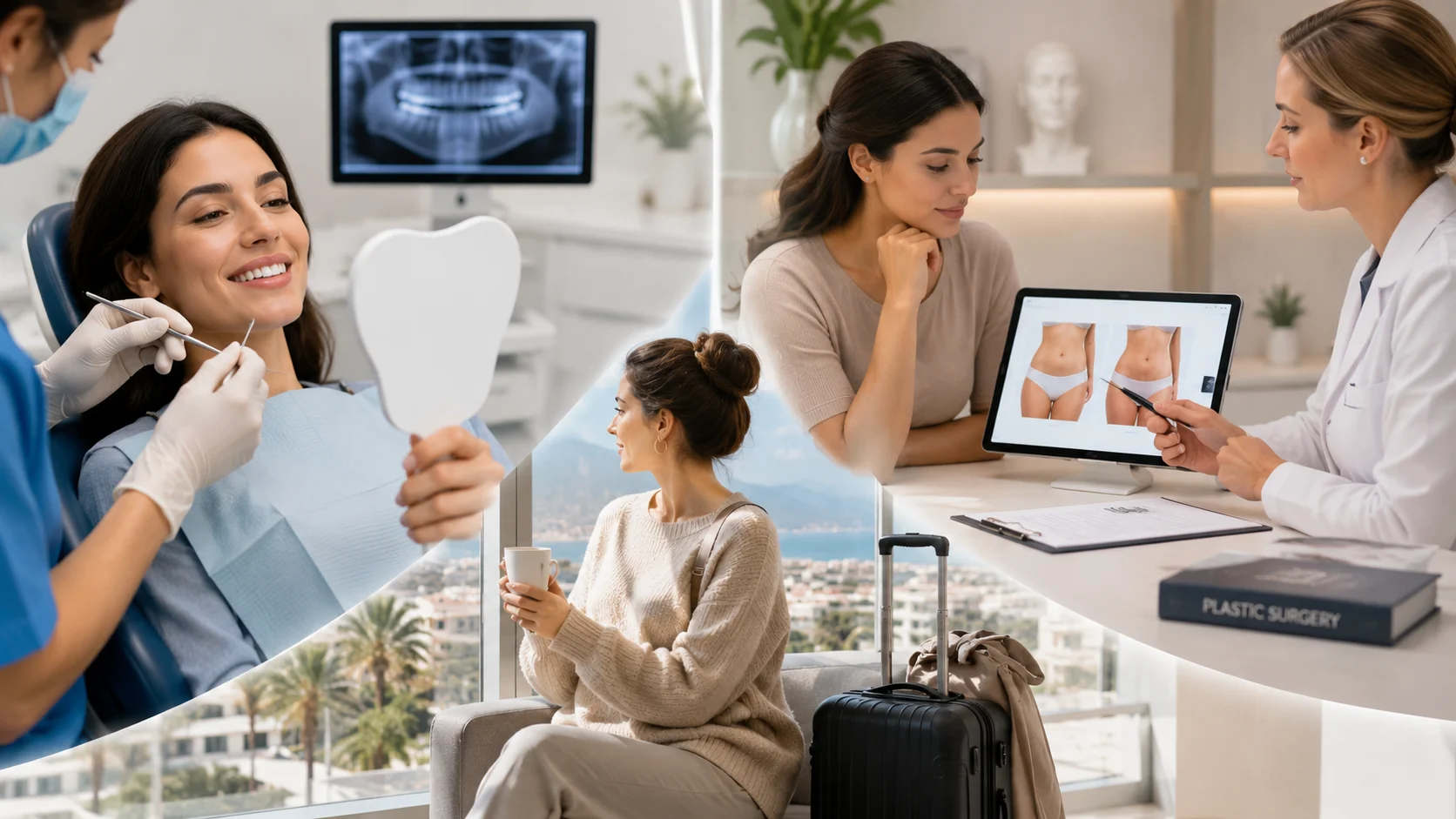
Many international patients travel to Turkey seeking a complete aesthetic transformation, wanting to upgrade their smiles and bodies simultaneously. However, before you book a flight, you must understand if can you have dental treatment and plastic surgery in the same trip safely. Balancing these two major transformations requires careful medical scheduling, strict infection control, and a realistic understanding of your physical limitations during recovery.
Table of Contents
The Physiological Reality of Dual Aesthetic Transformations
Combining multiple cosmetic procedures is highly tempting because it promises a single recovery period and lower overall travel expenses. However, the human body is not a machine where you can swap out parts simultaneously without a systemic tax. When you undergo major plastic surgery alongside complex dental treatments, you are exposing your system to dual physiological stressors that can interfere with your healing process.
Anesthesia and Surgical Endurance
General anesthesia is safe, but its safety is directly tied to the duration of exposure. Most board-certified plastic surgeons and anesthesiologists agree that elective cosmetic procedures should ideally not exceed five hours of continuous anesthesia. If you are combining a major body contouring procedure—such as a tummy tuck or a full body liposuction—with extensive dental work, the cumulative time under sedation or anesthesia easily surpasses safe margins. Prolonged anesthesia significantly increases the risk of deep vein thrombosis, respiratory complications, and delayed cognitive recovery. Splitting these treatments or using local anesthesia for dental work on separate days is the standard clinical approach to prevent these systemic risks.
Post-Operative Positioning and Physical Impossibilities
One of the most overlooked aspects of combining dental work with body contouring is post-operative ergonomics. If you undergo a tummy tuck (abdominoplasty), your abdominal muscles and skin are sutured tightly. To prevent these incisions from tearing, you are medically required to maintain a semi-Fowler’s position, walking and resting in a hunched, beach-chair-like posture for at least 10 to 14 days.
Now, imagine trying to lie completely flat in a dentist’s chair for a four-hour dental veneer preparation in this state. It is physically impossible and highly dangerous. Hyperextending your abdomen to fit into a dental chair will put extreme tension on your surgical wounds, leading to wound dehiscence, severe pain, and highly visible scarring. Similarly, an arm lift (brachioplasty) severely restricts your upper body mobility, making the basic act of keeping your mouth open during a dental procedure incredibly uncomfortable.
The Hidden Medical Risks: Bacteremia and Surgical Infections
The mouth is a highly vascular environment teeming with bacteria, and any dental manipulation opens a temporary gateway to the bloodstream. While a healthy immune system handles this daily, a body recovering from major plastic surgery is in a vulnerable state.
Transient Bacteremia and Implant Contamination
During invasive dental procedures like deep cleanings, tooth extractions, or dental implant placements, oral bacteria inevitably enter the bloodstream. This condition is known as transient bacteremia.
A systematic review of perioperative infections indicates that transient bacteremia from dental procedures can travel through the bloodstream and colonize fresh surgical wounds or prosthetic devices, such as breast implants or abdominal mesh. Studies published by the National Institutes of Health (NIH) demonstrate that dental implant procedures cause detectable bacteremia in up to 23% of healthy patients. Introducing these pathogens into the circulatory system while the body is trying to heal from a major plastic surgery significantly elevates the risk of surgical site infections, capsular contracture, or implant failure.
Immune System Depletion
Your body has a finite amount of healing resources. When you undergo a major surgical procedure like an arm lift or a tummy tuck, your immune system redirect its entire army of white blood cells and growth factors to repair the damaged tissues. If you simultaneously introduce a secondary healing site in your mouth—such as multiple dental implants or crown preparations—your body must split its resources. This division of labor slows down the overall healing rate, increases swelling, and leaves you more susceptible to minor infections at both surgical sites.
How to Safely Schedule Combined Procedures in Turkey
If you are determined to address both your teeth and your body during a single medical travel journey, you must follow a strict, medically cleared sequence to minimize cross-contamination and physical strain.
- Schedule a comprehensive virtual consultation with both your plastic surgeon and your cosmetic dentist to draft a synchronized treatment plan before booking your flights.
- Complete all invasive dental treatments, including implant placements, extractions, or veneer preparations, during the first 48 hours of your arrival.
- Wait a minimum of three to five days after your dental work to allow the oral mucosa to heal and ensure that any transient bacteremia has cleared from your bloodstream.
- Undergo your plastic surgery procedures, ensuring that you have completed the active phase of your dental treatment and only have non-invasive fittings left.
- Dedicate the remaining 7 to 10 days of your trip purely to post-operative recovery, lymphatic drainage massages, and final non-invasive dental checkups.
can you have dental treatment and plastic surgery in the same trip: Comparing the Options
To help you decide whether combining these treatments into a single journey is the right choice for your health and budget, let us compare the clinical realities of a combined trip versus staging your procedures across two separate visits.
| Comparison Metric | Combined Journey (Single Trip) | Staged Journeys (Two Separate Trips) |
| Total Travel Days | 12 to 15 days | 7 to 10 days per trip |
| Physical Toll & Pain | High; managing body soreness and oral sensitivity simultaneously | Moderate; focused recovery on one area at a time |
| Infection Risk Profile | Elevated due to transient bacteremia and split immune resources | Minimal; body heals completely before the next stressor |
| Financial Cost | Lower overall flight and accommodation expenses | Higher travel costs due to multiple round-trip flights |
| Anesthesia Safety | Requires careful staging to avoid prolonged cumulative sedation | Safest; standard anesthesia duration per session |
While a combined trip offers clear financial benefits by saving on flights and hotel stays, it demands a much higher level of physical endurance and strict medical coordination. Staged journeys remain the gold standard for patient safety, allowing your body to recover fully before undergoing another aesthetic transformation.
Navigating Your Treatment Plan with CK Health Turkey
Successfully coordinating both dental and plastic surgery procedures requires an experienced, multidisciplinary medical network that prioritizes clinical safety over commercial convenience. CK Health Turkey specializes in organizing highly coordinated, safe, and efficient itineraries for international patients seeking comprehensive transformations.
By working with board-certified plastic surgeons and highly qualified cosmetic dentists, CK Health Turkey ensures that your procedures are spaced safely, using CE and ISO-certified materials to guarantee long-lasting results. Our medical coordinators manage all your transfers, luxury accommodations, and clinical appointments, making sure you never have to choose between your safety and your aesthetic goals. Visit the CK Health Turkey website today to schedule a detailed evaluation with our medical team and receive a personalized, safe treatment plan.
Ultimately, the answer to whether can you have dental treatment and plastic surgery in the same trip depends on the complexity of your chosen procedures and your overall physical health. If you are planning minor treatments, such as teeth whitening combined with a minor non-invasive procedure, a single trip is highly achievable. However, for major surgical transformations like a tummy tuck alongside a full smile makeover, clinical safety dictates a carefully staged schedule. By partnering with dedicated medical coordinators who understand these physiological limits, you can achieve your dream results without compromising your long-term health.