Get clearer vision with Laser Eye Surgery.
Laser eye surgery is a modern, popular, effective method aimed at improving and restoring the functions of vision. This is practically the only way to help minimize the wearing of glasses and lenses or completely abandon their use. The essence of the procedure is the use of a laser. The laser beam is directed at the ocular cornea, as a result of which it changes its shape (optical properties), and the retina has the opportunity to focus the image correctly, thus, the process of improving vision occurs.Before performing vision correction, the patient undergoes a special diagnosis, as a result of the data obtained, it is estimated how safe the procedure is for him, and only then, after a detailed study of the indicators, laser correction is prescribed or not prescribed. This is decided, first of all, by an ophthalmologist. The vision correction procedure is individual for each patient.
If it is scheduled, then you need to prepare for it:
- A few days before the operation, stop wearing lenses;
- Alcohol should not be consumed two days before the procedure;
- Do not use eye makeup on the day of surgery;
- On the day of the operation, no diseases should be observed (cough, runny nose, fever). This is because any cold reduces immunity, which means that the recovery process after laser manipulation may take a little longer.
- After laser eye correction, it is better to rest for a few days to fully restore the body.
Visual impairments in which laser eye correction is recommended
 The most common optical defects of the organ of vision, in which ophthalmologists prescribe or recommend laser correction, are myopia, hyperopia, astigmatism. Special programs have been developed for each of these states.Nearsightedness, or myopia, is when a person clearly sees close objects, and blurs or poorly sees what is far away. Laser correction will be appropriate if myopia is not too pronounced.Hyperopia, or hypermetropia– is a defect in optics, in which objects at a distant distance are visible, and nearby objects are blurred.Astigmatism is an uneven curvature of the cornea. In this case, laser surgery performed on the cornea is effective. It is used for the low and medium degree of astigmatism.Often people who wear glasses or lenses feel uncomfortable, or for some reason cannot wear them, in this case, you can also resort to vision correction with a laser. Often, laser vision correction is performed by athletes who cannot wear glasses by occupation.
Who cannot do laser eye surgery?
Contraindications to laser correction are:- Retinal dystrophy. For the treatment of pathology, PPLC (peripheral preventive laser coagulation) is successfully used. After the procedure, the patient again has the opportunity to make laser vision corrections.
- Thin cornea.
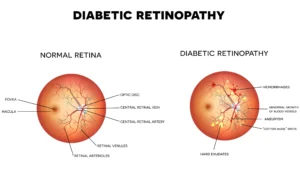
- Diabetes mellitus.
- Keratoconus. Keratoplasty, corneal tissue transplantation surgery is effectively used to treat keratoconus.
- The age of the patient is under 18 and over 45.
- Myopia of high degrees. To correct vision in such cases, there is an alternative — phakic lenses. They are implanted inside the eye without removing the lens to correct vision for short and long distances.
- Progressive deterioration of vision.
- The presence of cancer.
- Pregnant women, as well as during breastfeeding;

Methods of laser eye surgery
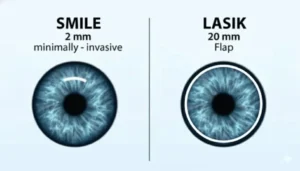
Laser surgery consists of various methods:- LASIK;
- LASEK;
- FRK.
 How to behave in the postoperative period?
- After surgery, the patient must adhere to certain rules so as not to disrupt the recovery process of the organ of vision and the body as a whole:
- On the first day after the operation, it is strictly forbidden to touch the eyes with your hands. In case of excessive lacrimation, use a handkerchief or napkins;
- A day after the operation, you can get behind the wheel of a car, read books, write, work at a computer and watch TV. On the day of surgery, it is better not to do this, because the eyes need rest;
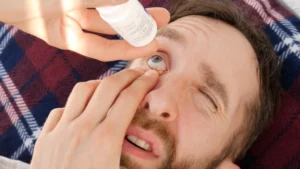
- Apply eye drops strictly according to the doctor’s prescription. Drops are introduced behind the lower eyelid, slightly pushing it away;
- We do not recommend to use decorative cosmetics for 14 days after surgery;
- The skin must breathe, so it is impossible to apply eye patches or glue patches after laser surgery;
- During the month after the procedure related to vision correction, it is forbidden to play sports, ski or skate, visit swimming pools, baths and saunas;
- It is better to wear sunglasses on the street as protection;
- Regular checkups by a doctor after surgery are necessary;
- To avoid negative consequences, in case of pain in the eye area, you should visit your doctor;
- Complete restoration of visual functions occurs after a few months.
Eye Treatments Latest Blog Posts
You can review other topics you wonder about Eye Treatments treatment in our most up-to-date posts: