Aging brings natural changes to vaginal tissue, affecting both physical structure and functional comfort. Women commonly experience tissue laxity, reduced elasticity, and vaginal dryness as estrogen levels decline during menopause. These changes can impact quality of life and intimate relationships significantly. Modern medicine now offers diverse solutions beyond traditional approaches to address these concerns effectively. Non-invasive energy-based therapies utilize radiofrequency and ultrasound technology to stimulate collagen remodeling. Laser treatments specifically designed for vaginal rejuvenation have gained considerable attention in recent years. Topical options including hormone-based creams and advanced moisturizers provide symptom relief with varying mechanisms of action. Each treatment modality demonstrates distinct benefits, considerations, and clinical evidence supporting its use. Understanding these available options enables informed decision-making tailored to individual needs and preferences. Healthcare providers can now offer personalized vaginal anti-aging solutions grounded in both clinical research and proven efficacy. The combination of technological advancement and evidence-based medicine has transformed how vaginal aging is managed today.
How Does Vaginal Aging Actually Change Your Body Over Time?
Epithelial thinning: The vaginal epithelium undergoes progressive atrophy as oestrogen levels decline during perimenopause and menopause. The stratified squamous epithelium loses its cellular layers, reducing tissue thickness and structural integrity significantly.
Reduced lubrication: Oestrogen directly stimulates vaginal transudation, the process by which fluid passes through the vaginal walls. As hormone levels fall, this transudation decreases, resulting in diminished natural lubrication and increased mucosal fragility.
Loss of elasticity and collagen degradation: Vaginal connective tissue relies on collagen type I and III fibres for tensile strength. Hormonal shifts accelerate collagen breakdown, reducing tissue elasticity and causing the vaginal walls to become less pliable over time.
Microbiome disruption: A healthy vaginal environment is dominated by Lactobacillus species, which maintain an acidic pH between 3.8 and 4.5. Declining oestrogen reduces glycogen availability in epithelial cells, depleting lactobacilli and raising pH, which alters the microbial balance.
Changes in vaginal dimensions: Reduced tissue distensibility leads to narrowing of the vaginal canal and decreased rugae depth. These structural changes reflect the cumulative effect of prolonged hypoestrogenism on pelvic floor musculature and connective tissue support.
Vascular alterations: Oestrogen supports submucosal blood flow within vaginal tissue. As levels decline, vascular density decreases, impairing oxygen delivery and tissue repair capacity. Growing clinical interest in vaginal anti-aging in Turkey reflects how these physiological changes are increasingly recognised across international healthcare communities pursuing evidence-based urogynecological care.
When Should You See a Doctor About Vaginal Aging Symptoms?
Certain symptoms associated with vaginal ageing require prompt professional evaluation rather than self-management. Recognising these signs early supports more effective clinical outcomes:
Persistent pain or discomfort during intercourse (dyspareunia) warrants evaluation by a urogynaecologist or gynaecologist, as it may indicate significant atrophic changes to vaginal tissue.
Recurrent vulvovaginal infections, including bacterial vaginosis or candidiasis occurring more than twice within six months, require assessment by a gynaecologist to identify underlying mucosal vulnerability.
Urinary incontinence or urgency, particularly stress or urge incontinence, falls within the expertise of a urogynaecologist, who assesses pelvic floor integrity and sphincter function.
Visible tissue prolapse or structural changes, such as pelvic organ prolapse, demand immediate urogynaecological referral for anatomical evaluation.
Unexplained postmenopausal bleeding necessitates urgent gynaecological investigation to exclude endometrial pathology.
Chronic vulvar irritation or significant dryness unresponsive to basic measures warrants dermatogynecological or gynaecological assessment.
Patients seeking vaginal anti-aging in Turkey are increasingly accessing urogynaecological and aesthetic gynaecology services for these concerns. Vaginal anti-aging in Turkey continues to attract patients experiencing genitourinary syndrome of menopause (GSM) who require structured clinical pathways for managing progressive mucosal and pelvic floor deterioration.
Vaginal Anti-Aging in Turkey: Moisturizers and Creams for Dryness Relief
Vaginal dryness can be effectively managed with topical products designed to restore moisture and alleviate discomfort. Formulations are generally categorized into two main groups: those containing hormones and those without, each offering a different mechanism of action to address tissue hydration. Understanding these approaches is a key part of vaginal anti-aging in Turkey.
Hormonal Topical Solutions
Hormonal creams work by directly delivering hormones, such as estrogen, to the vaginal tissues. This process helps to counteract dryness and improve tissue elasticity. Another approach involves the use of suppositories containing DHEA, a precursor hormone that the body converts into estrogen within the vaginal cells. These treatments address the underlying hormonal deficiency that contributes to atrophic changes and require a medical prescription.
Non-Hormonal Formulations
Non-hormonal options are widely available and provide hydration without hormonal ingredients. These are often the initial approach for managing symptoms.
Moisturizers: Products containing hyaluronic acid are particularly effective. This substance draws and retains water in the tissue, providing deep, long-lasting hydration. Regular use helps maintain tissue health and suppleness.
Lubricants: These are used as needed, typically during intimacy, to provide immediate, short-term relief from friction. They do not offer long-term moisturizing benefits.
The choice between these options is a central aspect of developing a plan for vaginal anti-aging in Turkey. These formulations are among the most effective vaginal moisturizers for dryness.
Key Ingredients in Formulations
When considering a cream for vaginal dryness, ingredient composition is critical for safety and efficacy.
Beneficial Ingredients to Prioritize:
Hyaluronic Acid: A powerful humectant that provides significant hydration.
Vitamin E: Supports skin healing and elasticity.
Water-Based Formulas: Less likely to disrupt the natural vaginal pH.
Natural Oils: Ingredients like coconut or almond oil offer soothing properties.
Ingredients to Avoid:
Fragrances & Parabens: Common irritants that can cause adverse reactions.
Glycerin: May trigger yeast infections in sensitive individuals.
Petroleum Jelly: Can trap bacteria and increase infection risk.
Lifestyle Habits That Support Vaginal Health as You Age
Daily hydration directly supports mucosal tissue integrity throughout the vaginal canal. Drinking at least 1.5–2 litres of water daily maintains epithelial moisture levels effectively.
Regular pelvic floor exercises, particularly Kegel contractions, strengthen the levator ani muscle group. Consistent practice improves urogenital support and reduces stress urinary incontinence risk.
Probiotic-rich foods such as live yoghurt, kefir, and fermented vegetables help sustain healthy Lactobacillus populations within the vaginal microbiome. A balanced vaginal flora maintains an acidic pH and resists pathogenic colonisation.
Sexual activity, including solo stimulation, promotes genital blood circulation and preserves vaginal wall elasticity over time.
Avoiding perfumed soaps, synthetic underwear, and harsh intimate wash products reduces mucosal irritation and disrupts vulvovaginal pH less. Cotton breathable fabrics lower moisture retention and infection risk.
A diet rich in phytoestrogen sources — including flaxseed, soy, and legumes — supports vaginal tissue resilience as endogenous oestrogen levels decline. Women exploring vaginal anti-aging in Turkey increasingly report integrating nutritional strategies alongside clinical care.
Smoking cessation significantly improves pelvic microvascular circulation. Vascular health is fundamental to maintaining vaginal lubrication and connective tissue quality across all stages of ageing. Those seeking vaginal anti-aging in Turkey benefit from combining these daily habits with structured clinical assessment.
Hormonal Therapies for Vaginal Anti-Aging: Is Local Estrogen Right for You?
Localized hormonal therapies are a primary approach for addressing vaginal changes associated with genitourinary syndrome of menopause (GSM). These treatments deliver a low dose of estrogen directly to the vaginal tissues. This targeted method helps manage symptoms while minimizing systemic absorption into the bloodstream. Many women seeking options for vaginal anti-aging in Turkey explore these localized solutions. The available forms include:
Vaginal Creams: These are applied using an applicator, with a dosing schedule that typically decreases over time.
Vaginal Rings: A flexible ring is inserted into the vagina, where it releases a consistent, low estrogen dose for approximately three months.
Vaginal Tablets/Suppositories: These small inserts are placed into the vagina, usually with a daily starting dose that is later reduced.
It is crucial to differentiate between localized and systemic hormone therapies, as their absorption and effects vary significantly. The following table compares these two approaches.
Therapy Comparison | Localized Estrogen Therapy | Systemic Hormone Therapy |
|---|---|---|
Hormone Delivery | Directly to vaginal and urinary tissues | Circulates throughout the entire body |
Systemic Absorption | Minimal | Significant |
Primary Symptoms Addressed | Vaginal dryness, discomfort, urinary issues | Hot flashes, night sweats, bone loss |
Extensive research shows low-dose vaginal estrogen does not significantly increase the risk of serious health conditions like heart disease or cancer. Its safety profile is well-established, making it a suitable option for many individuals. Before beginning any treatment for vaginal anti-aging in Turkey, a thorough discussion with a healthcare provider is essential.
Key points to review with a healthcare professional include:
A complete review of your personal and family medical history.
Discussion of any past or current health conditions.
An overview of the different therapy formats to determine suitability.
Laser and Energy Treatments for Vaginal Rejuvenation: How Do They Work?
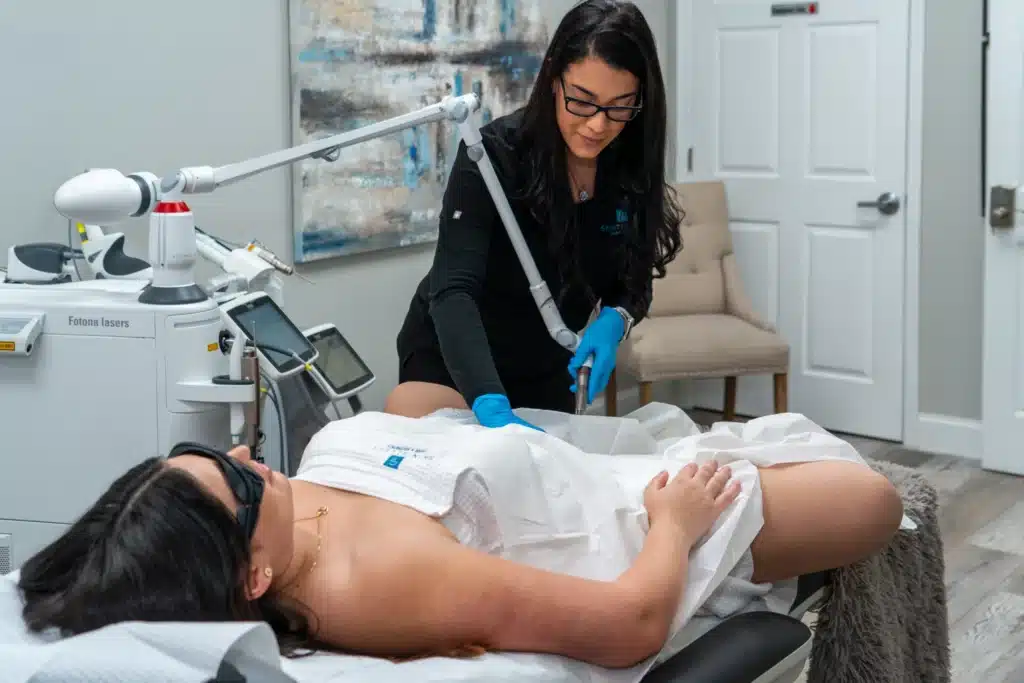
Energy-based vaginal anti-aging treatments utilize controlled thermal effects to stimulate tissue remodeling at a cellular level. These non-surgical procedures rely on the body’s natural healing response to generate new collagen and elastin, addressing various concerns.
CO2 Fractional Laser Technology
This approach uses a CO2 laser to create microscopic channels in the upper layers of the vaginal tissue. This process works by:
Delivering controlled thermal energy to heat the tissue.
Inducing a natural healing response that stimulates the production of new collagen, elastin, and blood vessels.
Addressing concerns such as tissue laxity and dryness.
A typical treatment plan involves 3–4 sessions spaced 4–6 weeks apart. Many patients considering vaginal anti-aging in Turkey opt for annual maintenance sessions to preserve the results.
Er:YAG Laser Technology
The Er:YAG laser is highly absorbed by water in the superficial tissue layers, increasing the local temperature. This modality stimulates tissue regeneration through:
Triggering new collagen formation within the vaginal walls.
Strengthening connective tissue for improved support.
This process can be non-ablative, preserving the surface layer.
From our collective experience, a series of 3 sessions is generally required to achieve the desired clinical outcome for this type of vaginal anti-aging treatment.
Radiofrequency and HIFU Technologies
These non-laser energy devices also promote tissue remodeling through controlled heating.
Radiofrequency (RF): Delivers uniform heat to increase blood flow, contract existing collagen, and stimulate the production of new collagen and elastin. A course often includes 3–5 sessions.
High-Intensity Focused Ultrasound (HIFU): Uses focused sound waves to generate deep-tissue heat, prompting a robust collagen production response for enhanced firmness. It typically requires 1–3 sessions.
Candidate Suitability
Ideal candidates are often women experiencing mild physical changes who prefer non-surgical vaginal anti-aging treatments. However, these procedures are not suitable for everyone. Individuals with active infections, undiagnosed bleeding, or those who are pregnant should avoid them. It is important to distinguish these clinical treatments, popular for vaginal anti-aging in Turkey, from topical products, which provide temporary relief without stimulating long-term collagen synthesis. The FDA has issued cautions regarding the marketing of these devices for such purposes.
Author: Dr. Oğuzhan Sağlam