
Highlights
- International patients arriving in Antalya are met by VIP transfers and either taken directly to the hospital for immediate assessments or to a pre-arranged hotel to rest before the next day's procedure.
- Pre-operative preparations include essential medical checks such as blood tests, ECGs, and anesthesia consultations to ensure patient safety and clinical readiness before surgery.
- Strict adherence to personalized fasting instructions and managing travel stress through rest is critical, as these factors can influence surgical outcomes and post-operative recovery.
Traveling abroad for medical care can feel both exciting and overwhelming, especially when managing the logistics of your arrival. Many international patients wonder about the exact timeline and coordination waiting for them once they land. Understanding what happens when you arrive in Turkey the night before surgery can transform your anxiety into a sense of calm and readiness.
Table of Contents
By planning for every step of your arrival evening, you can minimize stress and set the stage for a smooth, successful medical experience. This comprehensive guide outlines everything you need to know about airport navigation, VIP transfers, late-night testing, hotel check-ins, and medical preparations to ensure your peace of mind.
Stepping off the Plane: Airport Arrival and VIP Transfer
For CK Health Turkey patients, the usual arrival point is Antalya Airport (AYT). If your itinerary includes a connection through Istanbul or another hub, follow the travel details confirmed by your coordinator for the final leg to Antalya. After a long flight, the goal is to keep the arrival process simple and make sure you know exactly where to meet your pre-arranged transfer.
Clearing Customs and Baggage Claim
Once you exit the aircraft, follow the signs to passport control and keep your passport plus any travel or medical documents requested by your coordinator in your cabin bag. After passport clearance, collect your luggage and continue to the meeting point specified in your arrival instructions.
Meeting Your Personal Representative
Follow the meeting point, contact number, and any identification code sent by your CK Health Turkey coordinator before travel. A transfer representative or driver will meet you according to the confirmed arrangement. If you cannot immediately locate the meeting point, contact your coordinator rather than arranging alternative transport without checking first.
Boarding the VIP Transfer Vehicle
Once you meet your transfer team, you will be directed to the pre-arranged vehicle for the next stage of your itinerary. CK Health Turkey coordinates airport and local transport according to the patient package, while the exact vehicle type and onboard amenities can vary. Use the journey to settle in, contact family if needed, and review the next step with your coordinator.
Direct Hospital Admission vs. Hotel Stay: What Happens When You Arrive in Turkey the Night Before Surgery
The exact sequence depends on your confirmed itinerary, arrival time, procedure, and the treating hospital’s protocol. Knowing what happens when you arrive in Turkey the night before surgery means understanding that some patients may go to the hospital for assessment or testing first, while others may go to their pre-arranged hotel and attend the hospital the following morning.
Option 1: Direct Hospital Admission
If your confirmed plan includes same-night hospital admission or pre-operative assessment, your transfer may take you from Antalya Airport directly to the treating hospital. Registration, observations, blood tests, consultations, or other checks may then begin according to the hospital and surgical team’s plan. Not every patient follows the same sequence, so your individual itinerary takes priority over any general timetable.
Option 2: Pre-Arranged Hotel Overnight
If your confirmed itinerary schedules medical assessment for the following morning, you may instead be taken to your pre-arranged hotel after landing. This gives you time to rest before the next hospital transfer. Accommodation arrangements and pickup times depend on the package and treatment plan, so check the written schedule supplied by your coordinator rather than assuming every patient follows the same overnight routine.
To help you visualize these two distinct pathways, the table below highlights the key differences between starting your journey with a direct hospital admission versus a hotel stay:
| Operational Aspect | Direct Hospital Admission | Hotel Overnight Stay |
|---|---|---|
| Best Suited For | Patients whose confirmed itinerary includes same-night hospital admission or assessment. | Patients whose confirmed itinerary schedules hospital assessment for the following morning. |
| First Stop Destination | Airport transfer to the hospital when this has been arranged by the care team. | Airport transfer to the pre-arranged hotel when this is part of the confirmed itinerary. |
| Pre-Op Environment | A clinical private room with immediate nursing support. | A quiet hotel room with standard guest amenities. |
| Medical Checks | May begin that evening if scheduled by the treating hospital. | Testing and consultations follow the confirmed hospital schedule. |
| Fasting Management | Follow the fasting instructions issued by the hospital and anesthesia team. | Follow the same written clinical fasting instructions and ask if anything is unclear. |
Managing Late Flights and Schedule Adjustments
Flight delays are a normal risk in international travel, and landing later than planned can affect transfers, testing, or surgery timing. If your flight changes, contact your CK Health Turkey coordinator as soon as possible. Transfer and clinical arrangements can often be adjusted, but the medical team may also need to change the schedule if required assessments, fasting instructions, or other safety requirements cannot be completed in time.
If you land in the middle of the night, your coordinator will tell you the revised next step. Tests or consultations may sometimes move to the morning, but this depends on the hospital, procedure, and available time before anesthesia. A delay does not automatically mean cancellation, but patient safety takes priority over keeping the original operating time.
The Pre-Operative Testing and Clearance Process
Even if you completed tests in your home country, the treating hospital or surgical team may repeat or request assessments in Antalya before anesthesia. What is required varies with the procedure, anesthesia plan, age, medical history, medications, and hospital protocol. These checks help the clinical team confirm that it is safe to proceed.
Depending on your procedure and health profile, the pre-operative assessment may include some of the following:
- Blood Tests: The hospital may request a complete blood count, clotting studies, kidney or liver tests, blood group testing, or other laboratory work relevant to your operation.
- Electrocardiogram (ECG): An ECG may be requested when clinically indicated based on your age, medical history, procedure, or anesthesia assessment.
- Anesthesia Assessment: For procedures requiring anesthesia, the anesthesia team reviews your medical history, medications, allergies, previous anesthesia experiences, and relevant test results before confirming the plan.
- Surgical Consultation: Your surgeon may complete an in-person assessment, review the planned procedure, obtain any required medical documentation or photographs, and answer final questions before surgery.
A 2026 prospective observational study of 92 adults undergoing percutaneous nephrolithotomy found that poorer pre-operative sleep quality was associated with higher post-operative pain scores and a greater need for additional analgesia and sedation. Because this was an observational study in a specific surgical population, it should not be interpreted as proof that one poor night of sleep causes worse outcomes after every type of surgery. It does, however, support reducing avoidable stress and following your care team’s advice on rest before an operation.
Preparing for the Morning: Fasting and Overnight Guidelines
The night before your surgery is a critical window for physical preparation. Following the clinical guidelines provided by your medical coordinator is essential for avoiding postponement of your procedure. Whether you are staying in a hotel or a private hospital room, you must adhere strictly to these rules.
Follow Your Individual Fasting Instructions
Do not apply a universal “8 hours with no water” rule unless that is the instruction given by your treating team. Fasting protocols vary by procedure and patient. For example, many current anesthesia pathways advise no solid food for about six hours while allowing certain clear fluids until around two hours before anesthesia; NHS pre-operative guidance provides one example of this approach. Your own hospital and anesthesia team’s written instructions always take priority. If you eat or drink outside the instructions you were given, tell your coordinator or clinical team immediately rather than hiding it.
Hygiene and Night-Before Prep
Your surgical team may give you specific showering, skin-preparation, cosmetics, nail, or jewelry instructions before admission. Follow those instructions rather than assuming the same preparation applies to every operation. If you are unsure whether nail products, piercings, creams, or other items must be removed, ask your coordinator or pre-operative team in advance.
Packing Your Hospital Day Bag
Before you go to sleep, organize the items you will need to bring with you to the hospital the next morning. Keep your passport, medical records, and physical copies of past scans in an accessible folder. Pack loose-fitting, comfortable clothing that button or zip up the front, as you will want to avoid pulling shirts over your head after your procedure. Slip-on shoes are also highly recommended to minimize the need to bend over during recovery.
Choose CK Health Turkey for a Stress-Free Surgical Journey
For international patients planning treatment in Antalya, CK Health Turkey coordinates medical-tourism logistics around the patient’s confirmed treatment plan and package. The aim is to make communication, local transfers, accommodation arrangements, hospital attendance, and aftercare coordination easier to follow without making assumptions about services that are not included in an individual booking.
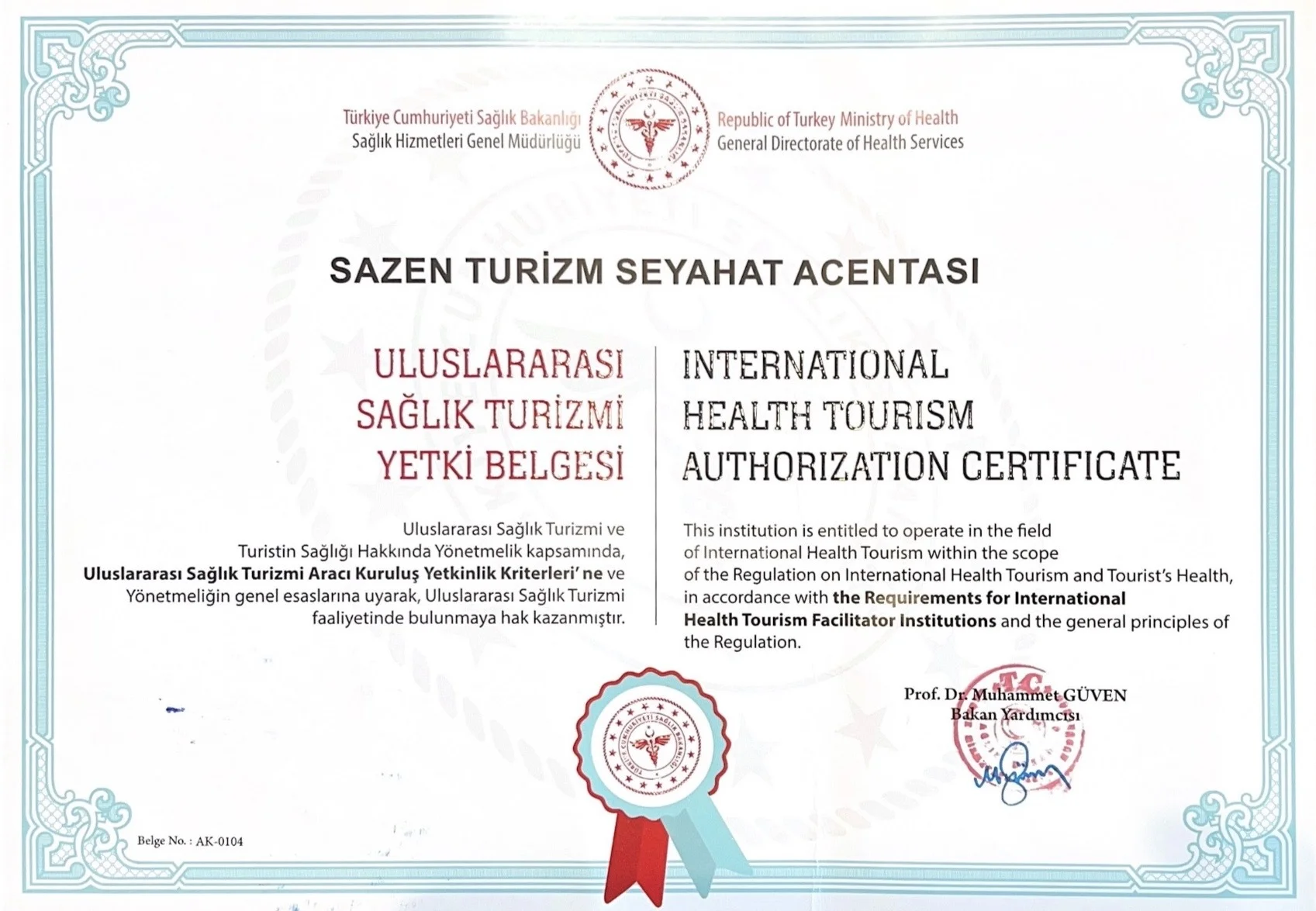
CK Health Turkey is based in Antalya and can coordinate airport and local transport, accommodation, and appointment logistics according to the package agreed with the patient. CK Health Turkey states that its treatments are carried out in contracted health institutions that hold health-tourism authorization certificates. Exact hospitals, accommodation, transfers, and included services depend on the individual treatment plan, so confirm the details of your own booking with the patient coordination team before travel.
Preparing for a medical procedure involves both practical planning and medical preparation. A clear, confirmed arrival itinerary can reduce uncertainty and help you focus on the instructions that matter for your own procedure. By knowing what happens when you arrive in Turkey the night before surgery and checking the details with your CK Health Turkey coordinator, you can arrive in Antalya better prepared for the next stage of your treatment.