Highlights
- Combining an arm lift and a thigh lift into a single surgery allows patients to address skin laxity in both the upper and lower body simultaneously under one anesthesia session.
- The primary benefits of this combined approach include reduced overall medical costs, a single recovery period, and more immediate aesthetic harmony across the entire body.
- Ideal candidates must be in good general health, maintain a stable weight, and be non-smokers to ensure safe healing and minimize the risk of surgical complications.
Massive weight loss, aging, or genetic predispositions often leave behind excess, lax skin that cannot be tightened through exercise alone. Many patients seeking comprehensive body transformation wonder whether undergoing an arm lift and thigh lift at the same time is a safe, effective solution. Combining these two popular cosmetic procedures allows individuals to address upper and lower body skin laxity simultaneously, streamlining both the surgical journey and recovery process.
Table of Contents
What Is a Combined Arm Lift and Thigh Lift?
Combining brachioplasty (arm lift) and thighplasty (thigh lift) into a single operative session is an advanced approach to body contouring. Instead of undergoing two separate surgical appointments months apart, a skilled plastic surgery team addresses both areas under one administration of general anesthesia. This combined surgical approach aims to reshape the contours of the upper limbs and lower extremities by eliminating loose skin, reducing residual subcutaneous fat, and tightening underlying supportive tissue.
Brachioplasty (Arm Lift) Overview
An arm lift specifically targets tissue laxity between the armpit and the elbow, commonly referred to as “bat wings.” During the procedure, an incision is placed along the inner or back surface of the upper arm. The surgeon removes excess cutaneous tissue, reshapes the underlying fascial matrix, and fuses the remaining skin to form a tighter, more toned upper arm contour. In cases where localized fat deposits persist, surgical excision is often paired with gentle liposuction to enhance definition.
Thighplasty (Thigh Lift) Overview
A thigh lift reshapes the inner or outer thighs by removing redundant, sagging skin and smooth muscle contours. In an inner (medial) thigh lift, the most common variation, incisions are placed strategically along the groin crease, extending downward toward the knee if extensive tissue reduction is required. The surgeon anchors the underlying deep fascia to stable pelvic ligamentous structures, ensuring long-term structural support while smoothing the skin surface.
Benefits of Having an Arm Lift and Thigh Lift at the Same Time
Deciding to address multiple body zones simultaneously offers distinct clinical and logistical advantages for patients seeking complete body restoration.
- Single Anesthesia Session: Undergoing one surgical procedure eliminates the physical stress and potential medical risks associated with multiple anesthesia administrations.
- Streamlined Total Recovery: Combining operations means navigating a single post-operative healing phase rather than enduring two distinct recovery periods separated by several months.
- Cost Efficiency: Consolidating surgery reduces total medical expenses by eliminating duplicate facility fees, surgeon fees, and anesthesiologist costs.
- Harmonious Aesthetic Balance: Sculpting the upper arms and thighs simultaneously yields immediate proportional harmony across the upper and lower frame.
Am I a Candidate for Combining Arm and Thigh Surgery?
While combining surgical procedures offers clear benefits, patient selection is critical for ensuring safety and achieving optimal aesthetic results. Candidates for a dual lift must meet strict physical and lifestyle criteria.
Ideal candidates typically possess:
- Stable Body Weight: Candidates should be at or near their ideal body weight for at least six consecutive months following weight loss or bariatric surgery.
- Good General Health: Absence of uncontrolled medical conditions, such as severe cardiovascular disease, active diabetes, or impaired blood clotting functions.
- Non-Smoking Status: Nicotine severely compromises microvascular circulation, drastically increasing the risk of wound dehiscence, skin necrosis, and delayed healing. Patients must abstain completely from nicotine products for several weeks before and after surgery.
- Realistic Expectations: Understanding surgical incision locations, potential scar maturation timelines, and post-operative mobility limitations is essential.
The Surgical Procedure: What to Expect
Executing a combined arm and thigh lift requires precise planning, operating room choreography, and advanced surgical techniques. Here is the step-by-step process of how the dual operation is performed:
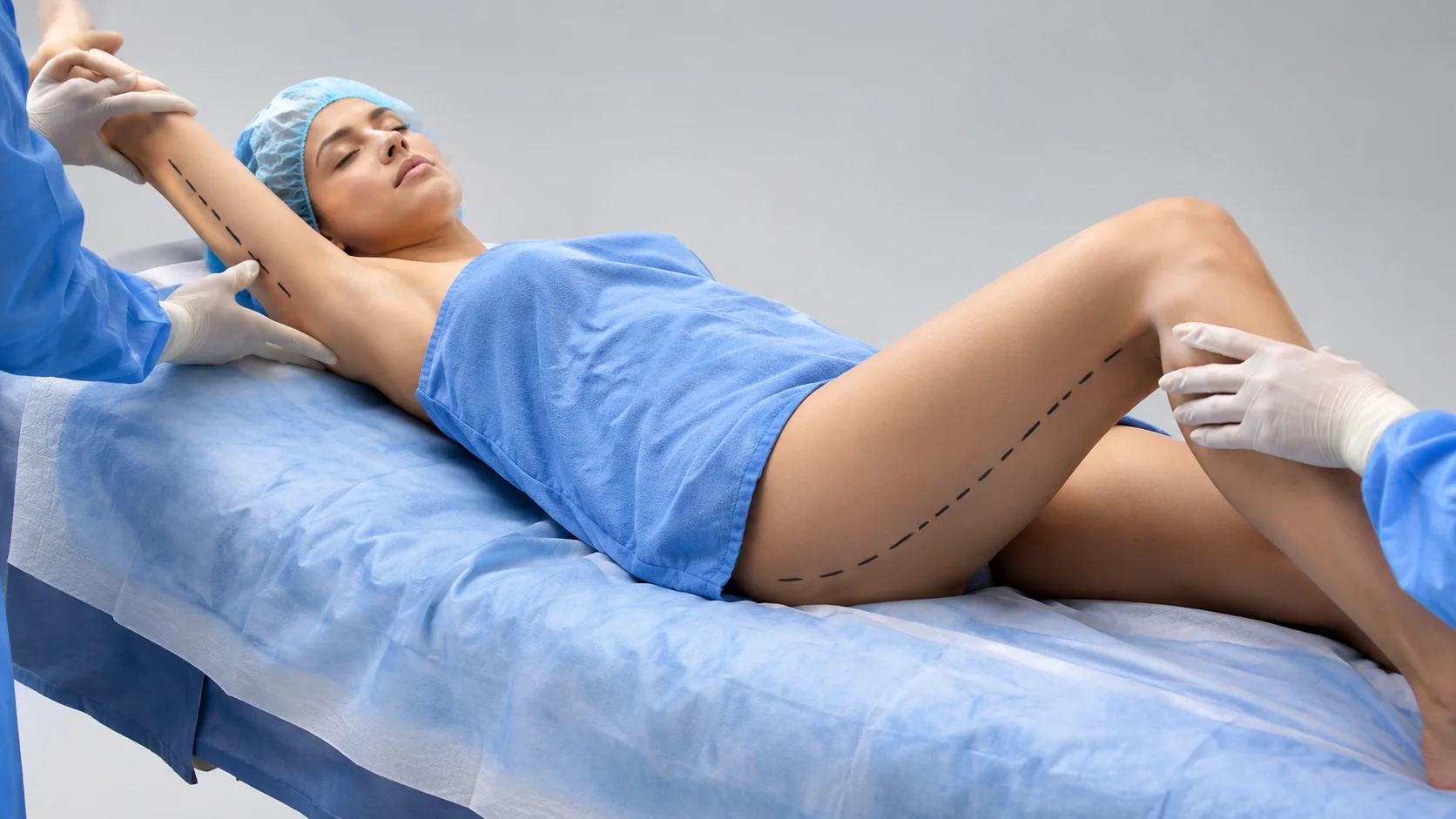
- Pre-operative marking is conducted while the patient is standing, carefully mapping out redundant skin zones and planned incision lines.
- The surgical team administers general anesthesia and sets up continuous physiological monitoring systems.
- The patient is prepped and sterilely draped to allow efficient access to both upper limbs and thighs.
- The surgeon performs the brachioplasty, making precise incisions along the pre-marked lines on the upper arms, resecting redundant tissue, and securing deep structural tissue with durable sutures.
- Liposuction is utilized where necessary to fine-tune the transition zones between the upper arms, axilla, and lateral chest wall.
- The surgical team transitions to the thighplasty, creating medial groin or vertical extended incisions to trim excess thigh skin and suspend deep fascial tissues.
- Temporary surgical drains are placed in both treatment areas to prevent fluid accumulation (seroma formation).
- Incisions are closed meticulously in multiple layers using absorbable sutures to minimize skin tension and scar width.
- Customized compression garments are fitted immediately over the arms and thighs to suppress edema and support newly contoured tissues.
Scientific Research Insight on Combined Body Contouring
Clinical studies in plastic and reconstructive surgery consistently highlight the safety and efficacy of combined post-bariatric procedures when proper candidate screening is enforced. Research evaluating surgical complications in massive weight loss patients shows that combining upper and lower body contouring operations—such as brachioplasty and medial thighplasty—does not significantly elevate systemic complication rates compared to single-zone operations, provided total surgical operating time remains within safe clinical thresholds (typically under 4 to 5 hours). Furthermore, findings indicate that single-stage combined procedures lead to higher overall patient satisfaction scores regarding body image perception and lower cumulative financial stress.
Single-Stage vs. Staged Surgeries: A Direct Comparison
Evaluating whether to combine procedures or stage them over time depends on patient health, tolerance for post-operative immobility, and surgical recommendations.
| Feature / Parameter | Combined Surgery (Single Session) | Staged Surgeries (Two Separate Sessions) |
| Anesthesia Exposure | Single exposure | Two separate exposures |
| Total Recovery Time | 4 to 6 weeks continuous | 8 to 12 weeks total (4 to 6 weeks per stage) |
| Overall Medical Costs | Lower (shared facility and anesthesia fees) | Higher due to duplicate facility & professional fees |
| Initial Physical Discomfort | Higher during the first 7 to 10 days | Moderate, but experienced across two separate phases |
| Time Away from Work | 2 to 3 weeks once | 2 to 3 weeks twice (4 to 6 weeks cumulative) |
| Surgical Risk Profile | Low to moderate (in healthy candidates) | Low per individual session |
Recovery Timeline and Post-Operative Care
Recovering from a dual operation requires patient compliance, mobility adjustments, and dedicated rest. Because both upper limbs and lower extremities are healing simultaneously, assistance during the early post-operative period is essential.
Weeks 1 to 2: Initial Healing Phase
During the first fortnight, swelling, bruising, and moderate discomfort in the arms and thighs are expected. Drains are typically removed within 5 to 10 days depending on fluid output levels. Patients must wear fitted compression garments continuously, maintain elevated arm positions when resting, and avoid spreading their legs wide or raising their elbows above shoulder level to avoid placing tension on fresh suture lines. Light short walks around the house are encouraged to promote deep vein circulation.
Weeks 3 to 4: Early Mobilization
Surgical incisions begin to close and stabilize. Swelling steadily subsides, allowing for improved range of motion in the limbs. Many non-manual workers can return to desk jobs around week 3. Compression garments must still be worn continuously except when showering.
Months 2 to 6: Tissue Maturation and Final Results
By month two, most surgical swelling has resolved, revealing clearer body contours. Patients may gradually resume light exercise, though heavy lifting and vigorous lower-body workouts should be delayed until cleared by the surgeon. Scar tissue continues to mature, flatten, and fade over 12 to 18 months, during which topical scar therapies and sun protection should be actively maintained.
Combined Body Contouring at CK Health Turkey
For international patients considering comprehensive body transformations, selecting a high-standard medical facility with extensive experience in post-bariatric surgery is vital. Located in Antalya, CK Health Turkey stands out as a premier destination for complex cosmetic and body contouring operations.
CK Health Turkey offers patients access to highly experienced, board-certified plastic surgeons specializing in multi-zone aesthetic revisions. International patients benefit from customized all-inclusive care packages that seamlessly combine surgical treatment, pre-operative screening, private VIP airport and hotel transfers, bilingual patient coordinators, and dedicated post-operative care in accredited hospital environments. By choosing CK Health Turkey, patients receive top-tier plastic surgery within state-of-the-art clinical settings while experiencing personalized support every step of the way.
To learn more about tailored combined body contouring options or to schedule a virtual consultation with a senior plastic surgeon, visit the official CK Health Turkey website today.
Combining an arm lift and thigh lift at the same time offers a highly effective pathway to complete body rejuvenation, dramatically reducing excess skin while consolidating recovery into a single period. When planned carefully with an experienced surgical team and performed on a well-prepared candidate, this dual procedure delivers life-changing physical and psychological benefits, empowering individuals to move forward with newfound confidence and comfort in their skin.