Highlights
- The abdominal binder is the primary 'Stage 1' garment used immediately after surgery to provide adjustable support and easy access to the incision site.
- The faja is a 'Stage 2' medical-grade compression garment that offers more precise contouring and uniform pressure as the patient moves into the later stages of healing.
- Proper use of these garments is clinically essential to minimize swelling, prevent fluid collection, and ensure the skin adheres correctly to the new abdominal contours.
Deciding between a binder vs faja after tummy tuck surgery is a critical step in ensuring a smooth and successful recovery. The right compression garment supports your newly contoured abdominal muscles, minimizes swelling, and helps the skin adhere to the underlying tissues. Understanding the specific roles of these two garments will help you navigate the healing stages with more comfort and confidence.
Table of Contents
What is an Abdominal Binder?
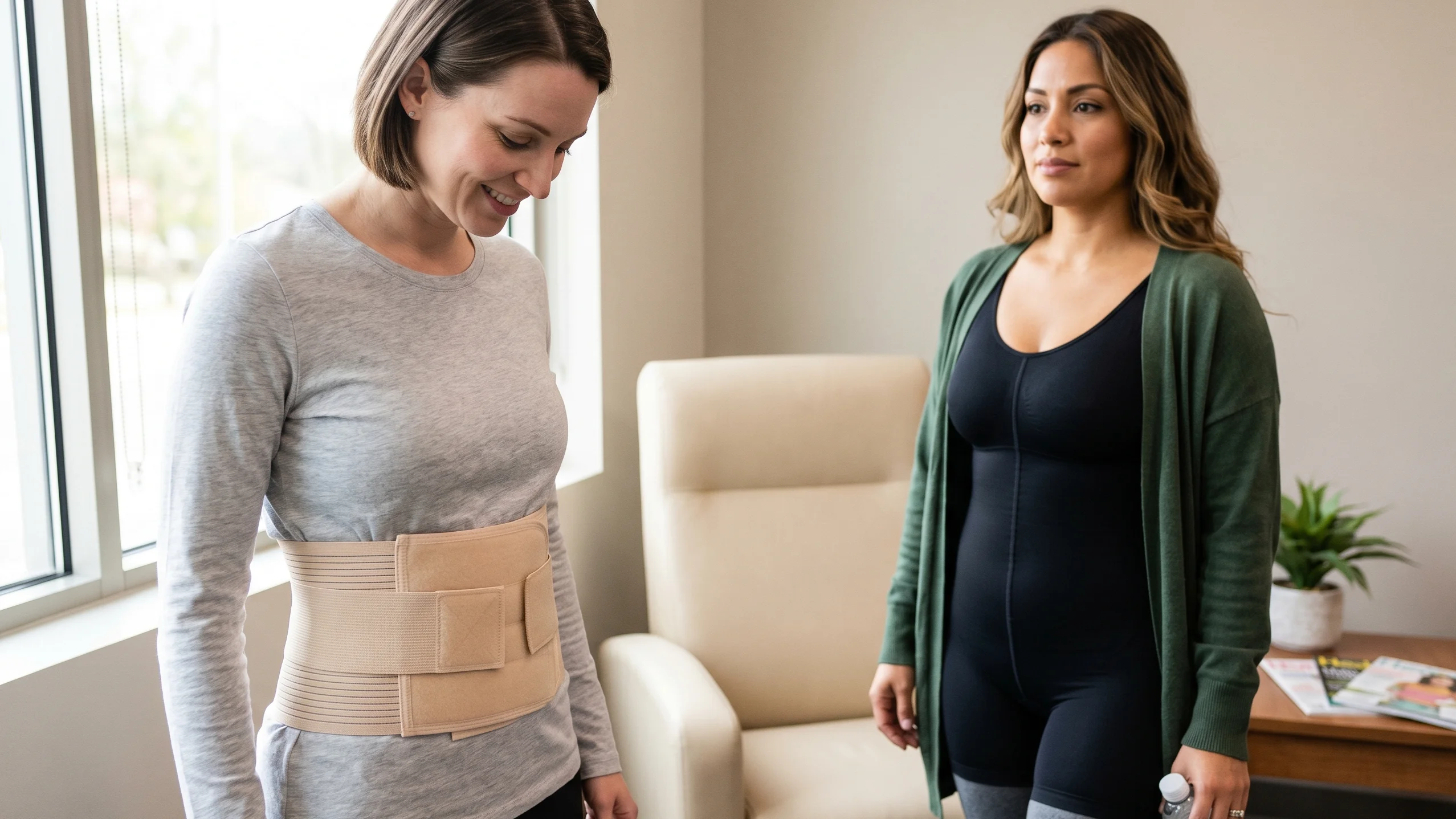
An abdominal binder is a wide, elastic wrap that goes around the midsection and is typically secured with high-strength Velcro. It is almost always the first garment a patient wears immediately after waking up from surgery. Because it is a simple wrap-around design, it allows surgeons and nurses easy access to the incision site and surgical drains during the first few days of recovery.
The primary function of a binder is to provide stable, adjustable support to the abdominal wall. After the internal muscles are repaired (muscle plication), the binder acts as a splint, preventing sudden movements from straining the sutures. Its adjustability is its greatest strength; as post-operative swelling fluctuates throughout the day, the patient or caregiver can easily loosen or tighten the Velcro to maintain a snug but comfortable fit.
What is a Faja?
A faja is a medical-grade compression garment that resembles a high-waisted bodysuit or girdle. Unlike the simple wrap-around design of a binder, a faja usually covers the entire torso and may extend down to the mid-thigh or knees. These garments are typically made from a blend of nylon and spandex (Powernet), providing more uniform and intense compression than a standard elastic wrap.
Fajas are often referred to as “Stage 2” garments. They feature complex closure systems, such as multiple rows of hook-and-eye fasteners or side zippers, which allow for more precise contouring as the body begins to take its final shape. While they are more difficult to put on than a binder, they offer a smoother finish under clothing and provide compression to the flanks and hips, which is essential if liposuction was performed alongside the tummy tuck.
Binder vs Faja after Tummy Tuck: Key Differences
When comparing a binder vs faja after tummy tuck procedures, the choice often comes down to the current stage of healing and the extent of the surgery. Each serves a distinct purpose in the recovery timeline, and most patients will eventually use both at different points.
Material and Design
Binders are typically made of thick, medical-grade elastic panels. They are designed for function over aesthetics, often feeling bulky under clothes. In contrast, fajas are constructed from thinner, highly breathable, yet very strong compressive fabrics. The “second-skin” feel of a faja is designed to hold the tissues firmly in place without the bulkiness of a wrap-around band.
Ease of Use
In the first week after surgery, mobility is limited. A binder is much easier to manage because it doesn’t require pulling a tight garment over the hips or struggling with tiny hooks. Patients with limited range of motion find the Velcro straps of a binder significantly more convenient. As mobility returns, the more complex faja becomes manageable and provides the more refined support needed for the later stages of healing.
Compression Level and Coverage
A binder provides focused compression only to the abdominal region. If your surgeon performed liposuction on your flanks (love handles) or back, a binder may not provide enough coverage. A faja offers comprehensive compression that covers the abdomen, waist, back, and often the thighs, ensuring that all areas treated during a “mommy makeover” or 360-degree contouring receive equal pressure.
The Recovery Timeline: When to Switch
Recovery from a tummy tuck is a marathon, not a sprint. The transition from a binder to a faja is a milestone that signals the end of the acute healing phase and the beginning of the refining phase.
Immediate Post-Op (Stage 1)
For the first 1 to 2 weeks, the binder is the gold standard. During this time, the risk of fluid collection (seroma) is at its highest, and surgical drains are usually still in place. The binder provides the necessary pressure to keep the skin flap down while allowing the drains to function without being crushed against the skin.
The Transition Phase (Stage 2)
Once the drains are removed and the initial incision has begun to close—typically around week 2 or 3—most surgeons recommend switching to a faja. This garment provides the uniform pressure needed to manage “the swell,” which can last for several months. Many patients find that the faja makes them feel more “held together” during daily activities and light walking.
Long-Term Support
By week 6 to 8, the most intense compression is usually no longer required. However, many patients choose to wear a light compression garment or a lower-stage faja for several months when they are particularly active or at the end of a long day when swelling tends to peak.
Benefits of Compression After Abdominoplasty
The use of compression is not just about comfort; it is a clinical necessity for achieving the best aesthetic results.
- Fluid Management: Compression helps the body reabsorb the fluids released during the inflammatory process. It closes the “dead space” between the skin and the muscle where fluid could otherwise pool and form a seroma.
- Pain Reduction: By limiting the movement of the abdominal wall, compression garments significantly reduce the sharp pains associated with coughing, sneezing, or laughing during the early weeks.
- Skin Adherence: For the skin to heal smoothly over the new abdominal contours, it must be held firmly against the underlying tissue. Compression prevents the skin from sagging or healing with irregularities.
Scientific Insights on Post-Op Compression
While the clinical use of compression is standard practice, researchers continue to study its precise impact on surgical outcomes. Understanding the science behind these garments helps patients appreciate why their surgeon’s instructions are so specific.
A systematic review published in the Journal of Plastic, Reconstructive & Aesthetic Surgery (PMC11253148) highlights that while high-quality randomized trials are still developing, existing data indicates that abdominal binders and compression garments are beneficial for reducing post-operative pain and improving physical function. The study notes that early use of these garments can help minimize the risk of seroma formation by applying consistent pressure to the surgical site. Furthermore, the psychological benefit of feeling “supported” during the initial recovery phase was found to contribute significantly to a patient’s overall sense of well-being and mobility after major abdominal surgery.
Choosing the Right Garment for Your Needs
Selecting the correct size is the most important factor when purchasing a faja or binder. A garment that is too tight can restrict blood flow to the incision site, potentially leading to skin necrosis or delayed healing. Conversely, a garment that is too loose will not provide the necessary pressure to prevent swelling.
Fit and Sizing
You should be able to slide a hand under your binder or faja. If you feel numbness in your legs, experience shortness of breath, or see deep, painful indentations in your skin, the garment is too tight. It is common to need a smaller size as your swelling decreases, so many patients buy a “Stage 1” and “Stage 2” garment in different sizes.
Fabric and Breathability
Look for fabrics that are hypoallergenic and moisture-wicking. Since you will be wearing these garments nearly 24/7 for several weeks, skin irritation can become a major issue. Wearing a thin, seamless cotton camisole under your binder or faja can help protect sensitive skin and absorb sweat, making the experience much more tolerable.
CK Health Turkey: Your Partner in Post-Op Care
For patients seeking world-class results with comprehensive aftercare, CK Health Turkey offers a premier experience in the heart of the Mediterranean. We understand that the success of a tummy tuck depends heavily on the quality of the surgical technique and the diligence of the recovery process. Our medical teams provide patients with the highest quality compression garments and personalized recovery protocols to ensure every patient achieves their aesthetic goals safely.
International patients choosing CK Health Turkey benefit from a seamless journey that includes expert surgical care, luxury recovery accommodations, and dedicated follow-up support. We are committed to guiding you through every step of your transformation, from the initial consultation to the final transition out of your compression gear.
If you are ready to take the next step in your body contouring journey, we invite you to reach out for a personalized consultation. Visit our website today to learn more about our tummy tuck procedures and the comprehensive care packages we offer.
Comparison Table: Binder vs Faja
| Feature | Abdominal Binder | Faja (Stage 2 Garment) |
| Primary Closure | Velcro Straps | Hooks, Eyes, or Zippers |
| Best Use Phase | Days 1–14 (Stage 1) | Weeks 3–8+ (Stage 2) |
| Adjustability | Highly adjustable | Limited (usually 3 rows of hooks) |
| Coverage Area | Mid-abdomen only | Torso, hips, and often thighs |
| Ease of Dressing | Very easy (wrap-around) | Difficult (pull-on/hook-up) |
| Visibility | Bulky under clothes | Sleek/Invisble under clothes |
| Cost | Generally lower ($20–$50) | Higher ($80–$200+) |
The decision regarding a binder vs faja after tummy tuck surgery is often guided by your surgeon’s specific technique and your body’s unique healing pace. By starting with the supportive stability of a binder and graduating to the refined contouring of a faja, you give your body the best environment to heal into its new, beautiful shape. Consistent use of these garments, combined with following your medical team’s advice, is the most effective way to ensure your tummy tuck results last a lifetime.