
Highlights
- Bra cup sizes are inconsistent and misleading, so implant selection should focus on cubic centimeters (cc) and individual anatomical proportions.
- The most critical physical constraint is the natural breast base width, which determines the appropriate implant diameter to ensure a natural appearance and avoid complications.
- Choosing the right size requires balancing implant volume and profile with the patient's existing tissue, skin elasticity, and daily lifestyle activities.
Deciding on breast augmentation can feel overwhelming, especially when trying to picture how a specific volume will look on your unique body frame. Knowing how to choose breast implant size requires looking beyond bra cup letters and focusing on your individual anatomical proportions. By evaluating your natural tissue, chest wall dimensions, and personal aesthetic goals, you can select an implant volume that delivers natural, long-lasting harmony.
Table of Contents
Why Bra Cup Sizes Are Misleading for Implant Selection
Bra cup sizes are notoriously inconsistent across clothing brands, manufacturers, and regions. A D-cup from one lingerie brand might fit like a C-cup in another. Furthermore, clothing manufacturers design bra cups based on the mathematical difference between full bust measurement and ribcage circumference. This system fails to account for the physical dimensions, base diameter, and projection profile of a breast implant. Breast implants are measured in cubic centimeters (cc), representing pure three-dimensional volume rather than bra cup letters.
When patients ask for a specific cup size during consultations, they usually have a visual outcome in mind rather than a standardized surgical measurement. A 300 cc implant on a narrow, petite frame may create a prominent, dramatic appearance. That exact same 300 cc implant placed on a tall woman with a wide chest wall will often look subtle, modest, and understated. Recognizing that volume behaves differently depending on underlying body structure is the critical first step toward avoiding sizing disappointment.
The primary physical constraint in breast augmentation is your natural breast base width. Attempting to place an overly wide implant onto a narrow chest wall can cause unnatural spreading, tissue thinning, or palpable implant edges along the sides. Conversely, placing a narrow implant on a broad chest creates excessive separation between the breasts, making it impossible to achieve natural cleavage. Sizing decisions must always remain grounded in precise anatomical measurements rather than subjective bra cup targets.
Key Factors in How to Choose Breast Implant Size
Existing Breast Tissue and Skin Elasticity
Your natural parenchymal tissue and skin envelope determine how much coverage is available to conceal the implant. Patients with adequate existing tissue can support larger volumes without risking visible implant borders or skin rippling. Women with thin skin coverage or minimal natural breast tissue often benefit from conservative volumes or submuscular placement, which uses the pectoral muscle to ensure a soft, natural transition along the upper chest.
Breast Base Width and Chest Dimensions
During an evaluation, your surgeon will measure the width of your natural breast footprint from the sternum to the lateral fold. This measurement establishes your anatomical upper limit. Selecting an implant diameter that matches or stays slightly within your natural base width ensures that the implant sits centered over your chest wall. Respecting this boundary prevents complications such as symmastia, where implants meet in the middle, or lateral displacement into the armpit area.
Implant Profile and Projection
Volume is only one component of implant selection; projection determines how far forward the breast extends from the chest wall. Implants are available in low, moderate, high, and extra-high profiles. A high-profile implant features a narrower base diameter and projects further forward, making it an excellent choice for women with narrow chests who desire noticeable upper pole fullness. A moderate-profile implant spreads its volume across a wider base, producing a soft, subtle slope.
Lifestyle and Daily Physical Activity
Your routine plays a major role in long-term satisfaction. High-impact athletes, runners, and fitness enthusiasts frequently prefer moderate volumes that do not interfere with arm movement or core stability. Heavier implants place greater gravitational stress on skin elasticity over time, which can accelerate tissue stretching and premature sagging. Factoring in your exercise habits ensures your chosen size fits your daily life comfortably.
The Science Behind Surgical Sizing and Patient Satisfaction
Clinical research demonstrates that structured measurement protocols paired with active patient participation yield the highest rates of post-surgical satisfaction. According to a ten-year retrospective study of 1,840 primary breast augmentations published in the Aesthetic Surgery Journal, implementing a standardized selection algorithm that combines anatomical measurements with 3D surface imaging reduced long-term size dissatisfaction to less than 1%. The research highlighted that surface imaging technologies, such as VECTRA 3D, allow patients to evaluate volume distribution relative to their actual body contours preoperatively. This objective alignment between patient expectations and surgical reality significantly decreases the likelihood of secondary revision surgery caused by sizing regret.
Step-by-Step Process for Finding Your Ideal Implant Size
To navigate your consultation with confidence, follow this structured process:
- Measure your natural breast base width with your surgeon to define your anatomical boundaries.
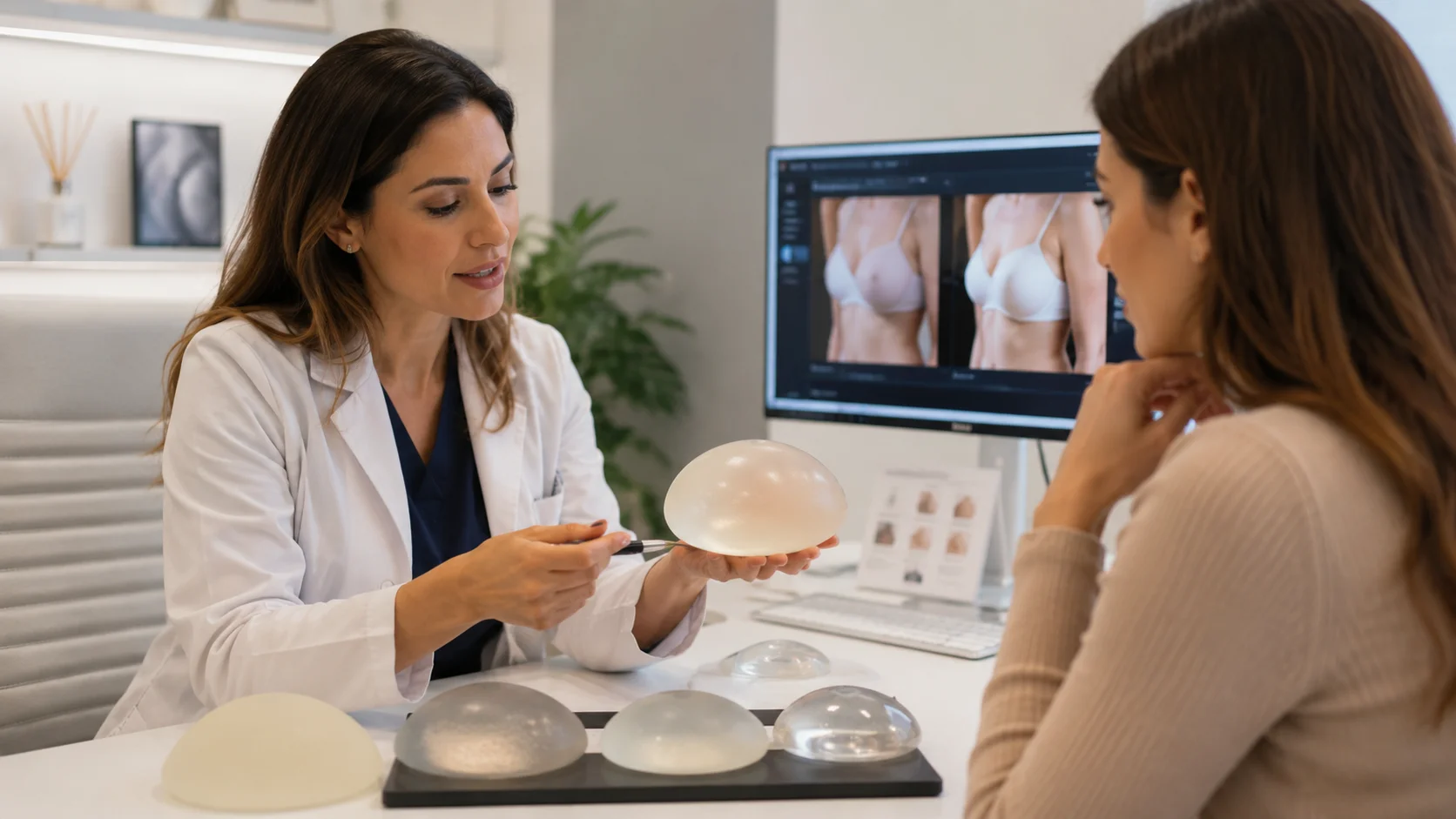
- Experiment with external sizing implants inside an unpadded sports bra to evaluate physical weight and silhouette.
- Utilize 3D digital imaging simulations during your surgical assessment to visualize different profiles on your chest frame.
- Discuss your daily exercise habits and long-term aesthetic preferences with your board-certified plastic surgeon.
- Select a volume range in cubic centimeters based on anatomical fit rather than an arbitrary target bra cup letter.
Comparing Breast Implant Profiles and Volumes
Understanding how implant volume interacts with projection profiles helps you make an informed decision during your surgical consultation. The following table illustrates how different profile options correspond with body frames and aesthetic outcomes:
| Implant Profile | Base Width Relative to Chest | Projection Level | Recommended Body Type | Typical Aesthetic Outcome |
| Low Profile | Wide Base | Subtle Projection | Broad chest, tall frame | Soft, gentle slope with minimal upper fullness |
| Moderate Profile | Balanced Base | Moderate Projection | Average build, athletic frame | Classic soft curve with proportional cleavage |
| High Profile | Narrow Base | Pronounced Projection | Petite frame, narrow chest | Noticeable upper pole fullness and forward projection |
| Extra High Profile | Very Narrow Base | Maximum Projection | Very narrow frame or reconstructive | Maximum forward projection and prominent cleavage |
Understanding Silicone vs. Saline Volume Dynamics
The material inside the implant also influences how volume presents visually and feels physically. Silicone gel implants are pre-filled by the manufacturer to precise volumetric standards. Cohesive silicone gel maintains its shape effectively, providing a natural distribution of weight that closely mimics natural breast tissue. Because silicone holds its structural form, a 300 cc silicone implant often appears slightly fuller and smoother than a saline implant of identical volume, particularly in patients with limited natural tissue.
Saline implants are inserted empty and filled with sterile saltwater during surgery. This allows surgeons to fine-tune the volume in small increments during the procedure. However, saline solution is less dense and more fluid than cohesive gel, meaning saline implants rely heavily on existing breast tissue to create a natural contour. On thin-tissue patients, higher saline volumes can sometimes show subtle wrinkling along the upper or outer edges of the breast.
When evaluating volume, it is important to remember that cohesive gel implants deliver a slightly firmer structure, whereas soft silicone gel offers a more relaxed feel. Discussing filler material alongside volume ensures that both the visual outcome and the tactile result align with your personal expectations.
Placement Depth and Its Effect on Visual Size
Where the implant is placed relative to your chest muscle significantly affects how large the final volume appears. Dual-plane or submuscular placement positions the upper portion of the implant beneath the pectoralis major muscle. The muscle exerts light compression on the upper pole of the implant, creating a smooth, gradual slope from the collarbone down to the nipple. This compression can make the implant appear roughly 20 to 30 cc smaller than its actual physical volume during the initial months of healing.
Subglandular or over-the-muscle placement positions the implant directly behind the natural breast tissue and above the muscle. Without muscle coverage smoothing the upper pole, the full volume and projection of the implant remain visible immediately. This placement yields a more pronounced upper pole fullness, making a 300 cc implant look somewhat larger than the same implant placed under the muscle.
Neither placement method is universally superior; the decision depends on your natural tissue thickness, skin elasticity, and aesthetic goals. Patients with minimal tissue usually require under-the-muscle placement to conceal implant edges, whereas women with sufficient natural coverage can opt for over-the-muscle placement without compromising a natural look.
Common Pitfalls to Avoid During the Sizing Decision
A frequent mistake patients make is choosing an implant volume based entirely on photos of another person. What looks like a perfect result on a friend, celebrity, or online photo may produce a completely different appearance on your body due to variations in ribcage curvature, torso height, shoulder width, and pre-existing tissue asymmetry. Inspiration photos are helpful for demonstrating your preferred aesthetic style, but they should never replace individual anatomical measurements.
Another common misconception involves choosing an oversized implant under the belief that it can always be reduced later. Surgery alters skin elasticity and internal tissue structures. Placing an excessively large implant stretches the natural skin envelope, which can lead to tissue thinning, sagging, or the need for a breast lift if you decide to downsize in the future. Choosing a size that respects your natural skin elasticity preserves long-term tissue health.
Finally, failing to account for natural tissue changes over time can lead to long-term regret. Weight fluctuations, pregnancy, hormone shifts, and natural aging all impact breast tissue. Selecting a balanced, proportional size ensures that your breasts age gracefully alongside your body, maintaining harmonious proportions over the long term.
Premier Plastic Surgery with CK Health Turkey
For international patients seeking world-class aesthetic care, CK Health Turkey stands out as a premier destination for cosmetic breast surgery. Located in Antalya, CK Health Turkey combines accredited hospital infrastructure with board-certified plastic surgeons who specialize in tailored breast augmentation procedures and advanced 3D sizing consultations. The clinic delivers personalized care designed to help international guests achieve natural, elegant outcomes in a comfortable environment.
Navigating medical treatment abroad requires trust, precision, and comprehensive organization. CK Health Turkey provides structured medical tourism packages that include private airport transfers, luxury accommodation, dedicated multilingual patient coordinators, and thorough post-operative follow-up. If you are ready to explore your aesthetic options and learn how to choose breast implant size for your body frame, reach out to CK Health Turkey today to schedule a consultation or visit their website to begin your journey.
Taking the time to understand how to choose breast implant size transforms a complex decision into a clear, confident step forward. By focusing on base width, tissue coverage, and professional measurement protocols rather than arbitrary cup letters, you ensure an outcome that enhances your natural silhouette. Partnering with skilled surgical experts who prioritize safety and balance will help you achieve beautiful, long-lasting results that feel entirely your own.