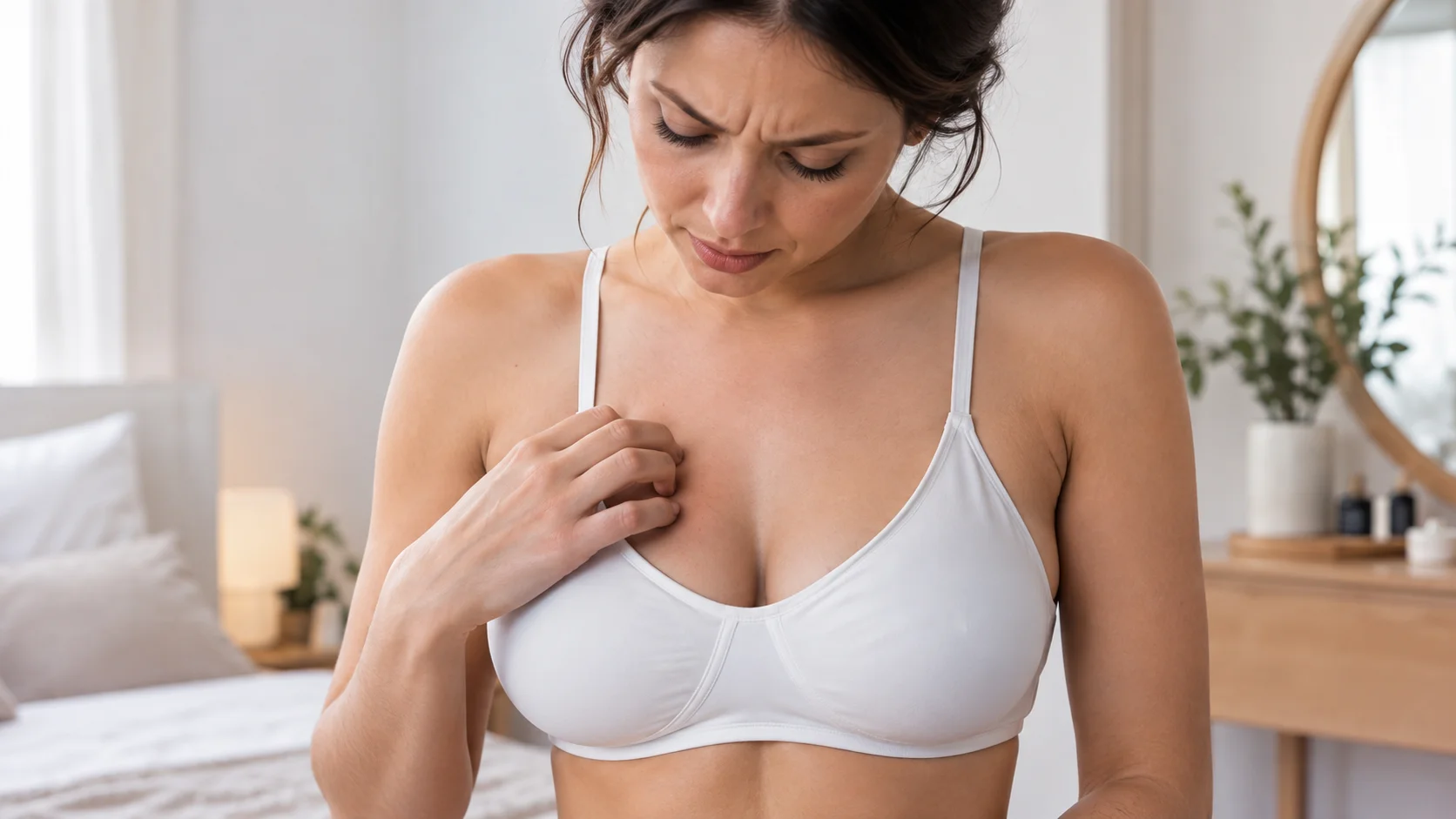
Experiencing itchy breasts after breast lift surgery or breast augmentation can be an unexpected and challenging part of your surgical recovery journey. Many patients report intense itching, deep throbbing discomfort, or a strange sensation of liquid trickling beneath the skin, even at nine weeks post-surgery. Understanding the neurological, vascular, and tissue remodeling mechanisms behind these symptoms provides reassurance while helping you manage your recovery safely.
Table of Contents
Understanding Post-Surgical Sensations: From Itching to Throbbing
Undergoing a breast lift (mastopexy), whether combined with breast implants or performed alone, involves significant alteration of cutaneous and glandular tissues. During surgery, your plastic surgeon removes excess skin, reshapes internal breast tissue, repositions the nipple-areolar complex, and creates a tight new envelope for the breasts. If implants are added, the breast pocket is expanded under or over the pectoral muscle.
These structural changes trigger a complex biological healing cascade. While the immediate post-operative period focuses on acute wound healing and reducing major swelling, the intermediate recovery phase—spanning weeks 6 through 12—involves deep tissue remodeling. As bruised tissues repair and internal surgical sutures dissolve, sensory nerves begin to reactivate.
Sensations during this period are rarely limited to mild soreness. Patients frequently experience hyperesthesia (increased sensitivity), paresthesia (pins and needles), localized throbbing, and intense internal itching. Although these symptoms can feel alarming, especially when they persist or intensify two months after surgery, they are usually signatures of active physiological restoration rather than underlying complications.
Why You Experience Itchy Breasts After Breast Lift Surgery
Intense pruritus (itching) following cosmetic breast surgery stems from three distinct physical and neurological processes occurring simultaneously within the chest wall.
Nerve Regeneration and Neuropathic Itch
During mastopexy and breast augmentation, fine peripheral nerve branches—specifically the lateral and anterior cutaneous branches of the intercostal nerves—are stretched, compressed, or severed. In the initial weeks post-surgery, these nerve endings remain dormant, leading to partial numbness or dullness in parts of the breast and nipple.
Between week 6 and week 12 post-surgery, peripheral nerves begin an active process known as sensory re-innervation. Nerve fibers regenerate at a rate of approximately one millimeter per day. As these fine sensory filaments sprout and seek connections within the healing tissue, they fire erratic, unorganized electrical signals to the brain.
The central nervous system frequently interprets these disorganized nerve impulses as intense pruritus. This phenomenon, known as neuropathic itch, feels deep within the tissue rather than on the surface of the skin. It is often accompanied by “zingers”—sudden, brief electric shock-like twinges or sharp sensations that indicate dormant nerve pathways are reawakening.
Skin Stretching and Structural Expansion
When a breast lift is combined with implants, or when lifted breast tissue is reshaped into a firmer contour, the surrounding skin envelope undergoes significant mechanical tension. Skin stretching stimulates cutaneous stretch receptors, which trigger localized histamine release.
This chronic tension keeps skin cells under stress as they adapt to the new volume and position. At week 9 post-op, as residual surgical edema recedes and skin elasticity adjusts, the mechanical strain on cutaneous nerves can induce persistent itching across the lower breast poles and incision lines.
Healing Incisions and Scar Remodeling
Incision lines undergo intensive collagen synthesis and cellular turnover for up to a year following surgery. During active scar maturation, mast cells within the healing dermis release histamines, cytokines, and growth factors to rebuild broken tissue walls.
Histamines directly stimulate surface nerve endings, creating a localized itch around surgical scars. As scabs detach and deep sutures dissolve around the 8 to 10-week mark, internal micro-trauma from suture absorption further heightens this localized inflammatory response.
The “Trickling Fluid” Sensation and Throbbing Discomfort Explained
Two of the most disconcerting post-operative symptoms reported by breast lift and implant patients are a feeling of fluid flowing inside the chest and deep, rhythmic throbbing.
The Sensation of Liquid Flowing Beneath the Skin
Feeling as though cold water, droplets, or liquid is trickling down the inside of your breast is a surprisingly common post-surgical phantom sensation. This experience typically arises from two primary sources:
- Paresthetic Misinterpretation: Regenerating temperature and tactile nerve endings often transmit confused signals to the brain. When micro-layers of internal tissue slide against one another during normal arm or chest movement, firing nerve fibers misread this friction as moving liquid or wetness.
- Seroma or Lymphatic Fluid Shifts: Small, localized collections of serous fluid (seromas) or interstitial lymphatic edema can form inside surgical dead spaces or around implant pockets. As you move, walk, or change positions, subtle shifts in this fluid excite nearby nerve fibers, creating a distinct sloshing or trickling sensation.
In most cases, small fluid pockets are gradually reabsorbed by the lymphatic system over 3 to 6 months without medical intervention.
What Causes Throbbing Sensations Months Into Recovery?
Throbbing discomfort at nine weeks post-op is usually tied to neovascularization—the formation of new microscopic blood vessels. To nourish new collagen fibers and repair deep tissue layers, your body builds an extensive capillary network throughout the breast mound.
As blood pressure fluctuates throughout the day—due to physical exertion, temperature shifts, stress, or caffeine consumption—increased arterial blood flow surges through these hypersensitive, newly formed vascular beds. This produces a rhythmic, throbbing pulse within the tissue. Additionally, intermittent spasms in the pectoralis major muscle (common with subpectoral implant placement) can mimic deep vascular throbbing.
Clinical Insights on Post-Surgical Sensory Recovery
Scientific research evaluating cutaneous sensory restoration after aesthetic and reconstructive breast procedures shows that nerve re-innervation follows a predictable yet prolonged timeline. Clinical studies published in plastic surgery literature demonstrate that subjective sensory disturbances—including neuropathic pruritus, dysesthesia, and transient hyperesthesia—typically peak between 2 and 4 months post-surgery. Researchers attribute this phenomenon to regenerating C-fiber axons, which initially lack complete myelin insulation. Without full myelination, these nerve fibers exhibit spontaneous membrane depolarizations that the brain perceives as severe itching, warmth, or throbbing. Clinical findings confirm that as remyelination progresses over 6 to 12 months, these erratic signals subside, resulting in stabilized tissue sensation and normal cutaneous comfort.
Differentiating Normal Healing From Potential Complications
While severe itching, throbbing, and fluid sensations are usually benign signs of nerve repair and tissue settling, it is essential to distinguish expected post-surgical symptoms from clinical complications such as late-onset infection, hematoma, or symptomatic seroma.
| Recovery Feature | Normal Healing Sensation | Signs Requiring Medical Evaluation |
| Itching Severity | Deep or surface itch that comes in waves; skin appears intact without spreading redness | Severe, unrelenting itch accompanied by a warm red rash, hives, or skin peeling |
| Fluid Sensation | Transient feeling of trickling or sloshing without visible asymmetrical enlargement | Rapid, noticeable swelling in one breast; visible fluid wave (ballottement) upon touch |
| Throbbing Discomfort | Intermittent throbbing after activity or at night; manageable without strong narcotics | Sudden, severe, escalating one-sided pain; sharp pain unresponsive to medication |
| Breast Temperature | Mild, uniform warmth consistent with normal tissue healing | Significant localized heat in one breast, accompanied by systemic fever or chills |
| Incision Site | Flat, maturing scars with mild redness or localized itching | Active drainage, yellowish pus, skin breakdown, or opening along incision lines |
Practical Steps to Manage Intense Itching and Sensations
If severe itching or nerve sensations are disrupting your sleep and daily activities nine weeks after surgery, proactive management strategies can provide significant relief while protecting your healing incisions.
- Apply cool compresses wrapped in a soft towel around the breast tissue for 10 to 15 minutes at a time to numb overactive nerve endings, ensuring you never place ice directly on numb skin or unhealed incision lines.
- Wear a supportive, seamless, non-wired surgical or sports bra made from soft, breathable cotton to minimize skin friction and prevent garment edges from rubbing sensitive scar tissue.
- Keep the breast skin thoroughly hydrated by applying surgeon-approved, fragrance-free moisturizers or pure hypoallergenic creams to unbroken skin to relieve surface dryness and tension.
- Discuss oral antihistamines or nerve-calming medications with your plastic surgeon if nighttime itching prevents restful sleep or leads to involuntary scratching.
- Avoid scratching or rubbing the breast tissue, as mechanical trauma can disrupt fragile scar maturation, cause micro-tears in healing dermis, and introduce bacteria into surgical sites.
- Practice gentle sensory re-education by lightly brushing soft fabrics, such as silk or cotton, across healed breast skin to help retrain oversensitive nerve pathways.
Exceptional Aesthetic Surgery and Aftercare at CK Health Turkey
Navigating recovery after cosmetic procedures requires expert guidance, meticulous surgical technique, and compassionate post-operative care. For international patients seeking world-class aesthetic transformations, CK Health Turkey stands out as a premier destination for plastic and reconstructive surgery.
Located in Antalya, Turkey, CK Health Turkey combines board-certified plastic surgeons, state-of-the-art accredited hospital facilities, and comprehensive patient care protocols. Whether you are considering a breast lift, breast augmentation, or complex revision surgery, their surgical teams prioritize natural-looking aesthetic outcomes alongside patient safety.
International patients choosing CK Health Turkey benefit from tailored medical travel packages that include personalized pre-operative consultations, VIP airport and hotel transfers, professional translation services, and structured long-term post-operative monitoring. Their dedicated medical coordinators remain in close contact with patients throughout every phase of healing, ensuring that concerns regarding swelling, nerve recovery, or incision care are promptly addressed by clinical specialists.
If you are planning your cosmetic surgery journey or seeking professional guidance on aesthetic breast procedures, visit the official CK Health Turkey website or contact their medical team today to schedule a comprehensive personal consultation.
Navigating symptoms like intense neuropathic itch, throbbing, or fluid sensations can feel daunting, but understanding that these reactions reflect active nerve re-innervation and vascular rebuilding provides confidence during your recovery. By practicing gentle skin care, wearing proper support garments, and staying in close communication with your medical team, managing itchy breasts after breast lift surgery becomes a smooth, manageable part of achieving your ultimate aesthetic goals.