Highlights
- Lymphatic drainage massage is essential after a tummy tuck to manually reroute fluid toward functional lymph nodes, as surgery disrupts the natural drainage pathways in the lower abdomen.
- The technique helps prevent complications such as subcutaneous fibrosis (tissue hardening), seroma formation, and prolonged discomfort by accelerating the clearance of protein-rich fluid.
- Unlike deep tissue massage which can cause trauma, manual lymphatic drainage uses feather-light pressure and must be performed by a certified therapist once surgical drains are removed.
Recovering from abdominoplasty requires patience, disciplined post-operative care, and an understanding of how your body repairs torn tissue. Many plastic surgeons recommend incorporating lymphatic drainage massage after tummy tuck surgery to accelerate the clearance of trapped fluid and refine final abdominal contours. Knowing when to begin this specialized therapy and how it interacts with your body’s altered anatomy can significantly improve your overall healing experience.
Table of Contents
Understanding Your Body’s Lymphatic System After Abdominoplasty
The lymphatic system is a complex network of vessels, nodes, and organs that acts as your body’s drainage and immune filter. It is responsible for collecting excess fluid, cellular debris, and proteins from interstitial tissues and returning them to the bloodstream. Under normal circumstances, lymph fluid in the lower abdomen flows downward toward the inguinal lymph nodes situated in the groin area.
During a tummy tuck (abdominoplasty), a surgeon tightens the underlying abdominal muscles, removes excess skin and fat, and pulls the upper abdominal tissue downward to create a smooth, flat midsection. This process involves significant tissue undermining and incision placement across the lower abdomen. Consequently, the delicate superficial lymphatic channels in the lower abdominal wall are cut and temporarily disrupted. Without these primary drainage pathways intact, lymph fluid cannot flow efficiently to its usual destination, leading to fluid accumulation, swelling, and localized pressure.
Why Lymphatic Drainage Massage After Tummy Tuck Is Essential for Healing
Post-operative swelling, known clinically as edema, is a universal response to surgical trauma. When tissues are altered, the inflammatory response increases capillary permeability, releasing fluid into surrounding tissues to aid cellular repair.However, if this fluid lingers for too long without proper evacuation, it can impede healing and compromise your cosmetic outcome.
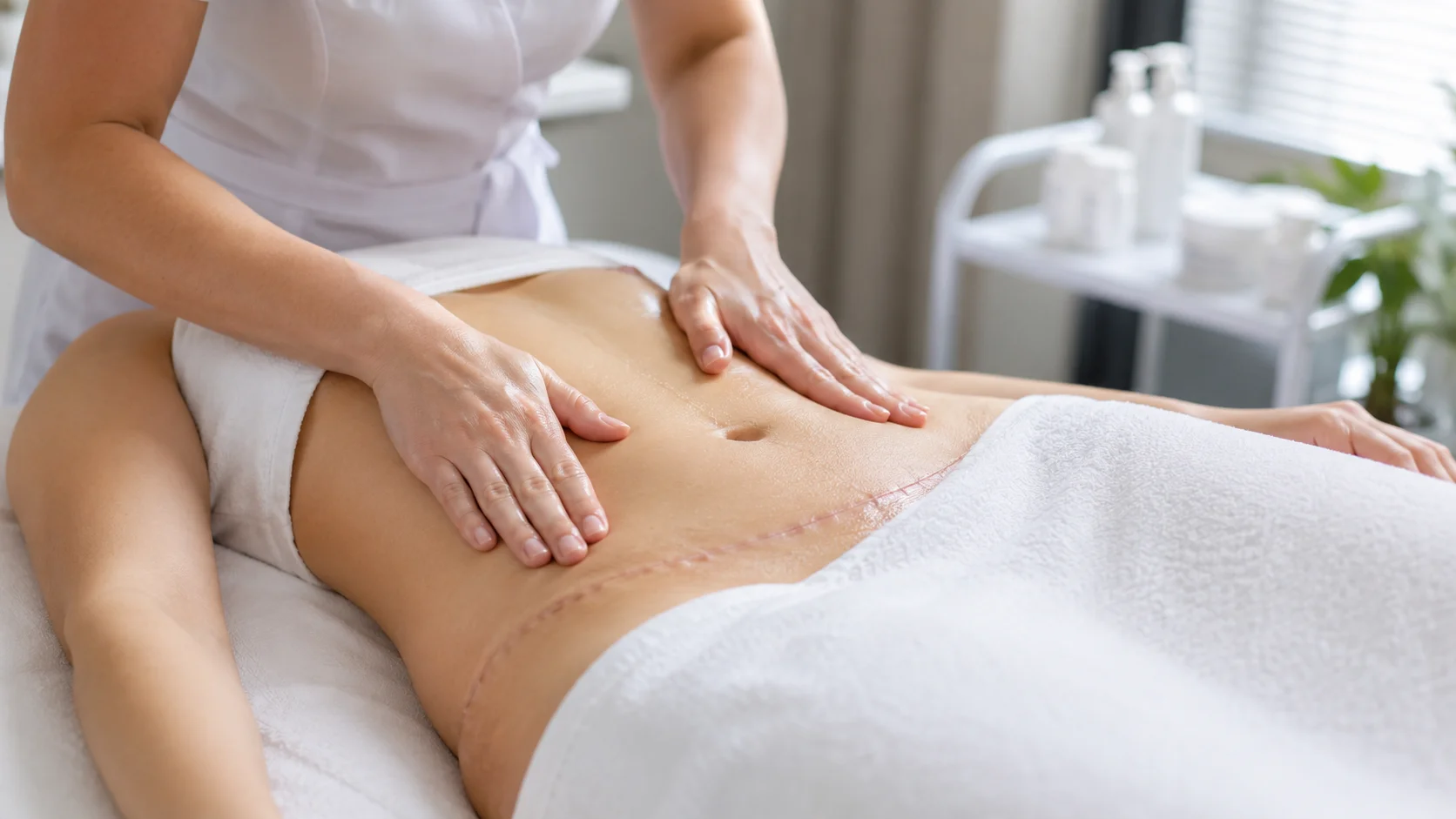
Integrating lymphatic drainage massage after tummy tuck surgery addresses fluid retention by using feather-light, rhythmic movements that manually stimulate functioning lymph vessels. Rather than pushing fluid aggressively, manual lymphatic drainage (MLD) gently encourages lymph fluid to bypass damaged tissue channels and re-route toward healthy, operational lymph nodes.
Failing to manage post-surgical fluid buildup can lead to several recovery complications:
- Subcutaneous Fibrosis: Stagnant, protein-rich fluid can trigger excessive collagen deposition, causing tissue to harden and form uneven, bumpy, or firm patches beneath the skin.
- Seroma Formation: Fluid pockets can collect between the abdominal wall and skin flap, occasionally requiring needle aspiration or surgical drainage.
- Prolonged Discomfort: Elevated fluid pressure stretches sensitive tissues, increasing feelings of tight, painful abdominal heaviness.
- Delayed Contour Refinement: Persistent swelling conceals surgical results, making it difficult to assess true aesthetic progress for months longer than necessary.
Clinical Insights on Post-Abdominoplasty Lymphatic Rerouting
Scientific evaluation highlights why post-surgical massage techniques must be specialized rather than generic. A landmark study published in Plastic and Reconstructive Surgery utilized lymphoscintigraphy imaging to map superficial abdominal lymphatic pathways before and after abdominoplasty. Researchers discovered that while 100% of patients drained fluid toward the inguinal groin nodes prior to surgery, 65% of patients shifted their primary lymphatic drainage path toward the axillary underarm nodes after the procedure. This anatomical shift proves that standard downward massage strokes are anatomically incorrect after a tummy tuck; specialized manual lymphatic drainage must redirect fluid upward and laterally toward functional axillary and collateral nodal channels to effectively resolve post-operative edema.
Key Benefits of Manual Lymphatic Drainage (MLD)
When performed by a certified therapist trained in post-surgical care, manual lymphatic drainage provides therapeutic benefits that go beyond simple relaxation.
Acceleration of Interstitial Fluid Clearance
MLD increases the contraction rate of lymphatic micro-vessels, known as lymphangions. By increasing vessel pumping action, MLD helps clear interstitial fluid and protein fragments rapidly, allowing swelling to diminish much faster than through passive rest alone.
Prevention of Fibrotic Tissue Lumps
As edema persists, high concentrations of fibrin proteins remain in the tissue space. If left untreated, these proteins organize into tough, fibrous bands that feel like hard lumps under the skin. Gentle lymphatic manipulation clears protein-rich fluid before it hardens, maintaining smooth tissue texture across your abdominal plane.
Pain Mitigation and Parasympathetic Activation
Light, continuous rhythmic strokes calm the central nervous system by stimulating parasympathetic nerve pathways. This tactile stimulation reduces local pain signaling, relaxes tense surrounding muscles, and decreases overall physical stress during early recovery.
Enhanced Scar Pliability and Skin Health
By reducing localized tissue tension, MLD improves microvascular microcirculation. Fresh blood flow carries oxygen and vital nutrients to healing skin edges, supporting clean scar formation and improving general skin elasticity around the surgical site.
When and How to Begin Post-Operative Lymphatic Therapy
Timing is critical when initiating post-operative massage. Starting too early or using improper technique can strain healing surgical incisions, while waiting too long allows fibrotic tissue to establish itself.
The typical clinical progression follows a structured schedule tailored to your surgeon’s specific protocol:
- Surgeon Clearance: Receive explicit medical authorization from your operating plastic surgeon prior to scheduling your initial session.
- Initial Evaluation (Days 7 to 14): Begin gentle therapy once surgical drains are removed and primary incision edges have closed securely.
- Nodal Clearance: The therapist initiates treatment by lightly massaging intact lymph nodes around the neck, collarbone, and axilla (armpits) to create room for incoming fluid.
- Directional Drainage: The practitioner applies delicate, feather-light skin traction to direct fluid away from the lower abdomen toward functioning axillary nodes.
- Garment Re-fitting: Immediately resume wearing your prescribed post-surgical compression garment after the session to prevent fluid from returning to cleared tissue spaces.
- Treatment Series: Complete a regular schedule of 2 to 3 sessions per week over a 3 to 6 week period based on individual edema levels.
Manual Lymphatic Drainage vs. Standard Deep Tissue Massage
A common mistake made by patients during recovery is booking a standard Swedish or deep tissue massage. Post-surgical lymphatic massage operates on physiological principles that are entirely different from muscular massage.
| Feature | Manual Lymphatic Drainage (MLD) | Deep Tissue / Swedish Massage |
| Target Depth | Superficial lymphatic vessels directly under the skin | Deep muscle tissue and fascial layers |
| Applied Pressure | Feather-light (less than 5 mmHg of pressure) | Moderate to severe deep pressure |
| Primary Goal | Fluid rerouting, edema reduction, seroma prevention | Muscle knot release, deep tension relief |
| Post-Op Safety | Safe and recommended when cleared by a surgeon | Contraindicated; can cause internal bleeding and tissue trauma |
| Sensation | Gentle, soothing, non-painful stroke movements | Deep physical pressure, potential soreness |
Applying deep pressure to an abdomen recovering from surgical skin elevation and muscle repair can sever delicate newly forming capillary sprouts, re-open internal bleeding sources, or cause severe inflammation. Always ensure your therapist is certified in post-surgical lymphatic care.
Recovery Outcomes: Standard Recovery vs. MLD-Supported Recovery
While the body eventually clears swelling on its own, adding structured manual lymphatic therapy alters the speed and quality of post-operative healing.
| Recovery Dimension | Standard Recovery (Rest & Compression) | MLD-Supported Recovery |
| Peak Swelling Duration | 6 to 12 weeks | 3 to 6 weeks |
| Risk of Hard Fibrosis | Moderate to High | Low |
| Seroma Incident Rate | Higher due to fluid stagnation | Reduced through active fluid evacuation |
| Skin Sensitivity & Tightness | Persistent over several months | Resolves faster as fluid pressure decreases |
| Final Contour Visibility | Apparent at 6 to 12 months | Apparent at 2 to 4 months |
Professional Post-Operative Care at CK Health Turkey
For international patients traveling to Turkey for plastic surgery, post-operative support is just as vital as the procedure itself. CK Health Turkey stands out as a leading health tourism destination in Antalya, offering foreign patients world-class surgical expertise paired with meticulous, end-to-end recovery management.
Recognizing that proper healing dictates aesthetic outcome, CK Health Turkey integrates comprehensive post-surgical care into patient journeys. Medical teams provide dedicated oversight, ensuring that post-operative treatments—including professional manual lymphatic drainage sessions—are administered safely under direct physician supervision. Patients recovering in Antalya benefit from luxury accommodations, personalized clinical monitoring, multilingual support, and structured recovery therapies designed to minimize downtime and maximize cosmetic results.
If you are planning an abdominoplasty or body contouring journey abroad, reach out to the medical coordination team at CK Health Turkey to explore comprehensive plastic surgery and post-operative recovery packages tailored to your goals.
Adhering to a structured recovery protocol ensures that your cosmetic investment yields the smoothest, most contoured result possible. Incorporating professional lymphatic drainage massage after tummy tuck surgery provides the physiological support your body needs to evacuate fluid efficiently, ease physical discomfort, and reveal your final sculpted midsection with confidence.