Highlights
- Medical necessity and urgency of spinal surgery take priority over elective cosmetic procedures, especially when nerve damage or instability is present.
- Recovery timelines for both surgeries are distinct and demanding, requiring joint consultation between surgeons to ensure the patient can physically tolerate the positioning and movement restrictions of a second operation.
- A previous tummy tuck can complicate future spinal surgeries like ALIF that require an abdominal approach, as scar tissue and abdominal wall changes may increase the risk of intraoperative complications.
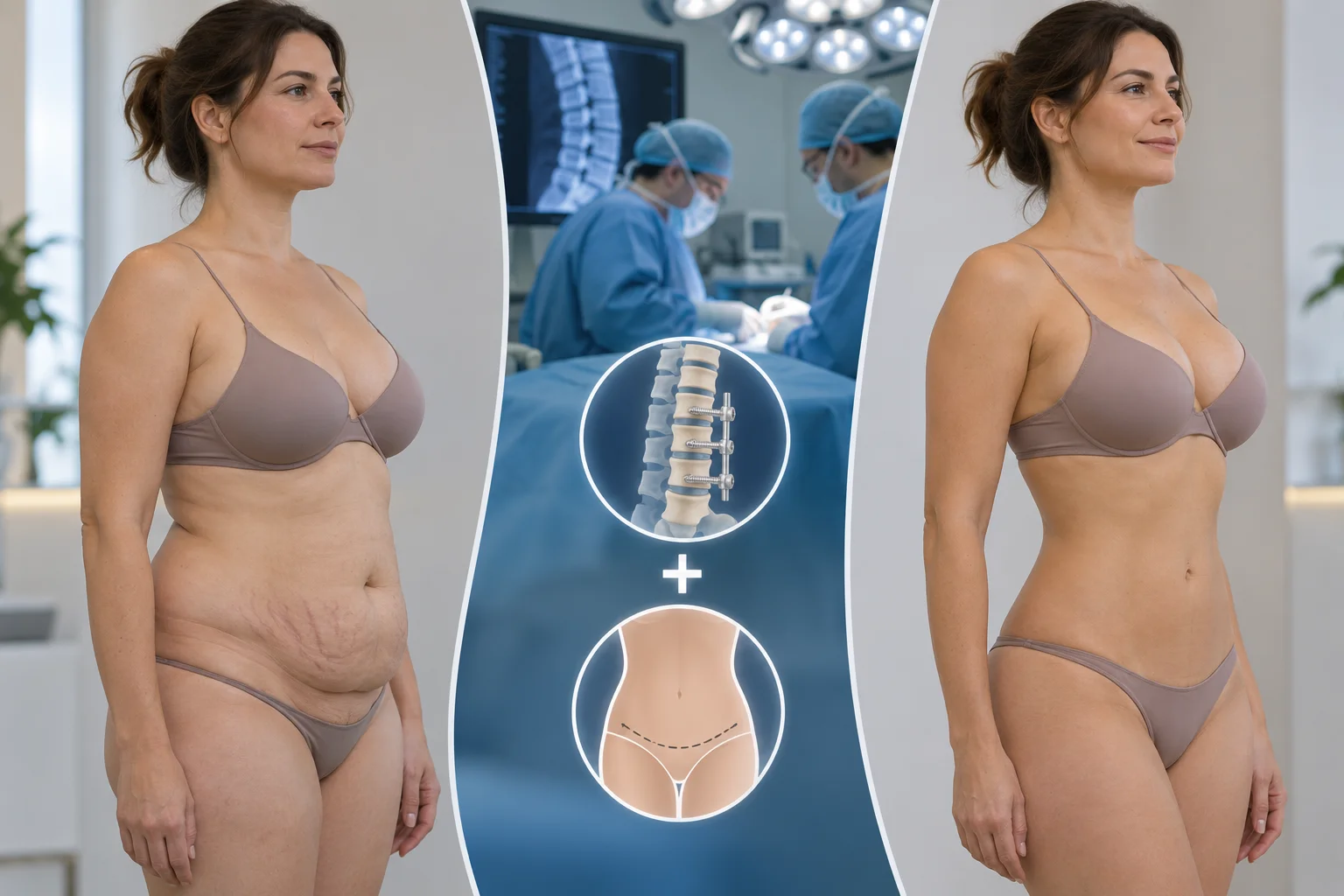
Deciding whether to have a mummy makeover before or after spinal surgery is not simply a question of fitting two operations into your calendar. A mummy makeover may involve a tummy tuck, breast surgery and sometimes liposuction, while spinal surgery can range from a relatively limited disc procedure to a major fusion. Each has different effects on lifting, sleeping positions, walking and recovery.
Table of Contents
The safest order depends on why you need spinal treatment, how urgent it is, the specific operation being planned and whether your spine surgeon and plastic surgeon agree that you are ready for elective body-contouring surgery.
Mummy makeover before or after spinal surgery: which comes first?
There is no universal rule that a mummy makeover must take place before or after spinal surgery. When spinal surgery is medically necessary to address progressive nerve damage, instability or another serious condition, that medical priority generally needs to be addressed before elective cosmetic treatment. When spine symptoms are stable and surgery is not urgent, the appropriate sequence may be more flexible.
For many patients, the practical question is whether they can recover sufficiently from the first operation to tolerate the positioning, movement restrictions, anaesthesia and rehabilitation required by the second. A surgeon should not approve an elective mummy makeover simply because an incision looks healed or a particular number of weeks has passed.
The American Academy of Orthopaedic Surgeons (AAOS) explains that a spinal fusion requires months of biological bone healing even when patients begin to feel better sooner. By comparison, the American Society of Plastic Surgeons (ASPS) describes incision care, compression and gradual activity progression after tummy tuck surgery. The recovery demands may overlap, but they are not the same.
If both procedures have been recommended, request a joint planning discussion—or at least written information exchanged between your spine surgeon, plastic surgeon and anaesthetist—before setting either date.
Why does the type of spinal surgery matter?
The term “spinal surgery” covers very different operations. A patient recovering from a single-level lumbar discectomy may have different limitations from someone healing after a multilevel instrumented fusion, revision operation or extensive correction of spinal deformity.
Lumbar microdiscectomy or decompression
A microdiscectomy removes disc material that is irritating or compressing a nerve. A decompression procedure, which may include a laminectomy, creates more space for nerves. Patients are generally encouraged to start walking early, but they may be asked to limit bending, twisting, lifting and strenuous activity during initial recovery.
The NHS guidance on lumbar decompression explains that some people return to work after approximately four to six weeks, while resuming all usual activities can take up to twelve weeks. This is general information, not clearance for another major operation at twelve weeks.
Guy’s and St Thomas’ NHS Foundation Trust advises avoiding loads heavier than a half-full kettle for up to six weeks after some decompression or discectomy operations and recommends individual physiotherapy advice.
Lumbar spinal fusion
A spinal fusion joins two or more vertebrae so that they heal into a more stable segment of bone. This process takes considerably longer than the surface incision needs to close. Hardware may help maintain alignment while the bone fusion develops, but it does not mean the healing process is complete.
The AAOS states that the fused bone may take several months to become solid and that rehabilitation and activity increases should follow the treating surgeon’s advice. A proposed tummy tuck with abdominal muscle repair should therefore be discussed carefully during fusion recovery.
Spinal deformity surgery or complex revision
Operations for scoliosis, major instability or revision surgery may involve more extensive incisions, fixation and rehabilitation. The recovery and timing of later elective procedures can differ substantially from those following a limited decompression.
If your surgeon is still monitoring nerve recovery, wound healing, spinal alignment, bone fusion or the need for revision surgery, that ongoing medical plan should influence when—or whether—a mummy makeover is appropriate.
When spinal surgery should not be delayed for cosmetic treatment
Some spinal problems require prompt or urgent assessment. New or worsening leg weakness, numbness in the area around the genitals or buttocks, and new difficulty controlling the bladder or bowels can indicate serious nerve compression. These symptoms should not be treated as an ordinary cosmetic scheduling issue.
The Cambridge University Hospitals NHS Foundation Trust advises emergency assessment for new limb weakness, genital numbness or bowel and bladder dysfunction after spinal surgery. Similar symptoms in someone who has not yet had surgery can also require immediate medical evaluation.
If a spine specialist recommends urgent treatment because of neurological deterioration, planning an elective tummy tuck or breast procedure first may create an inappropriate delay. The spinal diagnosis and recommended urgency must guide the decision.
On the other hand, not every episode of back pain or slipped disc requires spinal surgery. Appropriate non-operative management may be recommended. Ask the spine specialist what problem actually needs treating and whether an operation is necessary before coordinating elective cosmetic plans.
Why might a mummy makeover be harder during spinal recovery?
A typical mummy makeover combines at least a tummy tuck with breast augmentation, breast lift or breast reduction. Each additional component can affect recovery, and a tummy tuck in particular may involve abdominal wall tightening.
Early after a tummy tuck, many patients rest with a degree of hip and knee flexion to avoid excessive tension on the abdominal incision. They may have difficulty getting out of bed, lifting objects, standing fully upright or caring for children. The ASPS recovery guidance notes that assistance with household tasks is often necessary and that early movement is encouraged to help prevent blood clots.
Spine surgery may also involve specific instructions for bending, twisting, transferring from bed to chair and supporting the back. Following two potentially competing recovery plans at once can be difficult, particularly if a patient is still using mobility aids or has persistent leg symptoms.
Comfort alone is not enough to establish surgical readiness. Your team should consider walking ability, muscle strength, balance, pain control, medication, nutritional status and the ability to follow postoperative instructions.
Can a tummy tuck affect a future spinal operation?
Yes, in selected circumstances. One important detail that patients may not realise is that some lumbar fusion operations approach the spine through the abdomen, rather than through the back.
An anterior lumbar interbody fusion (ALIF) uses an abdominal incision to access a disc space in the lower spine. The AAOS explains that the incision and approach can depend partly on previous abdominal operations.
A previous tummy tuck does not automatically prevent ALIF. However, scar tissue, abdominal wall changes and the operative approach may need special consideration by the spine and access surgeons.
In a 2020 retrospective cohort study of 660 patients undergoing ALIF, each additional prior abdominal operation was associated with higher odds of an intraoperative complication after adjustment for other factors. The study evaluated abdominal surgical history overall, not mummy makeovers specifically, and cannot predict the risk of ALIF after an individual tummy tuck.
More recent research also illustrates the importance of nuance: a 2026 large database analysis of ALIF and prior abdominal surgery found that apparent differences in postoperative outcomes were no longer statistically significant after adjustment for comorbidities. That study examined different outcomes and methods from the 2020 analysis, so the findings should not be treated as directly contradictory or as proof that scar-related exposure difficulties never occur.
If an ALIF is under consideration, share any previous C-section, abdominoplasty, hernia repair or other abdominal operation with the spine surgeon. If you have not yet undergone a tummy tuck, asking the spine team about the planned access route may materially affect the order of treatment.
Does abdominal muscle repair place extra stress on the spine?
A tummy tuck may include rectus diastasis repair, sometimes described as abdominal muscle tightening or plication. This changes the abdominal wall’s tension and can temporarily affect how someone stands, sits, coughs or rises from bed.
That does not prove that a tummy tuck will damage spinal implants or reverse a successful fusion. It does mean that patients recovering from recent spine surgery may need a tailored plan for movement and core rehabilitation.
The evidence base for directly comparing mummy makeover timing before and after spinal surgery is limited. Studies of abdominoplasty and back discomfort cannot establish whether a cosmetic operation is safe at a particular stage of spinal fusion or whether it will improve a diagnosed spinal disorder.
Ask whether planned muscle plication, abdominal compression garments and early postoperative flexion are compatible with the spinal procedure you have had or expect to have. If there is any uncertainty, the spine surgeon should review the plan before elective surgery.
How long after spinal surgery can you have a mummy makeover?
There is no evidence-based universal waiting interval. The correct timing depends on the spinal operation, healing progress, mobility, ongoing symptoms, medications and the proposed plastic surgery procedures.
After uncomplicated lumbar decompression, some people return to many normal activities over several weeks to a few months. After fusion, bone healing and rehabilitation often extend across several months. Being able to walk comfortably or return to work does not by itself indicate readiness for a multi-procedure cosmetic operation.
Consider the following assessment points rather than a fixed deadline:
- The spinal incision is healed, without infection, fluid leakage or unresolved wound problems.
- The spine surgeon is satisfied with the neurological and, where relevant, fusion or imaging findings.
- You can walk and transfer safely without significant assistance or unstable symptoms.
- You can tolerate the positioning required during and after the proposed tummy tuck and breast procedures.
- Any prescribed pain medicines, anticoagulants and other drugs have been reviewed by the relevant clinicians.
- You have completed appropriate rehabilitation milestones and have a realistic support plan for another recovery period.
The AAOS guidance on minimally invasive spine surgery emphasises that recovery depends on the actual procedure and that fusion healing may take months even with smaller incisions.
If the spine team has not cleared you for the required movement and activity, do not book a mummy makeover solely because a particular number of months has elapsed.
How long after a mummy makeover could you have spinal surgery?
That depends on the urgency and nature of the spinal problem. Elective spine surgery may be easier to plan after the tummy tuck and any breast procedure have healed sufficiently, but a medically urgent spinal operation may need to proceed sooner regardless of cosmetic recovery.
After a tummy tuck, the Mayo Clinic advises patients to avoid straining and certain movements for about the first six weeks, with restrictions on sport and other activity potentially lasting longer. This is a recovery guideline, not a standard clearance time for spinal surgery.
For a future spine operation, the team should assess abdominal incision healing, infection or wound issues, ability to lie in the required surgical position and the potential effects of a prior abdominal operation on access.
A posterior spinal procedure may involve lying face down in the operating theatre, which could be uncomfortable or problematic with a recently operated abdomen. An anterior approach raises different abdominal scar and tissue considerations. The planned technique and positioning need to be discussed, not assumed.
Comparing the two possible sequences
| Clinical situation | Planning priority | Why it matters |
|---|---|---|
| Progressive neurological symptoms or urgent spinal condition | Prompt spine assessment and medically indicated treatment | Cosmetic surgery should not delay necessary neurological care |
| Planned spinal fusion with prolonged rehabilitation | Complete an appropriate phase of fusion recovery before elective cosmetic surgery | Bone healing, movement limits and activity clearance are important |
| Uncomplicated decompression with good recovery | Reassess after spine follow-up and return of safe mobility | Timing may be more flexible, but is not automatic |
| Future ALIF through an abdominal incision | Discuss any planned or previous tummy tuck with the spine surgeon | Scar tissue and abdominal access route may influence planning |
| Stable back pain without a recommendation for surgery | Clarify diagnosis, rehabilitation and cosmetic suitability separately | Back pain alone does not dictate a surgical sequence |
| Recent mummy makeover with newly urgent spine symptoms | Urgent medical assessment | Aesthetic recovery does not override urgent neurological needs |
This is a decision framework rather than an instruction to undergo either operation first. A coordinated plan should account for the actual diagnosis and the risks of both procedures.
What about blood clots, anaesthesia and medicines?
Major surgery, reduced mobility and some individual health factors can increase the risk of blood clots in the legs or lungs. It is important to avoid planning a second elective operation during a period when the first operation has left you substantially immobile or medically unstable.
NICE guidance NG89 recommends assessing venous thromboembolism risk in surgical patients and provides measures to consider for patients undergoing elective spinal operations. The ASPS tummy tuck guidance also highlights early walking and appropriate prevention strategies.
If you take a blood thinner after spine surgery, the plastic surgeon and prescribing clinician must agree on management. Do not stop anticoagulants simply to proceed with cosmetic surgery.
Tell the anaesthetist about previous anaesthesia difficulties, sleep apnoea, chronic pain medicines, steroid treatment, nicotine exposure and any ongoing neurological problems. A longer combined cosmetic operation can involve different anaesthetic and recovery demands from a limited procedure.
Seek immediate help for sudden chest pain, breathlessness, fainting or a painful swollen leg. These can be signs of serious complications.
Can a mummy makeover improve back pain after spinal surgery?
It is important not to confuse body contouring with treatment for spinal disease. Breast reduction may improve symptoms in some people whose breast size contributes to musculoskeletal discomfort, but that does not mean it treats a compressed nerve, unstable spinal segment or failed fusion.
Similarly, tightening the abdominal wall after pregnancy may change posture or the way a patient uses abdominal muscles, but evidence of an improvement in general back symptoms does not establish that an abdominoplasty can replace indicated spine treatment.
If relief of back pain is your main reason for considering a mummy makeover, discuss the source of the pain with a spine specialist, physiotherapist or other appropriate clinician. A cosmetic surgeon can explain expected aesthetic changes, but should not promise that spinal pain or neurological symptoms will disappear.
Does the order change if you want breast surgery but no tummy tuck?
Yes, potentially. A mummy makeover is not one fixed operation. Breast augmentation, breast lift or reduction without abdominal wall repair may create different recovery and positioning demands from a full abdominoplasty with muscle plication and liposuction.
However, breast surgery still involves incisions, lifting restrictions and potentially general anaesthesia. If you have recent spine surgery, reaching overhead, pushing up from bed, caring for children or using walking aids may be difficult during breast recovery.
If you rely on your arms to transfer safely after spinal surgery, a breast procedure that temporarily limits upper-body effort may create significant practical problems. The surgeons should account for your actual mobility needs rather than assuming a smaller cosmetic operation is harmless.
Our mummy makeover candidacy and recovery guide explains how different combinations affect the overall plan.
Can you recover from both procedures in the same period?
Trying to overlap recoveries may look efficient, but it can complicate activity restrictions, wound care, pain control and rehabilitation. Spine surgery may require specific movements and exercises while a tummy tuck limits abdominal strain; breast surgery can further restrict the arms that help you move.
The ASPS discussion of combined cosmetic operations stresses that combining procedures requires careful attention to safety and total time under anaesthesia. There is no basis for assuming that spine surgery and mummy makeover procedures should be combined or deliberately overlapped as a matter of convenience.
Sometimes the preferable approach is to complete recovery milestones from one operation before proceeding with the other. Which procedure is first, and how much time is needed, should be determined by the medical teams.
How should you sleep and get out of bed between procedures?
Sleeping positions can be an overlooked reason to delay elective cosmetic treatment after spinal surgery. Following a tummy tuck, the abdomen may be supported with the hips and knees flexed. A spine surgeon may have provided separate instructions about neutral alignment, log-rolling or using a back brace.
A position that relieves tension on the tummy tuck incision is not automatically comfortable or suitable during recent fusion recovery, and positioning restrictions from spine surgery may make it harder to find a safe alternative.
Before booking a mummy makeover, ask the medical teams to demonstrate how you would sleep, turn, sit, stand and walk during the first few postoperative days. It should be possible to get to the bathroom and to follow clot-prevention advice without violating either recovery plan.
If there is no practical way to meet both sets of restrictions, that is a reason for the surgeons to reconsider timing, the planned procedures or the support you will need.
What if you had a tummy tuck years ago and now need spinal fusion?
An old, fully healed tummy tuck is a different situation from a recent abdominal operation. Many people undergo later non-cosmetic surgery without a problem, but previous abdominal incisions and muscle repair should still be disclosed—especially if a spine surgeon is considering an anterior approach.
The AAOS ALIF information describes how the spine can be accessed through the abdomen. Your spine surgeon may want details of previous incisions, mesh if any, hernia repair and abdominal complications.
Do not assume that an abdominal scar automatically rules out spinal surgery. The treating team will weigh imaging, anatomy, the proposed surgical approach and your other health conditions to plan access safely.
Questions to ask both surgeons before choosing a date
Because the two procedures affect some of the same movements and recovery activities, it helps to request clear answers in writing:
- Is my spinal condition urgent, or is it reasonable to postpone spinal surgery?
- Am I having decompression, discectomy, fusion or a more extensive spinal procedure?
- Will the spine be approached from the back, side or through the abdomen?
- What evidence of spine healing or rehabilitation progress is needed before elective cosmetic surgery?
- Would a tummy tuck with abdominal muscle plication interfere with my spinal restrictions?
- Can I walk, turn in bed and manage personal care safely after both procedures?
- How should pain medicines, anticoagulants and other prescriptions be managed?
- Would it be safer to separate breast surgery from a tummy tuck or postpone part of the makeover?
- Are there additional risks related to previous abdominal incisions, fusion hardware or ongoing nerve symptoms?
- What follow-up would be needed if the mummy makeover is performed abroad?
Share relevant operation notes, imaging reports, medication lists and any written spine rehabilitation instructions with the plastic surgery team before making non-refundable travel arrangements.
CK Health Turkey: planning a mummy makeover with spinal history
CK Health Turkey in Antalya supports international patients exploring plastic surgery and body-contouring procedures in Turkey. If you are considering a mummy makeover and have had—or may need—spinal surgery, provide your diagnosis, the specific spinal operation, relevant dates, ongoing symptoms and current rehabilitation or medication requirements during the consultation process.
A qualified plastic surgeon and the team responsible for your spine care should assess whether the proposed surgery is appropriate, whether an abdominal repair or breast procedure creates conflicting restrictions and whether further healing or rehabilitation is required. Coordinators can assist with the consultation and travel-planning process, but they cannot replace clearance from the treating clinicians.
To discuss an individual assessment and the available consultation process, contact CK Health Turkey and explain your spinal history before considering a cosmetic surgery date.
The decision to have a mummy makeover before or after spinal surgery should be driven by medical priority and recovery readiness, not by the earliest available appointment. Understanding the spine procedure, any abdominal surgical access and the practical demands of tummy tuck and breast surgery gives both teams the information they need to plan safely and avoid overlapping restrictions.