Planning cosmetic treatment abroad involves deciding whether to travel solo or bring a support person. Deciding to get plastic surgery in Turkey alone or with a companion depends on your budget, procedure complexity, and personal comfort with international travel. Understanding how each option impacts your safety, recovery, and overall expenses will help you make the right choice for your surgical journey.
Table of Contents
Plastic Surgery in Turkey Alone or With a Companion: Key Differences
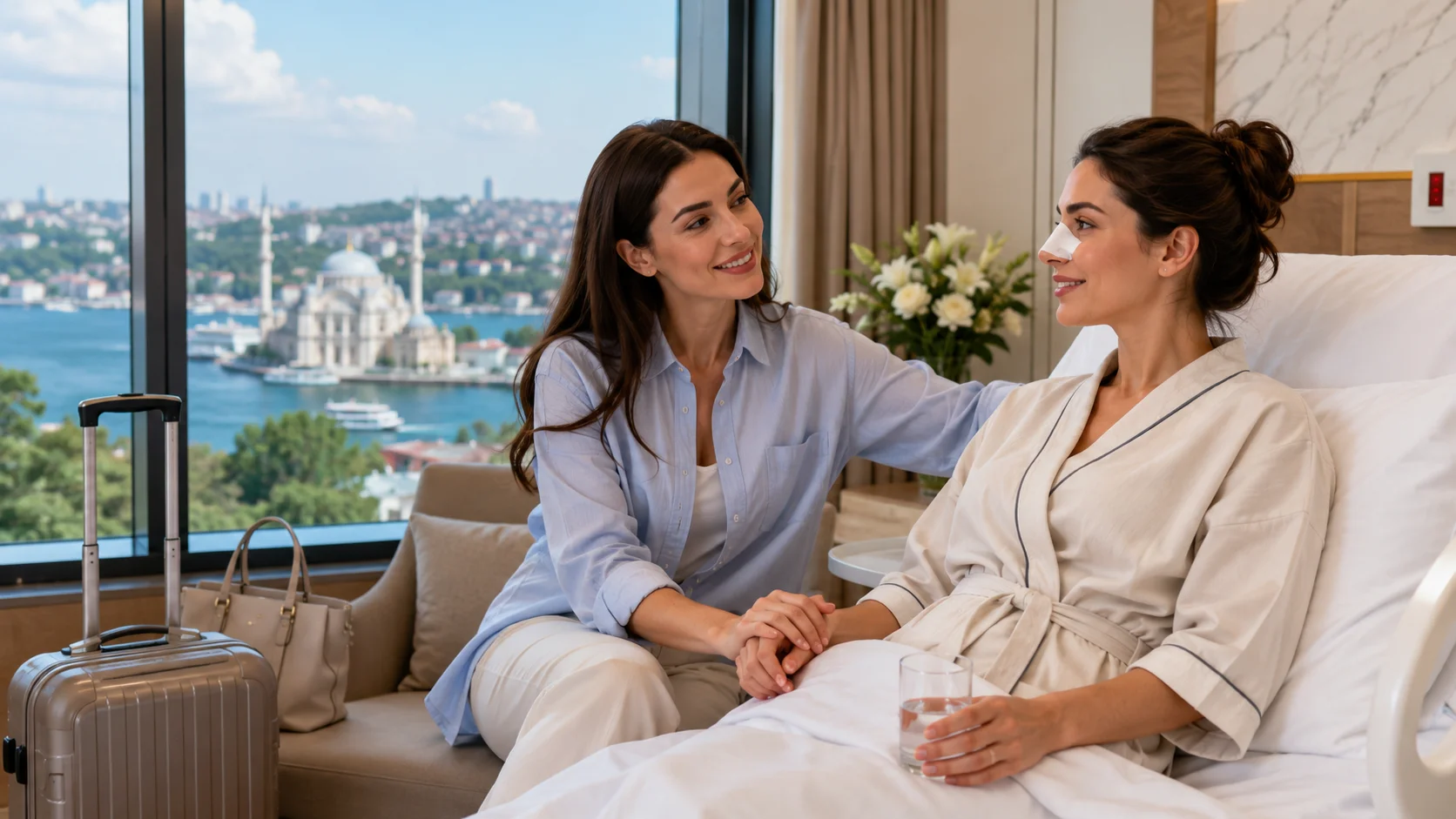
Undergoing cosmetic surgery in a foreign country involves physical recovery, emotional adaptation, and logistical navigation. When you travel solo, your recovery environment relies entirely on self-management, hotel staff support, and the care provided directly by your surgical team. Conversely, traveling with a companion introduces a built-in caregiver who can assist with immediate daily tasks during the vulnerable initial days following your procedure.
The physical demands immediately after surgery can be significant. General anesthesia often leaves patients feeling fatigued, dizzy, or nauseous for the first 24 to 48 hours. Tasks as simple as opening a water bottle, standing up from a low bed, adjusting compression garments, or organizing prescription medications can become challenging. A travel companion absorbs these minor friction points, allowing you to rest continuously without exertion.
Solo medical travel, on the other hand, demands thorough preparation and self-reliance. While it offers complete privacy and eliminates the need to coordinate with another person’s schedule or preferences, it requires a patient who is mentally resilient and physically capable of handling basic post-operative routines. Clinics that cater to international patients often adjust their care protocols for solo travelers by extending hospital stays or assigning dedicated patient hosts to bridge this gap.
Comparing the Costs: Solo Travel vs. Traveling with a Companion
Financial considerations play a major role when deciding whether to bring a guest. Medical tourism packages in Turkey are known for offering all-inclusive value, but adding a companion alters your total expenditure across several key categories.
- Flight Tickets: Bringing a companion doubles your airfare costs. Depending on your origin country and the season, this can add anywhere from $300 to $1,200 to your overall budget.
- Accommodation and Room Upgrades: While many clinic packages include standard hotel accommodation, solo patients usually occupy a single room. Bringing a companion may require upgrading to a double room or a suite with extra seating, which can increase accommodation costs slightly.
- Daily Expenses and Meals: Food, local transport, and incidental expenses double when catering to two people. While the patient’s meals during the hospital stay are typically provided, the companion must cover their own dining expenses.
- Hospital Companion Fees: Most private hospitals in Turkey permit one companion to stay overnight in the patient’s private hospital room at no additional cost. However, some facilities charge a nominal daily fee for companion meals and extra bedding.
While traveling alone is undeniably lighter on the wallet, bringing a companion can prevent indirect costs. For instance, a companion can help you avoid paying extra for private aftercare nurses or late check-out fees at hotels by managing check-in protocols and errands on your behalf.
Safety and Daily Care During Post-Operative Recovery
Safety remains the highest priority for any surgical procedure. Evaluating your post-operative needs based on safety and physical assistance ensures a smoother healing process.
Physical Assistance and Mobility
During the first week of recovery, restricted mobility is common. Procedures like a abdominoplasty (tummy tuck) or circumferential lipo-sculpting significantly limit your range of motion. Standing upright, using the restroom, and taking recommended light walks to promote blood circulation require assistance. A companion provides physical balance and stability, reducing the risk of accidental falls or strained incisions. Solo travelers undergoing major body contouring must rely on hotel staff or hire private post-operative nursing care to assist with these physical movements safely.
Spotting Red Flags and Emergency Support
A major advantage of having a companion is having an attentive observer by your side. Post-operative complications—such as sudden hematomas, excessive wound drainage, unexpected spikes in body temperature, or adverse reactions to medication—often manifest gradually. A companion who knows your baseline health can spot these subtle changes early and notify medical staff promptly. When recovering alone, a patient who is groggy or in pain might delay seeking medical help or misread early warning signs.
Managing Recovery as a Solo Patient
Solo recovery is entirely achievable with proper planning, particularly for less invasive procedures. Solo patients can optimize their safety by:
- Requesting a ground-floor or elevator-adjacent hotel room close to medical facilities.
- Pre-purchasing all necessary post-operative supplies, extra pillows, easy-to-wear button-up clothing, and simple snacks before the surgery date.
- Establishing direct communication channels with the clinic’s emergency nursing staff via messaging applications.
- Arranging dedicated airport and clinic transfers through your surgical provider rather than relying on public transportation or street taxis.
Clinical Evidence: The Impact of Social Support on Postoperative Recovery
Scientific literature consistently underscores the biological and psychological benefits of strong social support during perioperative care. Research examining postoperative recovery patterns indicates that perceived social support plays a crucial role in lowering patient anxiety, reducing perceived pain intensity, and promoting strict adherence to post-surgical care protocols. Studies on perioperative caregiver dynamics show that patients accompanied by a trusted individual demonstrate higher compliance rates with vital recovery directives—such as wearing compression garments consistently, adhering to medication schedules, and maintaining proper sleep positioning. Furthermore, the emotional reassurance provided by a companion helps stabilize cortisol levels, which directly fosters a more conducive physiological state for wound healing and reduces post-operative mood fluctuations.
Comparing Solo vs. Companion Travel for Medical Tourism
| Feature / Metric | Solo Medical Travel | Travelling with a Companion |
| Overall Travel Cost | Lower (single flight, standard single room, single meal expenses) | Higher (double flights, extra meals, potential accommodation upgrades) |
| Immediate Mobility Support | Depends on hospital staff, private nurses, or personal effort | Immediate, dedicated physical help with walking, standing, and dressing |
| Emergency Response | Patient must self-monitor and contact clinic staff if symptoms worsen | Companion acts as an immediate safety net to identify red flags early |
| Psychological Comfort | Requires high self-reliance; risk of temporary isolation or post-op anxiety | High emotional reassurance; reduces anxiety and post-operative stress |
| Logistical Flexibility | Complete control over schedule, resting hours, and personal privacy | Need to consider companion’s comfort, meals, and daily activities |
How to Choose the Right Option for Your Procedure
The decision between solo travel and bringing a companion often comes down to the invasive nature of your specific treatment.
Minor or targeted procedures—such as isolated rhinoplasty, hair transplantation, blepharoplasty, or dental cosmetic work—generally involve minimal physical impairment. Patients undergoing these procedures usually maintain full mobility, can feed themselves comfortably, and can manage their recovery routine independently. For these treatments, solo travel is very common and straightforward.
Major body contouring procedures—such as a Brazilian Butt Lift (BBL), mommy makeover, extended abdominoplasty, or multi-area liposuction—involve significant post-operative inflammation, fluid drainage, and strict positioning requirements. For these procedures, traveling with a companion or arranging formal private nursing support is strongly advised to ensure your safety and comfort.
To decide which path aligns best with your upcoming journey, follow these steps:
- Consult with your surgeon regarding the exact mobility limitations, drain management requirements, and expected recovery timeline for your specific procedure.
- Calculate a detailed cost estimate for both solo travel and dual travel, including flights, upgraded lodging, and daily meal allowances.
- Evaluate your personal emotional resilience and comfort level when staying alone in a foreign country while recovering from surgery.
- Confirm the exact level of post-operative care, host assistance, and nursing check-ins provided by your chosen medical clinic in Turkey.
Why Choose CK Health Turkey for Your Cosmetic Surgery Journey
Navigating medical travel requires a clinic that understands the unique needs of international patients. Located in Antalya, CK Health Turkey provides comprehensive cosmetic and reconstructive surgery packages tailored for both solo travelers and patients arriving with companions.
For solo patients, the clinic offers dedicated patient coordinators who speak fluent English, ensuring seamless communication from initial consultation to final follow-up. Solo travelers receive attentive clinical care, structured post-operative checkups, and assistance with local transfers, ensuring they never feel unguided or isolated.
For patients traveling with a companion, CK Health Turkey ensures that accommodation options and hospital arrangements comfortably cater to both individuals. Their transparent, patient-first approach eliminates unexpected costs and provides a supportive environment focused entirely on safe healing and exceptional aesthetic outcomes.
If you are planning your cosmetic treatment abroad, reach out to the medical team at CK Health Turkey or visit their official website to request a personalized consultation and explore tailored treatment packages designed around your recovery needs.
Regardless of your final decision, undergoing plastic surgery in Turkey alone or with a companion can be a smooth and transformative experience when supported by proper preparation, realistic expectations, and an experienced surgical team.