Highlights
- Fresh surgical scars lack the pigment-producing cells needed for UV defense, meaning sun exposure can cause permanent dark staining or thick, irregular scar tissue.
- Relying solely on sunscreen is insufficient for new incisions; physical barriers like UV-protective clothing and silicone scar tape are essential for the first six months.
- A scar can take up to eighteen months to fully mature, and it must remain completely shielded from the sun until it has turned from pink to a flat, silvery-white line.
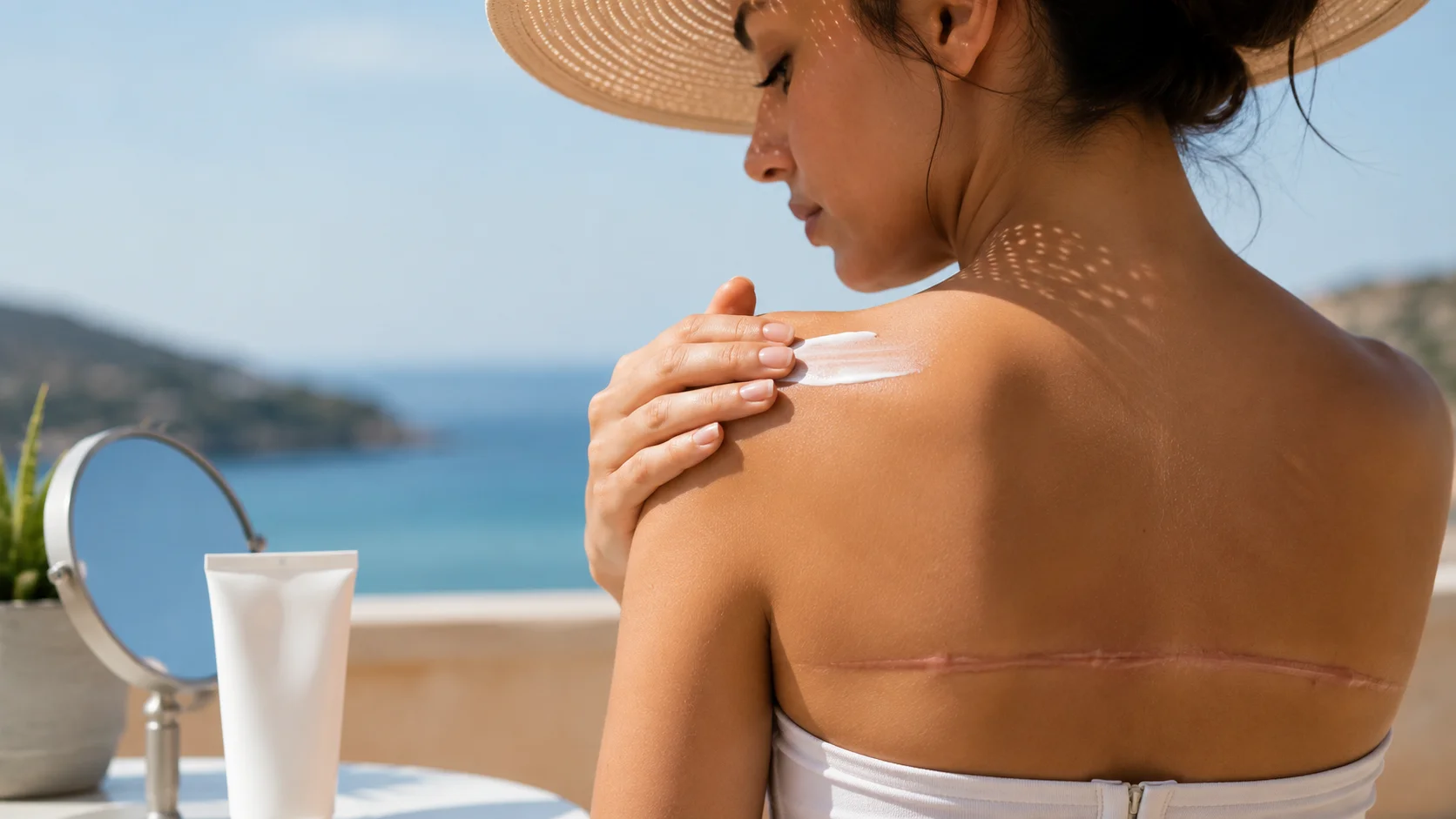
Keeping a surgical scar out of direct sunlight can feel straightforward until you need to go to work, walk outside or travel home after an operation. The most practical approach is to combine shade, protective clothing and a suitable scar-care routine. Sunscreen and silicone products can be useful later, but they are not interchangeable with dressings or your surgeon’s wound-care instructions.
Table of Contents
This guide focuses on how to protect surgical scars outdoors: what to use, when products may be appropriate and how to adapt protection to the location of your incision. For a separate explanation of UV exposure and scar maturation, see our guide to sun exposure after plastic surgery scars.
First, Check Whether the Incision Has Fully Healed
The most important distinction is between an open or still-healing incision and a fully closed scar. A newly operated area may have stitches, adhesive strips, scabs or drainage. Do not replace the prescribed dressing with cosmetic scar products, apply sunscreen directly to an open incision or start silicone products without the treating team’s approval.
During this stage, follow the wound-care plan you were given. If you need to go outdoors, keep the area shaded and covered in the way your surgical team recommends. Contact your team if the wound opens, becomes increasingly red or painful, produces discharge or you develop a fever.
Once the wound is closed and the team confirms that products can be applied, you can discuss sunscreen and, where appropriate, silicone gel or sheets. Healing times vary by procedure and individual, so a calendar date alone should not determine when to start.
Compare Clothing, Dressings, Silicone and Sunscreen
These methods serve different purposes. In many everyday situations, clothing and shade provide the easiest first layer of sun protection; sunscreen helps protect exposed, healed skin.
| Option | What it helps with | Important limitation |
|---|---|---|
| Opaque clothing or UPF-rated fabric | Keeping UV rays off the covered area during outdoor activity. | Fit, fabric and uncovered gaps matter; avoid rubbing or pressure on a healing incision. |
| Surgeon-approved dressing | Protecting an incision during the wound-healing stage. | Use the dressing and change schedule advised by your team; not every dressing is UV protective. |
| Silicone gel or silicone sheets | Supporting scar management once the wound is fully closed, if recommended. | Not a substitute for a proven UV barrier or SPF unless the specific product says so. |
| Broad-spectrum SPF 30+ sunscreen | Reducing UV exposure on healed, uncovered skin. | Do not apply on an open wound; reapply according to the product instructions. |
| Shade and changing your schedule | Reducing the amount of direct sunlight during outdoor activities. | Reflected and indirect UV exposure can still occur. |
A Practical Sun-Protection Routine After Surgery
- Follow your discharge instructions first. Confirm whether the incision needs a dressing, whether showering is allowed and when the skin is considered healed.
- Choose coverage before leaving. Loose, comfortable clothing that covers the area can be easier to manage than repeatedly exposing a scar to apply products. Avoid fabric that irritates the wound.
- Plan for shade. Keep time in direct sunlight to a minimum, particularly during lengthy transfers, sightseeing or beach visits.
- Use sunscreen only when appropriate. On closed, healed skin, use broad-spectrum SPF 30 or higher and reapply as directed, especially after sweating or towelling off.
- Ask before adding silicone products. Silicone gel or sheets may be useful for some scars, but timing, skin sensitivity and product instructions matter.
- Keep the routine manageable. A dependable combination of cover, shade and sunscreen on healed skin is generally more realistic than relying on one product alone.
Protecting Scars in Different Areas
Facial scars
A wide-brimmed hat and shade can help protect a facial incision without placing adhesive directly onto delicate skin. Once healed, ask your clinician about a sunscreen your skin tolerates. Be particularly careful around the eyes and areas where dressings or surgical adhesive remain.
Breast, abdominal and body-contouring scars
Clothing can cover these areas well, but compression garments and tight waistbands may already be part of your recovery plan. Do not change or add pressure garments to obtain sun protection without surgical advice. Choose an outer layer that does not disturb dressings or cause friction.
Scars on arms and legs
These areas are easy to expose unintentionally when sleeves or trouser legs ride up. Consider coverage during walks, car journeys and outdoor breaks. Once healed, sunscreen can provide an additional layer of protection when the scar is uncovered.
Common Questions About Silicone and SPF
Does silicone scar tape replace sunscreen?
Not automatically. Silicone sheets are principally used for scar management, and their UV-protection properties vary. Unless your product is specifically rated for sun protection, do not assume that it blocks UV sufficiently. Use clothing and shade, and follow medical advice for sunscreen on healed skin.
Is mineral sunscreen essential?
No single formulation suits everyone. A broad-spectrum, water-resistant SPF 30+ product is the key starting point for healed skin. People with sensitive skin may prefer a fragrance-free mineral formulation, but tolerance and correct application matter more than assuming one category is universally best.
How long should a scar stay protected?
Scar maturation often continues for many months. The NHS advises covering scars from sunlight for at least one year and using SPF 30 or higher. Your surgical team may recommend a different duration based on the procedure, location and your skin.
A Final Check Before Travelling Home
If you are recovering in Antalya, pack clothing that covers your surgical areas without rubbing them, and check the wound-care instructions before spending time outdoors. Ask your care coordinator or surgeon when to change dressings, when silicone can begin and when sunscreen is appropriate. Keep this guidance alongside your individual discharge plan rather than using a generic timeline as medical clearance.
Medical Sources and Further Reading
- NHS: Scars — care and sun protection
- American Academy of Dermatology: How to minimise a scar
- American Academy of Dermatology: Scar treatments, including silicone
This information is general patient education, not a substitute for an assessment of your incision. Follow your surgeon’s instructions if they differ.