Highlights
- It is entirely safe to undergo an MRI after gastric sleeve surgery because modern surgical staples are made of non-ferromagnetic titanium alloys that do not react to magnetic fields.
- Over time, these staples become permanently encased in natural scar tissue, providing mechanical stability that prevents them from moving or dislodging during a scan.
- While the staples may cause minor local image distortions in abdominal scans, they do not pose safety risks or affect the quality of imaging for other parts of the body.
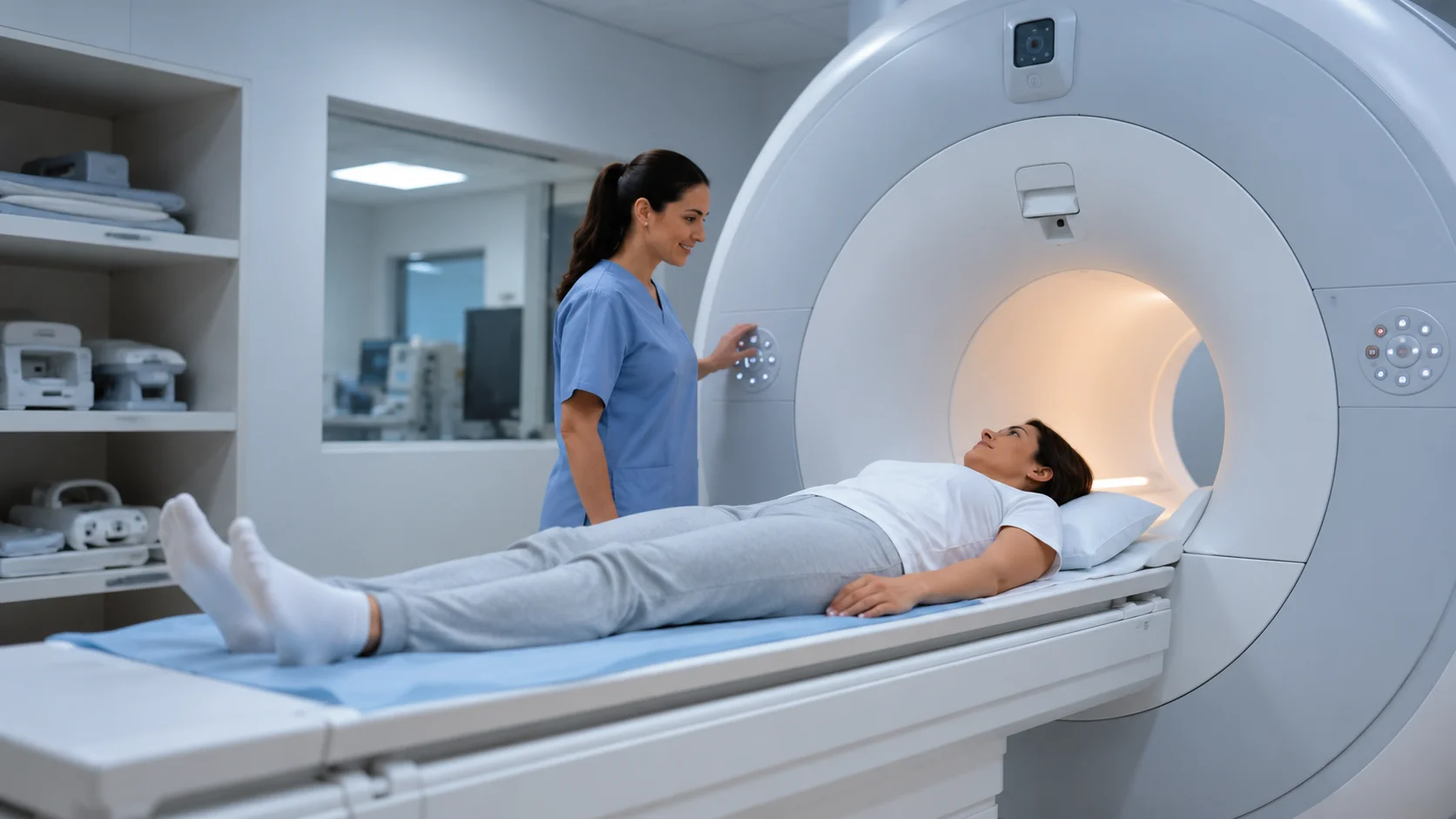
Many patients wonder if the metallic staples left behind after sleeve gastrectomy cause complications during magnetic resonance imaging. If you are asking whether can you have an MRI after gastric sleeve surgery, the straightforward answer is yes. Modern medical materials ensure that post-bariatric patients can safely undergo diagnostic imaging without damaging internal tissues.
Table of Contents
Can You Have an MRI After Gastric Sleeve Surgery?
Magnetic Resonance Imaging (MRI) is fully safe for individuals who have undergone sleeve gastrectomy. The surgical restructuring of your stomach—reducing its size by roughly 75 to 80 percent—does not create any anatomical contraindication for strong magnetic fields. Because MRI technology utilizes radio waves and powerful magnets rather than ionizing radiation, the altered digestive anatomy functions entirely normally during and after the procedure.
The primary concern for most bariatric patients involves the permanent metal line used to seal the reshaped stomach pouch. During a gastric sleeve procedure, surgeons divide the stomach vertically using a specialized surgical stapler. This device simultaneously cuts the tissue and applies multiple parallel rows of microscopic staples to prevent bleeding and leaks.
While placing metal into a machine driven by powerful magnetic forces sounds hazardous, modern surgical components are specifically engineered to prevent magnetic attraction, thermal heating, or physical shift within the body. Radiology departments routinely perform scans on individuals with bariatric staple lines without adverse events.
Understanding Gastric Sleeve Surgical Staples
To understand why an MRI is safe post-surgery, it is essential to look at what surgical staples are made of and how they behave inside the body over time.
Titanium Alloy and Non-Ferromagnetic Properties
The vast majority of modern bariatric stapling devices utilize high-grade titanium alloy staples. Titanium is a non-ferromagnetic material, meaning it contains negligible iron and does not react to static or dynamic magnetic fields.
Unlike ferrous metals such as iron or nickel, titanium experience no magnetic pull when exposed to the powerful superconducting magnets inside an MRI machine. As a result, there is virtually zero risk of the staples pulling away, migrating, or tearing the stomach wall during your scan.
Permanent Placement and Tissue Healing
Gastric sleeve staples do not dissolve over time; they remain permanently embedded within the gastrointestinal tract. Within weeks following sleeve gastrectomy, your body initiates a natural tissue repair process.
Fibrous scar tissue encases the staple line, firmly locking each tiny staple into place. This complete integration into healed stomach tissue adds a substantial layer of mechanical stability, ensuring that external magnetic energy cannot dislodge the surgical line.
The Medical Science Behind MRI Compatibility
Medical device standards rigorously regulate surgical components to guarantee patient safety during post-operative diagnostic procedures. Under the international standards established by ASTM F2503 and healthcare regulatory bodies, modern bariatric staples carry an MR Conditional rating. This classification indicates that an implant poses no known hazards in a specified MRI environment when specific scanning parameters are maintained.
Research evaluating bariatric surgical devices confirms that modern staple lines made from non-ferromagnetic titanium alloys pose negligible risks during clinical imaging. Clinical testing at standard diagnostic field strengths of 1.5 Tesla and 3.0 Tesla demonstrates that titanium staples exert no detectable magnetic displacement force and generate negligible thermal heating during standard radiofrequency pulse sequences. Because the staple material lacks ferromagnetic properties and is securely encapsulated within healed fibrous stomach tissue, the staple line remains completely stable throughout active MRI acquisition.
Potential Impact on MRI Image Quality
While gastric sleeve staples do not compromise physical safety, they can occasionally influence how diagnostic images appear.
Abdominal Susceptibility Artifacts
Metallic objects, even non-magnetic ones like titanium, alter local magnetic field homogeneity. This phenomenon can create localized image distortions known as susceptibility artifacts.
On an abdominal MRI scan, these artifacts show up as small dark spots or blurry signals directly surrounding the staple line in the upper stomach area. Radiographers can adjust specific sequence parameters, such as using metal artifact reduction sequences (MARS), to minimize these visual distortions when imaging organs near the upper abdomen.
Non-Abdominal MRI Scans
If your MRI targets areas outside the abdomen—such as the brain, cervical spine, knee, shoulder, or lumbar region—gastric sleeve staples have zero impact on image quality. The magnetic field distortion remains strictly confined to the immediate vicinity of the stomach tissue, leaving distant anatomical structures completely clear and diagnostic.
Comparison of Surgical Implants and MRI Compatibility
Different surgical materials interact with MRI magnetic fields in varying ways. The table below outlines common internal medical items, their composition, and their general safety profile in diagnostic imaging:
| Implant / Component Type | Material Composition | Magnetic Property | ASTM F2503 Safety Rating | 1.5T / 3T Compatibility | Primary Diagnostic Note |
| Bariatric Staples | Titanium Alloy | Non-Ferromagnetic | MR Conditional | Fully Compatible | May cause minor local abdominal image artifact |
| Hemostatic Surgical Clips | Titanium or Polymer | Non-Ferromagnetic | MR Conditional | Fully Compatible | Used to control blood vessels; low risk |
| Older Surgical Clips (Pre-1990s) | Steel Alloy | Ferromagnetic | MR Unsafe (Varient) | Needs Clearance | Requires surgical records to confirm material composition |
| Orthopedic Screws & Plates | Titanium / Stainless Steel | Non / Low Ferromagnetic | MR Conditional | Fully Compatible | Minimal heating; potential local image distortion |
| Vascular Stents | Nitinol / Elgiloy | Non-Ferromagnetic | MR Conditional | Compatible (Wait 6-8wks) | Usually safe after endothelialization period |
Step-by-Step Preparation for Your MRI Scan
Following a structured preparation protocol ensures your imaging appointment proceeds smoothly and without delay.
- Inform the radiology scheduling staff about your bariatric surgical history when booking your appointment.
- Gather your surgical records, including the date of your gastric sleeve procedure and the hospital where it was performed.
- Complete the standard MRI safety screening questionnaire with full details regarding any metallic implants or surgical clips.
- Provide your bariatric surgical implant card to the technologist if your surgical center issued one post-operatively.
- Verify equipment weight capacities with the facility prior to arrival if you require a wide-bore or bariatric-adapted scanner.
Bariatric Weight Limits and Specialized MRI Scanners
Beyond staple compatibility, bariatric patients sometimes face physical considerations related to scanner dimensions. Standard closed-bore MRI units typically feature a tunnel diameter of 60 centimeters and a maximum table weight capacity ranging between 350 and 450 pounds (150 to 200 kilograms).
For patients early in their weight loss journey who exceed these dimensions, specialized imaging facilities offer wide-bore MRI (70-centimeter openings) or open MRI systems. These advanced machines accommodate higher table weight limits (often up to 550 pounds or 250 kilograms) while significantly reducing feelings of claustrophobia. Confirming equipment specifications beforehand ensures comfort and prevents appointment rescheduling.
Comprehensive Bariatric Care with CK Health Turkey
Selecting a high-caliber medical provider is fundamental to long-term health, safety, and peace of mind when undergoing weight loss surgery abroad. CK Health Turkey stands as a premier destination for international patients seeking advanced bariatric procedures in Antalya, Turkey.
The surgical teams at CK Health Turkey utilize premium, internationally certified titanium stapling technology that meets global manufacturing and medical standards. This commitment to medical excellence ensures that every gastric sleeve patient receives durable staple lines engineered for optimal tissue healing and total long-term MRI compatibility.
From initial consultation through comprehensive post-operative guidance, CK Health Turkey provides tailored patient care, transparent communication, and dedicated medical support for international guests. If you are considering sleeve gastrectomy or have questions regarding post-bariatric health management, visit the official CK Health Turkey website or contact their expert team to explore personalized treatment options.
Understanding post-operative medical guidelines allows you to navigate healthcare decisions with total clarity. Knowing that can you have an MRI after gastric sleeve surgery safely ensures that you can pursue necessary diagnostic scans without worrying about surgical staple movement, thermal injury, or internal complications. Maintaining open dialogue with your healthcare providers and radiographers ensures effective, safe imaging whenever medical needs arise.