
Highlights
- While combining gastric band removal and a tummy tuck is possible, it is not always the safest option and depends on the patient's health, weight stability, and the condition of the band.
- Performing both surgeries together can reduce the number of anesthetic episodes but may lead to longer operative times and more complex postoperative care if complications like band erosion or infection are found.
- Surgeons often recommend staged operations to ensure the stomach heals properly and to confirm weight stability before performing elective body contouring surgery.
Can you have gastric band removal and tummy tuck together in one operation? It may be considered in carefully selected circumstances, but the two procedures address different problems and combining them is not automatically the safest option. The condition of your gastric band, your current health and whether your weight is stable should guide the decision.
Table of Contents
Can you have gastric band removal and tummy tuck together?
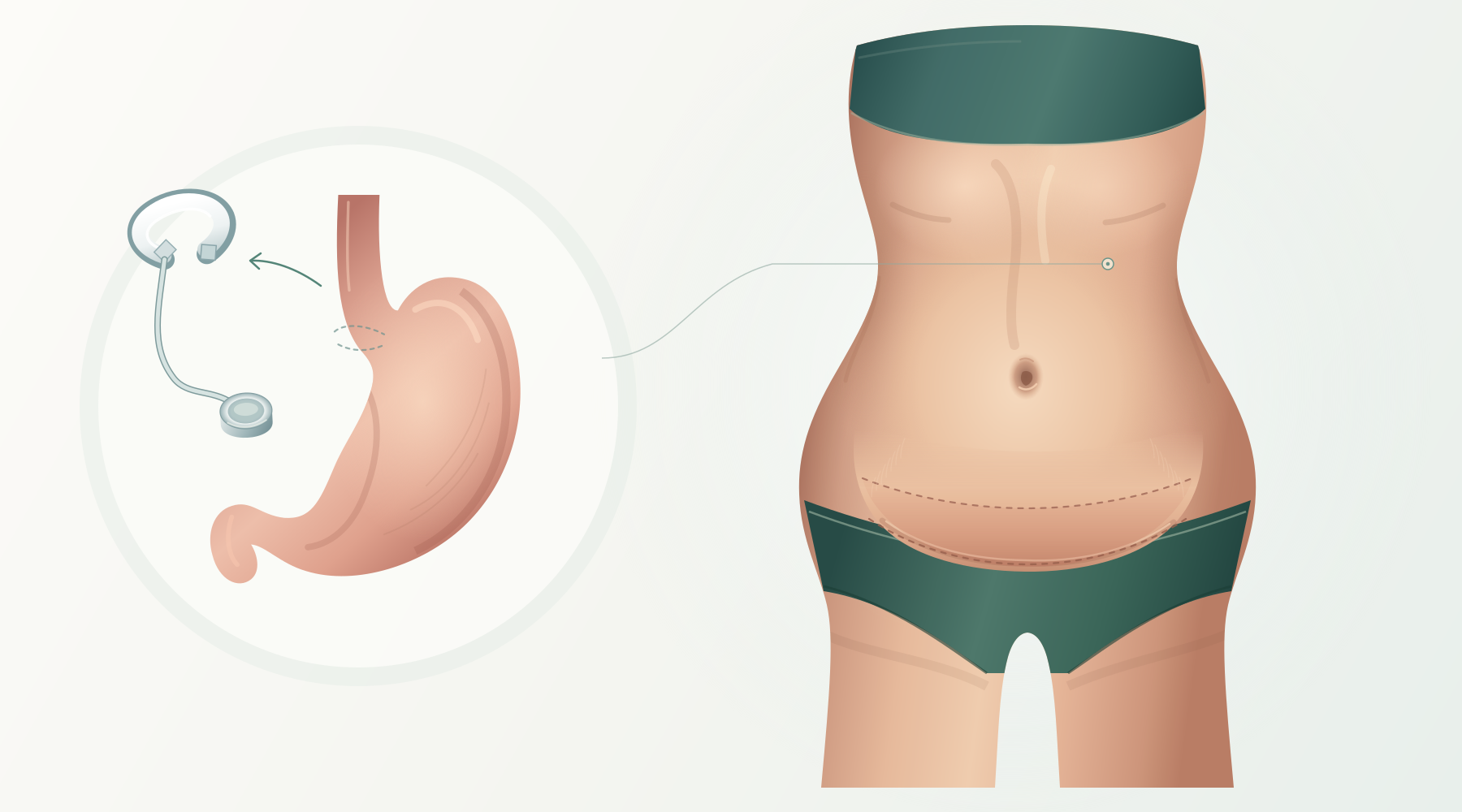
In principle, a bariatric surgeon and a plastic surgeon may consider performing both operations during the same anaesthetic in an appropriately equipped hospital. But the decision is highly individual. Removing an adjustable gastric band involves surgery around the stomach, while a tummy tuck (abdominoplasty) reshapes the abdominal skin and, in some cases, tightens the abdominal wall.
Performing them together potentially reduces the number of separate admissions and anaesthetic episodes. It can also increase the scope of a single operation, which may mean longer surgical time, greater demands on postoperative care and more complex decisions if an unexpected problem is discovered around the band.
There is insufficient high-quality evidence specifically comparing simultaneous gastric band removal plus tummy tuck with staged operations. It would therefore be misleading to describe the combination as routinely safe or to promise that it is suitable for most patients. A surgeon must first establish why the band needs removal and whether an elective tummy tuck should go ahead at all.
What happens during gastric band removal?
An adjustable gastric band is a silicone device placed around the upper stomach, with tubing connected to an adjustment port under the skin. Band removal commonly involves laparoscopic surgery to release the band from surrounding tissue and remove the device, tubing and port as appropriate.
The operation is not always straightforward. Scarring around the band, slippage, stomach pouch changes and erosion into the stomach wall can alter the technique. Where an erosion or other complication is present, the bariatric surgeon may need additional steps to manage the stomach safely.
The American Society for Metabolic and Bariatric Surgery (ASMBS) identifies slippage, erosion, swallowing problems and repeat operations among the recognised disadvantages of adjustable gastric bands. Patients considering removal should be assessed for the reason the band is no longer appropriate, rather than assuming every removal carries the same risk.
For a more detailed explanation of the removal procedure and recovery, see CK Health Turkey’s lap band removal guide.
What does a tummy tuck involve after weight loss?
A tummy tuck removes loose skin and some underlying fat from the abdomen. In a full abdominoplasty, the surgeon typically redrapes the skin, repositions the belly button and may tighten stretched abdominal fascia if clinically appropriate. An extended technique may also address skin extending towards the sides of the waist.
Tummy tuck surgery does not treat the stomach or replace an obesity-management plan. It may improve the appearance and comfort of loose abdominal skin after substantial weight loss, but the result can be affected by further major changes in weight.
The American Society of Plastic Surgeons (ASPS) notes that significant future weight fluctuations can compromise abdominoplasty results. This is particularly relevant when discussing band removal: some patients may experience weight regain after the restriction provided by the device is removed.
Our article on tummy tuck after weight loss surgery explores surgical timing and skin-removal options in more detail.
Why might surgeons recommend two separate operations?
There are several reasons for treating the band problem first and planning body contouring after recovery.
Band erosion, infection or stomach injury
If the band has eroded into the stomach or there is an active infection, removing it may involve treating an inflamed area or repairing the gastric wall. In this setting, an elective skin-removal operation generally should not be added simply for convenience. The clinical priority is resolving the band complication safely.
The ASMBS consensus statement on gastric band management describes the need to remove eroded bands and, in some cases, repair the stomach. It cautions against adding an immediate revisional bariatric operation in that inflamed setting because healing can be compromised. Although that specific advice concerns bariatric revision rather than abdominoplasty, it illustrates why unexpected band complications may make combined elective surgery inappropriate.
Uncertain weight stability
People can regain weight after the band is removed, particularly if no further weight-management treatment is planned. A tummy tuck performed just before significant weight gain may not retain the intended contour and may expose someone to major surgery before their longer-term plan is settled.
In a retrospective study of 211 patients undergoing gastric band removal, 28% subsequently underwent revisional bariatric surgery. The results underline the need for an individual weight-management plan following removal; they do not predict exactly how much weight any particular person will gain.
Health, nutrition and wound-healing concerns
People who have experienced vomiting, difficulty swallowing, low dietary intake or rapid weight loss may require assessment of nutrition and hydration before elective abdominoplasty. Protein intake, anaemia, diabetes, smoking or nicotine exposure and other conditions can influence healing. Combining procedures does not remove these risks.
A 2022 review of post-bariatric abdominoplasty emphasises careful assessment of nutritional status, thromboembolism risk and other medical conditions. It also notes an association between longer operations and more complications in some studies, supporting thoughtful decisions about when procedures should be combined or staged.
Combined surgery vs staged surgery: key differences
| Consideration | Combined operation | Separate operations |
|---|---|---|
| Anaesthetic episodes | Usually one planned episode | Typically two |
| Overall surgical exposure | More procedures in one session; possibly longer operative time | Each operation has a more focused scope |
| Band complications | Unexpected findings may require changing or cancelling the tummy tuck | Band problems can be treated and reassessed before cosmetic surgery |
| Weight stability | Must already be appropriate for contouring | Allows time to monitor weight after band removal |
| Recovery | Overlapping gastric and abdominal wound-care needs | Separate recovery periods and more time between procedures |
| Suitability | Only after individual multidisciplinary evaluation | Often preferable when risk or future weight changes remain uncertain |
Neither approach can be declared safer for an individual patient from this table alone. The condition of the band, the expected surgical steps and the person’s health must drive the decision.
Who might be considered for the combined procedure?
Surgeons may be more willing to discuss a single operative session when the band removal is expected to be uncomplicated, there are no signs of infection or erosion, the patient is at a stable weight and the abdominal skin concerns are appropriate for a tummy tuck. Nutritional status and other health conditions should also be optimised.
Even in this situation, separate specialist examinations are essential. A bariatric surgeon is responsible for assessing the band and upper gastrointestinal anatomy; a plastic surgeon evaluates the abdomen and the risks of skin and abdominal wall surgery. The anaesthetic team also considers the total duration and complexity of the proposed operation.
Some patients will discover during assessment that another operation is more relevant—for example, a bariatric revision rather than band removal alone, or a panniculectomy rather than a full tummy tuck. A successful plan does not require that every desired procedure happen during the same hospital visit.
What if you need gastric sleeve or bypass after band removal?
Band removal alone does not provide a new weight-loss mechanism. If weight regain or inadequate weight control is a concern, the bariatric specialist may discuss ongoing medical treatment, nutrition support or conversion to another bariatric procedure such as sleeve gastrectomy or gastric bypass, depending on individual circumstances.
Band removal with a bariatric revision is not the same operation as band removal with a tummy tuck. Studies comparing one-stage and two-stage conversion to another bariatric procedure cannot establish the safety of adding cosmetic abdominoplasty at the same time.
A systematic review of 11 studies covering 1,370 patients compared one-stage and two-stage gastric band conversion to sleeve gastrectomy or gastric bypass. It addressed revisional bariatric strategies—not simultaneous tummy tuck surgery. This distinction matters when interpreting online claims that a combined approach has already been proven safe.
CK Health Turkey’s article on bariatric revision surgery offers background on why treatment after a failed or troublesome band may require a different plan from straightforward removal.
Does band removal affect the tummy tuck incision or abdominal wall?
Band removal is usually performed through several small incisions and an incision associated with the access port. A tummy tuck uses a much larger lower-abdominal incision and lifts or repositions skin and fat. These surgical areas are different, although the port position and existing scars may affect how the plastic surgeon plans tissue movement.
The surgeon should identify where the port and tubing lie before making incisions. Previous operations can also leave internal scar tissue that may complicate laparoscopic access to the stomach. That is separate from the skin laxity addressed by a tummy tuck.
A tummy tuck may include abdominal wall repair if needed, but repairing separated abdominal fascia does not fix reflux, band slippage or other problems arising from the gastric device. The bariatric and plastic surgeons should agree on their respective surgical plans and how unexpected findings would be handled.
What risks need to be discussed?
Both operations involve general surgical and anaesthetic risks. Gastric band removal can involve bleeding, infection, injury to the stomach or surrounding tissues, leakage if the stomach requires repair, and problems related to pre-existing adhesions. The exact likelihood depends on the condition of the device and the complexity of removal.
Abdominoplasty can cause seroma (a collection of fluid), infection, wound separation, delayed healing, skin or fat necrosis, scarring, altered sensation and blood clots. The ASPS lists these as recognised tummy tuck risks.
When operations are combined, patients and clinicians must consider total operative time, the possibility of more extensive abdominal wounds, overall anaesthetic risk and recovery support. An unexpected gastric problem may change the original plan. It is not possible to supply a trustworthy numerical complication rate for gastric band removal plus tummy tuck specifically without direct, adequate evidence.
A 2021 retrospective study of 910 women undergoing abdominoplasty found that patients with a history of major weight loss following bariatric surgery had a higher risk of multiple complications than the comparison group after analysis, while other factors such as BMI, smoking, diabetes and age also mattered. This study does not evaluate same-day band removal and tummy tuck, but it supports careful risk assessment when planning abdominal contouring after bariatric treatment.
How long should you wait for a tummy tuck after gastric band removal?
There is no single evidence-based waiting interval that applies to every patient after band removal. Someone recovering from uncomplicated elective removal may follow a very different pathway from someone who needed treatment for erosion, infection or stomach-wall repair.
The most important considerations are that the stomach and abdominal wounds have healed appropriately, nutritional concerns are addressed, and body weight is stable enough for a worthwhile contouring result. If further bariatric treatment is planned, a tummy tuck is usually considered as part of a later body-contouring plan rather than as an add-on to a rapidly changing weight-loss process.
The Aesthetic Society’s body-contouring guidance advises patients to reach a stable weight and undergo appropriate medical evaluation before post-weight-loss surgery. It notes that combining or staging procedures is a decision for the surgeon based on safety and the planned outcome.
Your surgeons should give you an individual timeline, based on the reason for band removal and your progress after it, rather than a fixed number of weeks from an online article.
What is recovery like if the procedures are combined?
If both operations are performed, you would need to recover from upper-abdominal surgery involving the band and from the more extensive skin and potentially fascial work of abdominoplasty. Pain control, wound care, mobility and dietary instructions must account for both.
You may need help with household tasks and lifting, particularly if the tummy tuck includes muscle repair. Gentle walking is often encouraged as clinically appropriate, while strenuous activities are restricted. If there is any concern about the stomach after band removal, the bariatric surgeon’s instructions about drinking, eating and monitoring symptoms are especially important.
Watch for worsening abdominal pain, fever, persistent vomiting, inability to tolerate liquids or signs of an infected wound. Chest pain, sudden breathlessness or significant one-sided leg swelling require urgent medical evaluation. Do not attribute new severe symptoms to normal post-tummy-tuck swelling.
For patients travelling for treatment, any return-flight plans must be based on the actual postoperative course, sufficient local follow-up and an assessment of blood-clot risk. Combining operations to shorten travel arrangements is not a sound reason to bypass clinical safety considerations.
How should you prepare for a surgical consultation?
Gathering information about the existing gastric band before deciding on body contouring helps the clinical team assess what would actually be involved.
- Document your band history. Note when it was placed, previous adjustments and any treatment for slippage, reflux, infection or erosion.
- Describe current symptoms. Report swallowing problems, vomiting, pain, reflux, food intolerance or unexpected weight change.
- Review weight and nutrition. Bring your recent weight history and discuss dietary intake, relevant blood tests and any deficiencies.
- Explain your tummy tuck goals. Identify whether your main concern is loose skin, abdominal wall separation or a problem caused by an overhanging fold.
- Ask for a coordinated plan. Find out whether the surgeons recommend removal alone, further bariatric treatment, delayed contouring or a carefully selected combination.
- Plan the aftercare. Confirm who will provide postoperative review, how complications will be assessed and when travelling home is appropriate.
If any urgent band-related symptom is present, obtain prompt bariatric assessment rather than waiting to arrange elective cosmetic surgery.
CK Health Turkey: planning bariatric and body-contouring care
CK Health Turkey in Antalya supports international patients exploring bariatric and plastic surgery options in Turkey. If you have a gastric band and are considering a tummy tuck, a helpful first step is to share your band history, current symptoms, medical background and weight changes, alongside the skin or abdominal contour concerns you would like assessed.
The clinical teams must determine whether removal is indicated, whether further bariatric care is needed, and whether a tummy tuck should be planned separately. International-patient coordination can help you understand the consultation, travel and follow-up process, but no combined operation or particular result can be assumed before an individual surgical assessment.
To enquire about a personalised assessment and discuss appropriate treatment pathways, contact CK Health Turkey for more information.
Ultimately, gastric band removal and tummy tuck together is a possibility to discuss, not a standard shortcut. Treating band complications first, confirming stable weight and good health, and choosing a carefully coordinated surgical plan offer a more reliable basis for making decisions than the convenience of one operation alone.