Highlights
- Excess skin folds after weight loss trap sweat and bacteria, leading to unpleasant odors, inflammation, and infections like intertrigo or candidiasis.
- Daily management requires a strict hygiene routine involving antibacterial cleansing, thorough drying with cool air, and the use of barrier creams or moisture-wicking fabrics.
- While conservative care manages symptoms, surgical procedures like panniculectomy or abdominoplasty provide a permanent solution by physically removing the skin folds that cause the issues.
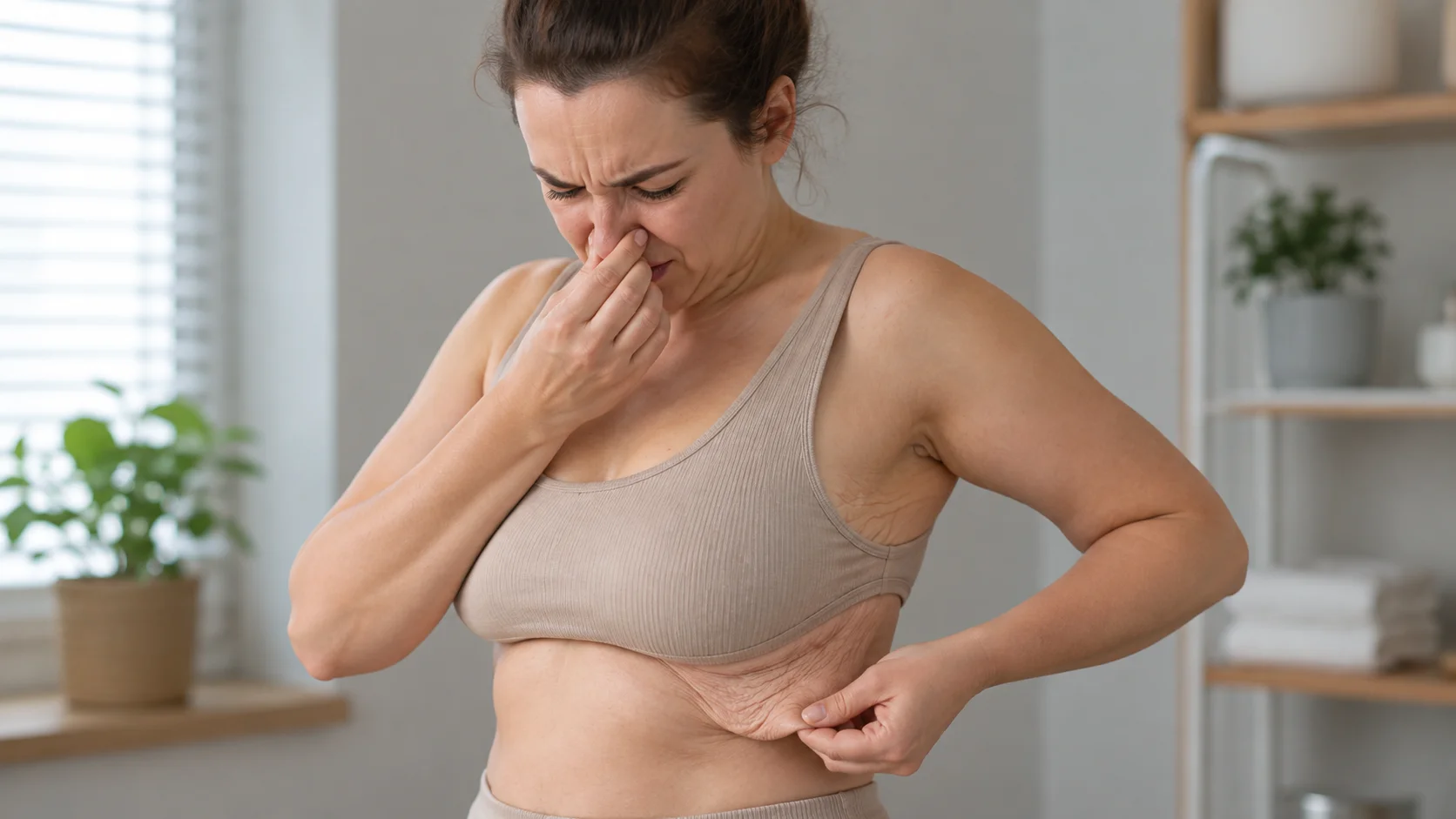
Achieving massive weight loss is a life-changing milestone, yet it frequently introduces unexpected physical challenges. For many individuals, managing loose skin odour after weight loss becomes an ongoing struggle caused by trapped sweat, friction, and microbial buildup within deep tissue folds. Understanding the underlying medical causes and exploring long-term hygienic and surgical solutions is essential to restoring physical comfort and self-confidence.
Table of Contents
What Causes Loose Skin Odour After Weight Loss?
When a person undergoes significant weight reduction—whether through bariatric surgery, lifestyle modifications, or metabolic medication—the body shrinks faster than the elastic fibres in the dermis can retract. This discrepancy leaves behind hanging rolls of excess skin, commonly called a panniculus when located on the lower abdomen. Similar folds can form around the inner thighs, upper arms, breasts, and back.
The primary culprit behind unpleasant smells in excess skin folds is not the skin itself, but the microenvironment created inside those folds. Dark, warm, and tightly compressed areas create ideal conditions for moisture accumulation and cellular debris collection.
Sweat Accumulation and Sebum Breakdown
Human skin contains two main types of sweat glands: eccrine and apocrine glands. Eccrine glands produce a watery secretion aimed at cooling the body, while apocrine glands produce a thicker fluid rich in lipids and proteins. In deep skin folds, trapped sweat cannot evaporate efficiently.
When sweat combines with natural skin oils (sebum) and shedding dead skin cells (keratinocytes), naturally occurring skin bacteria begin breaking down these organic compounds. The metabolic byproducts of this bacterial decomposition release volatile fatty acids, which produce a distinct, sour, or musty smell.
Intertrigo Development
Intertrigo is an inflammatory skin condition caused by skin-on-skin friction in warm, moist areas. As heavy folds of tissue rub against each other during movement, the outermost protective layer of skin (the stratum corneum) wears away.
This process, known as maceration, turns the skin soft, white, and raw. Macerated skin breaks down easily, creating superficial cracks and fissures that leak tissue fluid, further amplifying odour and causing intense stinging or burning sensations.
Microbial and Fungal Overgrowth
Healthy skin maintains a delicate balance of harmless micro-organisms. However, when moisture is continuously trapped inside deep tissue folds, the local microbiome shifts dramatically.
- Candida albicans: This yeast thrives in moist skin folds, leading to cutaneous candidiasis. It produces a characteristic sweet, yeast-like smell, accompanied by bright red rashes and satellite pustules.
- Corynebacterium: These bacteria feed on sweat proteins and produce strong, pungent, ammonia-like odours.
- Dermatophytes: Fungal species responsible for ringworm or tinea infections can colonize irritated folds, causing scaling, scaling edges, and a stale, damp odor.
Daily Management and Hygiene Strategies for Excess Skin Folds
While conservative measures do not remove excess tissue, establishing a meticulous hygiene routine is vital for managing inflammation, preventing secondary skin infections, and reducing unpleasant smells on a daily basis.
To maintain healthy skin folds, follow this sequential daily care routine:
- Wash the affected skin folds once or twice daily using a mild, fragrance-free, antibacterial soap and lukewarm water.
- Gently cleanse deep inside the folds using a soft cotton cloth, avoiding harsh scrubbing that can worsen skin friction.
- Pat the area completely dry with a clean towel; never rub the irritated skin.
- Use a hair dryer on the coolest air setting to remove lingering moisture from hard-to-reach tissue creases.
- Apply a thin layer of barrier cream containing zinc oxide, or a doctor-prescribed antifungal powder, to absorb excess moisture.
- Dress in loose-fitting, moisture-wicking garments made from natural fibres like cotton or specialized synthetic fabrics that draw sweat away from the body.
Avoid using heavy cosmetic lotions, scented body washes, or standard cornstarch inside deep folds. Scented products can trigger contact dermatitis on raw skin, while cornstarch can clump together when wet and serve as a food source for yeast organisms.
Scientific Research Insights on Post-Bariatric Skin Complications
Clinical literature heavily documents the dermatological and psychological burdens caused by redundant skin after major weight reduction. A landmark study published in Obesity Surgery examined the prevalence of dermatological complications in post-bariatric patients, finding that over 70% suffered from chronic intertrigo, recurrent fungal infections, and skin fold malodour within two years of weight stabilization.
Microbiological analysis within the research demonstrated that deep skin folds exhibit significantly elevated pH levels and higher bacterial densities compared to normal skin surfaces. The researchers concluded that while topical antifungal therapies and moisture barriers temporarily suppress microbial proliferation, structural surgical intervention remains the definitive treatment to resolve chronic maceration, tissue degradation, and persistent odor permanently.
Comparing Non-Surgical Hygiene Management vs. Surgical Skin Removal
Managing excess skin through conservative care requires continuous effort, whereas surgical removal physically eliminates the fold itself. The table below compares the key differences between ongoing daily management and corrective body contouring surgery.
| Feature / Metric | Non-Surgical Daily Care | Surgical Skin Removal (Body Contouring) |
| Primary Mechanism | Manages sweat, bacteria, and friction topically | Permanently excises redundant tissue and skin folds |
| Odour Resolution | Temporary (requires daily maintenance) | Permanent (eliminates the environment causing odour) |
| Intertrigo Prevention | Moderate control with barrier creams and powders | High resolution (eliminates skin-on-skin friction) |
| Daily Time Requirement | High (frequent washing, drying, and cream application) | None once post-operative healing is complete |
| Invasiveness | Non-invasive | Major surgical procedure requiring general anaesthesia |
| Recovery Time | None | 2 to 6 weeks depending on procedure scope |
| Long-Term Cost | Ongoing expense for creams, cleansers, and dressings | One-time surgical investment |
Surgical Solutions to Eliminate Loose Skin Odour After Weight Loss
For individuals with substantial tissue redundancy, topical treatments and lifestyle tweaks are often not enough. Surgical body contouring removes the physical folds completely, removing the environment where sweat and bacteria accumulate.
Panniculectomy vs. Tummy Tuck (Abdominoplasty)
Patients seeking abdominal skin reduction often evaluate panniculectomy and abdominoplasty. Although both address excess tissue, they serve different medical and aesthetic goals:
- Panniculectomy: A strictly functional medical procedure that removes the hanging “apron” of abdominal skin (the panniculus) below the belly button. It does not tighten underlying abdominal muscles or reposition the navel, but it successfully resolves chronic intertrigo, skin ulcerations, and foul smells.
- Abdominoplasty (Tummy Tuck): A comprehensive reconstructive and cosmetic procedure. It removes excess skin, tightens lax abdominal wall muscles (diastasis recti), and repositions the navel to create a smoother, firmer contour.
- Fleur-de-Lis Abdominoplasty: Recommended for patients with significant horizontal and vertical skin excess. It utilizes both vertical and horizontal incisions to pull tissue inward from the sides as well as downward.
Lower Body Lift (360 Belt Lipectomy)
When excess skin extends beyond the abdomen around to the hips, lower back, and buttocks, a 360 lower body lift provides a comprehensive solution. The surgeon removes a continuous belt of skin and fat around the entire circumference of the torso. This lifts the thighs and buttocks, flattens the abdomen, and eliminates multiple deep skin creases at once.
Brachioplasty and Thighplasty
Excess skin folds frequently develop along the upper arms (bat wings) and inner thighs.
- Brachioplasty (Arm Lift): Removes redundant skin between the armpit and elbow, preventing armpit sweat and friction from causing localized rash and odour.
- Thighplasty (Thigh Lift): Resects hanging skin from the inner and upper thighs, resolving severe chafing during walking and keeping the groin area dry.
Why Choose CK Health Turkey for Post-Weight Loss Body Contouring
For international patients seeking a permanent resolution to skin fold complications, CK Health Turkey offers world-class plastic and reconstructive surgery services. Located in Antalya, CK Health Turkey specializes in post-bariatric body contouring, helping patients complete their physical transformation after major weight loss.
Choosing CK Health Turkey provides several clear advantages:
- Board-Certified Plastic Surgeons: Operations are performed by highly experienced reconstructive surgeons who understand the anatomical complexities of post-bariatric tissue.
- Comprehensive All-Inclusive Packages: International patients receive seamless care, including accredited hospital facilities, VIP transfers, pre-operative testing, post-surgical medication, and hotel accommodation during recovery.
- Advanced Surgical Facilities: Procedures take place in JCI-accredited hospitals equipped with modern technology and rigorous infection-control protocols.
- Transparent and Accessible Care: Surgical options are tailored to individual anatomical needs, providing high-standard medical care at competitive international rates.
If chronic skin fold irritation and odor are affecting your quality of life after weight loss, expert surgical evaluation can help you plan your next steps safely. Visit the CK Health Turkey website or contact their patient care team to schedule a detailed virtual consultation and receive a personalized treatment plan.
Living with excess skin fold irritation does not have to be a permanent tax on your health transformation. While conservative daily care helps manage symptoms, undergoing targeted body contouring surgery provides a definitive end to loose skin odour after weight loss. Taking the next step toward professional surgical consultation empowers you to comfortably enjoy your hard-earned results without compromise.